Case Study

Global University Systems Canada
Engineering a Unified Digital Experience for
GUS Canada
Global University Systems (GUS) Canada is a leading network of higher education institutions that provides career-focused and globally recognized academic programs. As part of the broader Global University Systems network, GUS Canada is committed to making quality education accessible through innovative learning models and strategic partnerships.
Brands We Serve





Overview
Global University Systems (GUS) Canada oversees multiple post-secondary institutions with distinct identities and educational focuses. With the increasing importance of digital presence in higher education, GUS Canada faced the challenge of unifying their online platforms while preserving the individuality of each institution.
What began as a technical initiative evolved into an exemplary case of cross-institutional collaboration. The project brought together stakeholders from the University Canada West (UCW), University of Niagara Falls Canada (UNF), Trebas Institute, and Avila University to build a cohesive yet flexible digital ecosystem that would strengthen their online foundations, drive growth, and enhance global recognition. This shared vision focused on honouring each school’s unique character while creating unprecedented cohesion behind the scenes.
what we delivered
Enterprise Headless WordPress at Scale:
The GUS Canada Transformation
01
A Unified Digital Ecosystem
The technical foundation featured a streamlined WordPress headless approach, with multiple institutional websites connected to a centralized node server for optimal resource utilization that provides each institution with its own distinct digital identity while maintaining a cohesive underlying architecture. This approach allows for brand-specific customization while leveraging shared components across the network, addressing key business challenges of flexibility, stability, and scalability.
02
Block-Based Foundation
Our WordPress solution centres on flexibility, featuring a comprehensive Gutenberg block editing experience that accommodates diverse institutional sitemaps. This framework integrates navigation elements, specialized content post types, and carefully designed templates into cohesive building blocks for complete page construction across all institutions.
The modular block inventory employs a thoughtful approach to Gutenberg content management. We developed reusable blocks for consistency, dynamic blocks that streamline content workflows, institution-specific brand styling parameters, and component variations that adapt to different contexts.
03
Brand-Aligned Creative Direction
The strategic design process flowed from deep analysis of each institution’s brand DNA to thoughtful expansion of their visual languages for digital experiences. Through this progression, we preserved core brand equities while crafting enriched colour systems, responsive typographic scales, and visual cues that reinforce brand recognition and improve navigation and engagement.
04
Collaborative Governance
Managing the intricate web of needs across multiple educational institutions proved demanding, with each maintaining specialized priorities and well-defined brand protocols. Our team addressed this by implementing a structured stakeholder engagement process, creating clear communication channels between technical teams and institutional representatives, and developing a prioritization framework for feature requests.
NETWORK PARTNERS
University Canada West
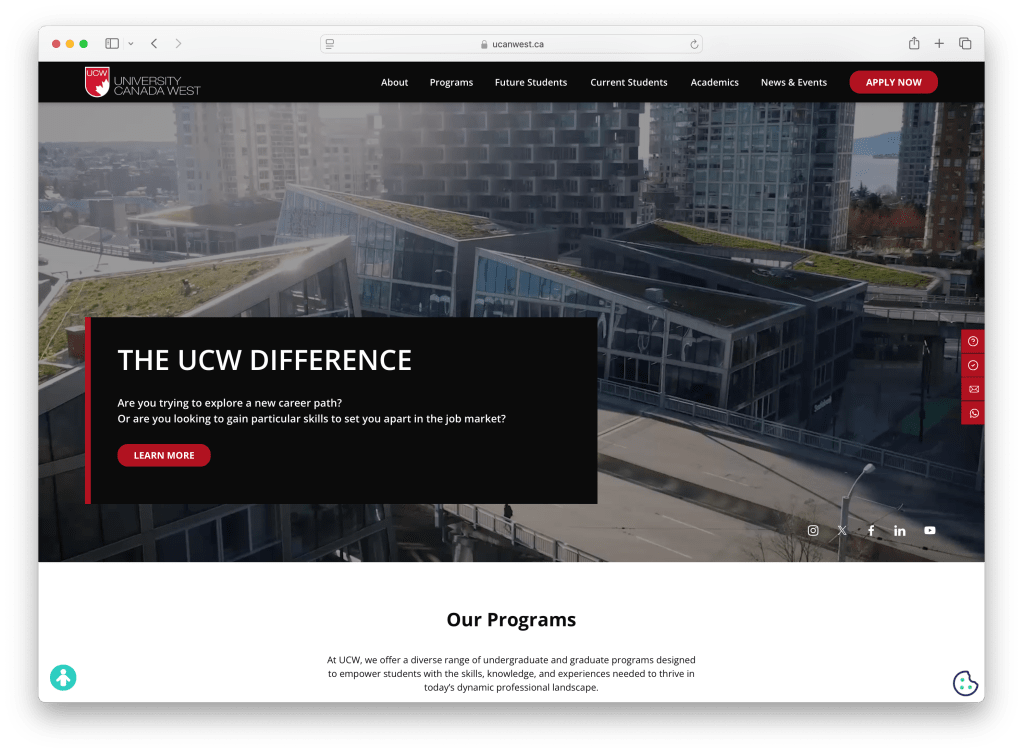
University Canada West (UCW) is a private, business-focused university in Vancouver, British Columbia, Canada. Established in 2004, UCW specializes in undergraduate and graduate business programs, including its flagship Master of Business Administration (MBA), as well as Bachelor of Commerce (BCom) and Bachelor of Arts in Business Communication (BA) degrees.
UCW took a leadership role in this initiative by becoming the foundational implementation of the headless WordPress architecture that would eventually support the entire digital ecosystem. This pioneering effort established the core design system, block library, and technical infrastructure that was later adapted across all other GUS institutions.
University of Niagara Falls Canada
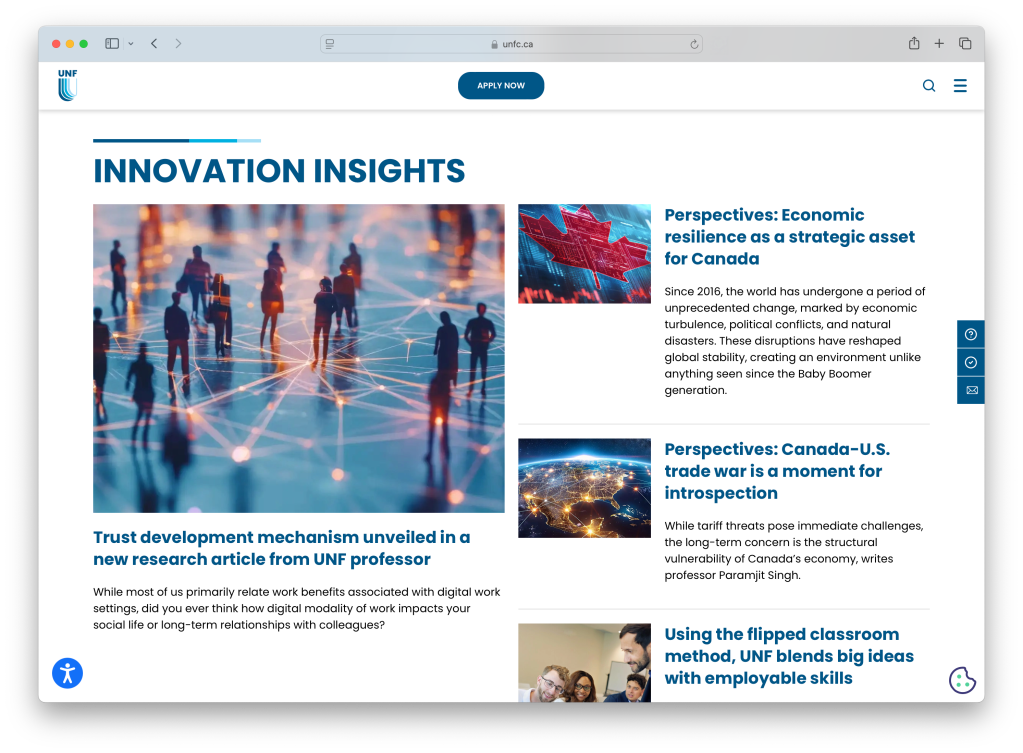
The University of Niagara Falls Canada (UNF) offers digitally-focused, career-oriented programs designed to equip students with the skills required for the modern workforce. The university emphasizes innovation, technology integration, and experiential learning, providing both undergraduate and graduate degrees across various disciplines.
Trebas Institute
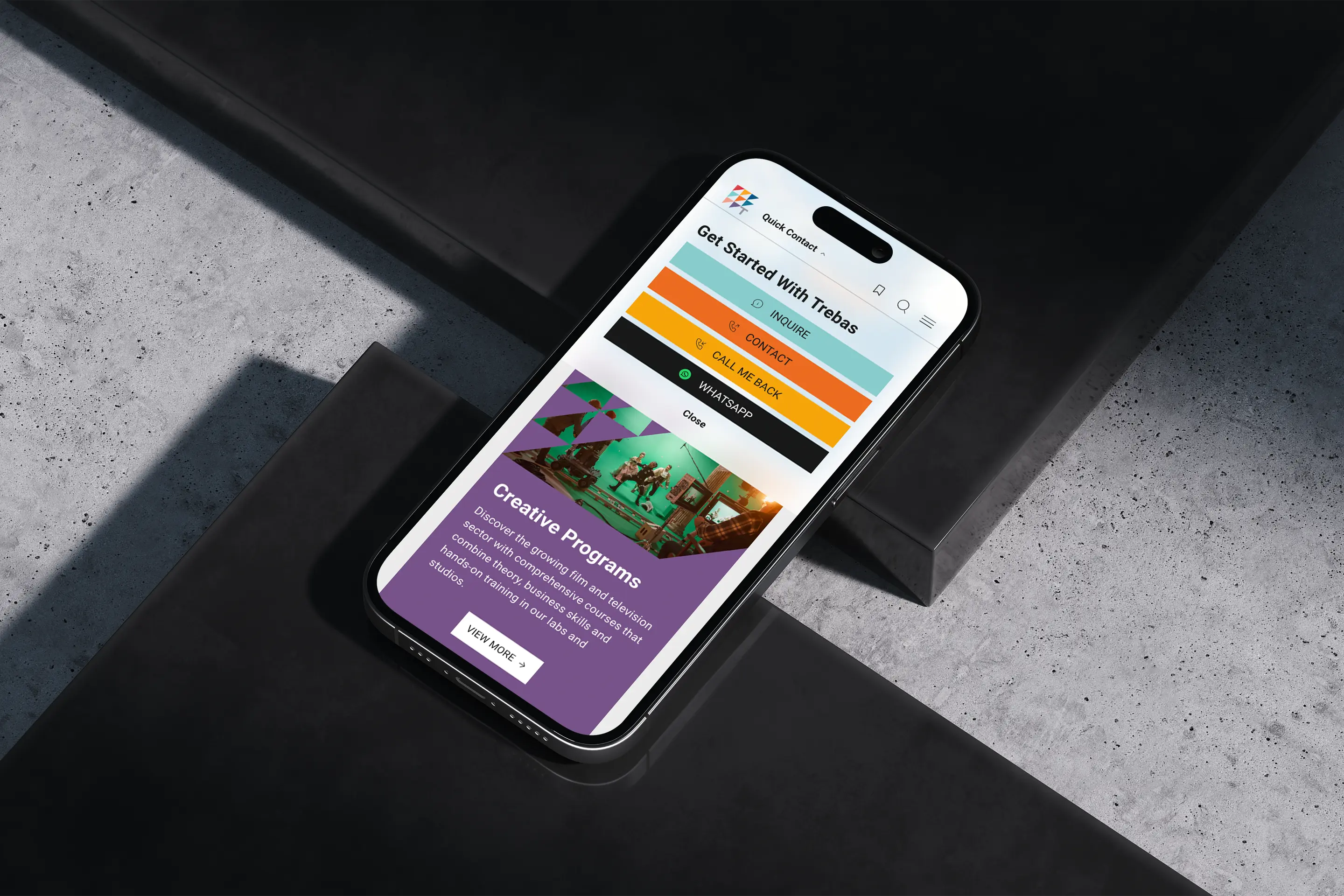
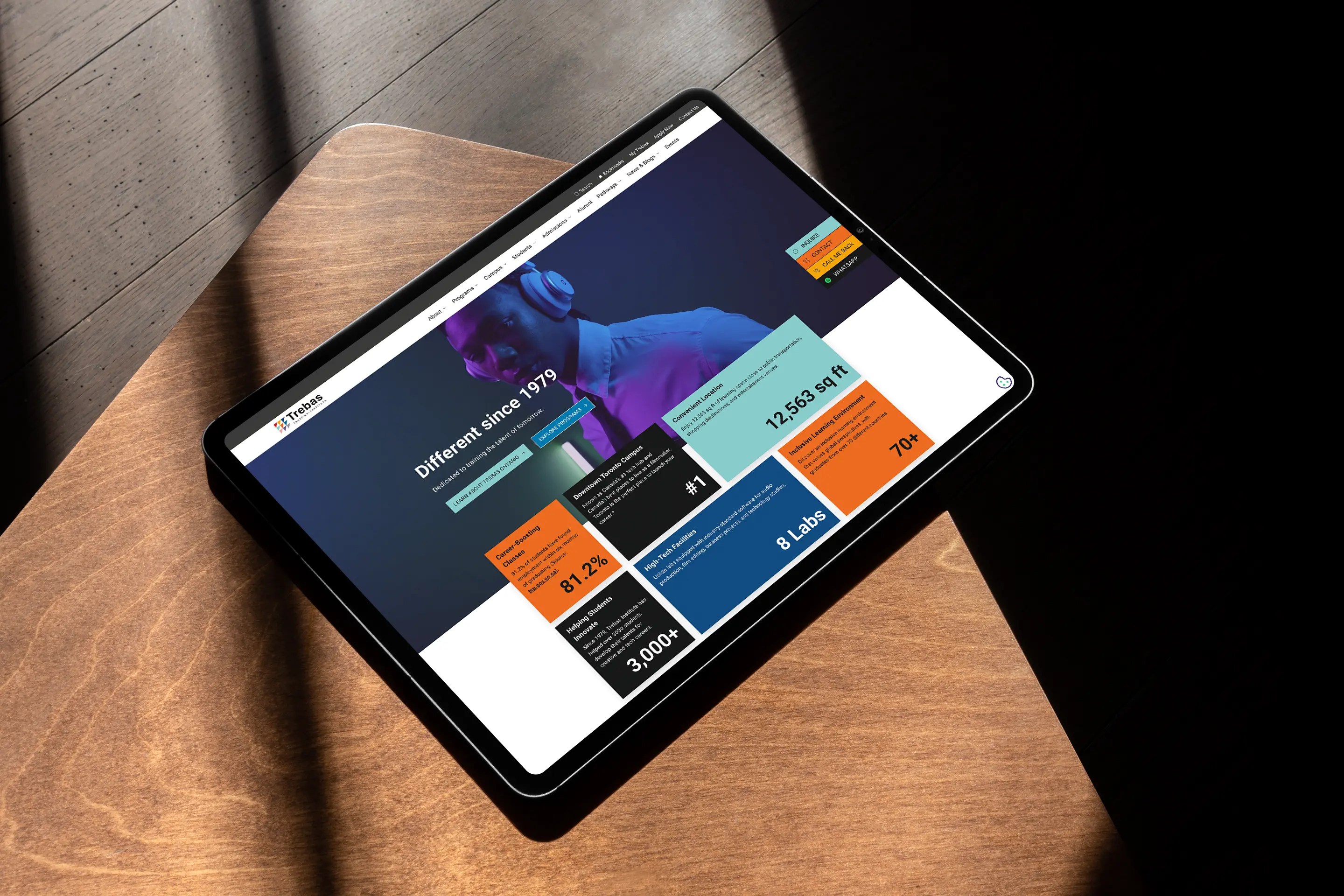
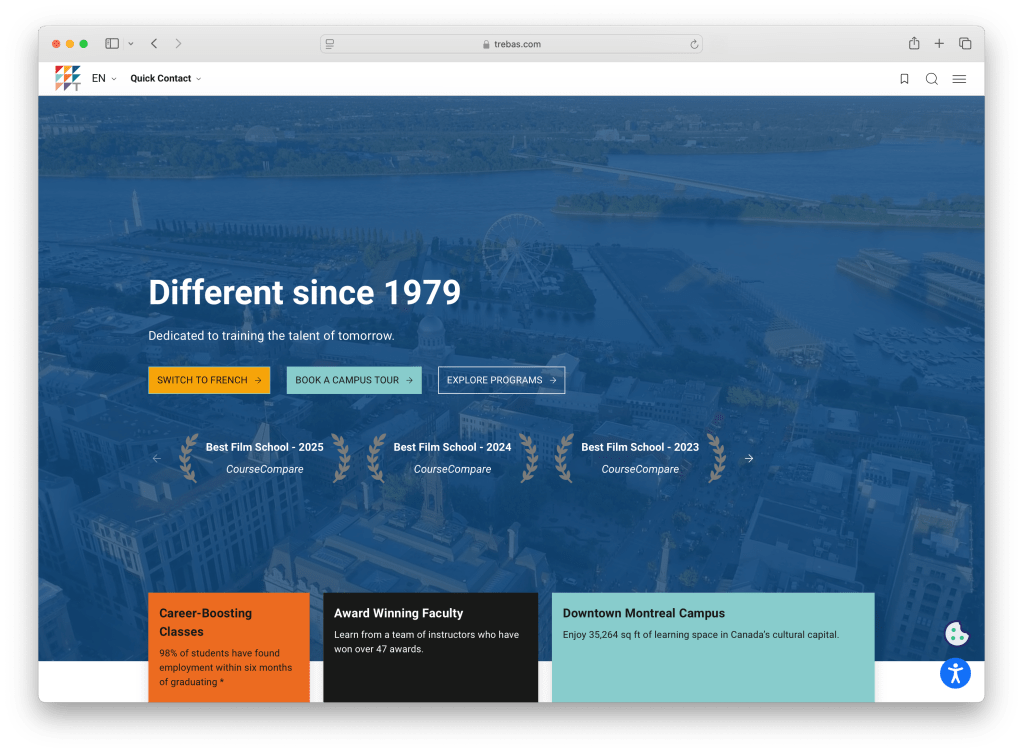
Trebas Institute is a private career college in Canada, with campuses in Montreal and Toronto, specializing in media, business, technology, and entertainment education. Recognized by the Ministère de l’Enseignement supérieur du Québec and a Designated Learning Institution (DLI) for international students, Trebas emphasizes hands-on training and career readiness, preparing students for roles in creative and tech-driven industries. Trebas Institute needed to transition from its legacy Umbraco platform to the new unified WordPress VIP environment as part of this broader initiative.
Avila University
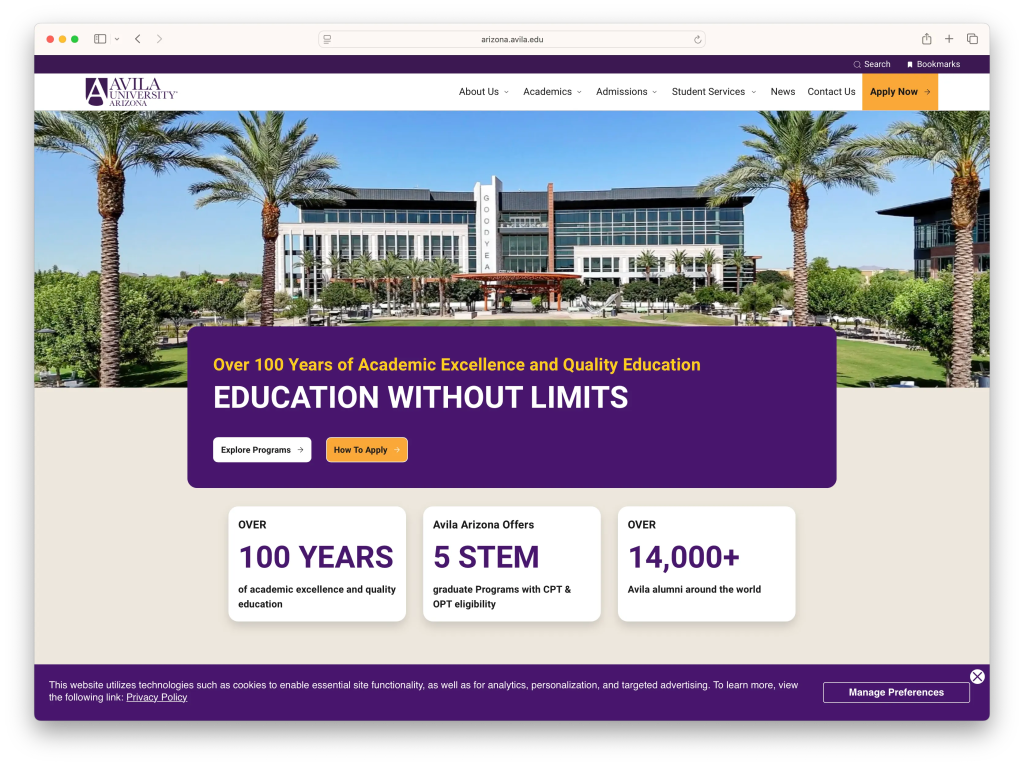
Avila University is a private Roman Catholic institution located in Kansas City, Missouri. In recent developments, Avila University has expanded its reach by opening an additional location in Arizona, reflecting its commitment to accessible education. Avila University was incorporated into the multisite framework, demonstrating the architecture’s versatility and ability to extend beyond the initial Canadian institutions. This integration showcased how the platform could support GUS’s global expansion strategy.
The Results
The unified digital ecosystem transformed how GUS Canada presents its educational offerings online. The innovative approach yielded immediate benefits by eliminating redundant development work through shared components across institutions. Simultaneously, centralized updates dramatically reduced maintenance overhead. These combined efficiencies generated substantial cost savings while enabling faster deployment of new features and content throughout the network.