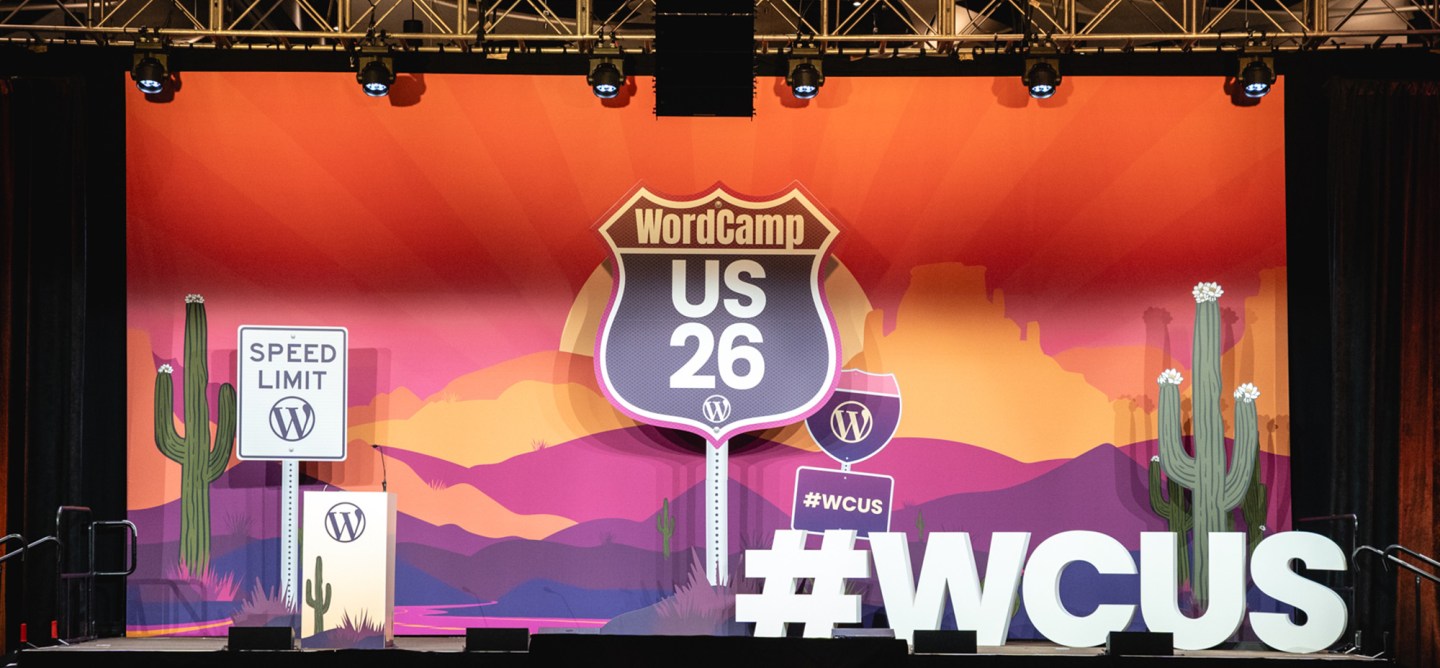
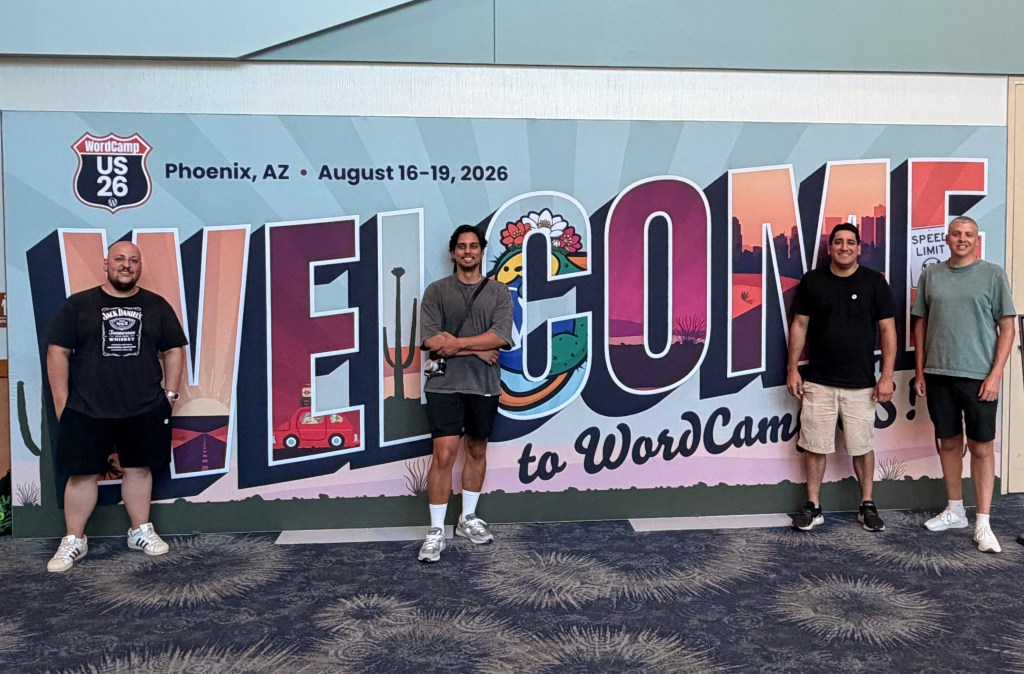
WordCamp US 2026 ran from August 16 to 19 at the Phoenix Convention Center, drawing 1,114 in-person attendees and more than 50 sessions across the AI, Technical WordPress, Honing Your Skills, and Beginner WordPress tracks. Contributor Day opened the week, Showcase Day followed, and the final two days ran a mix of talks and hands-on workshops.
Artificial intelligence was everywhere, on slides, in product demos and in conversations around the venue. Most of it was not about AI as a product. It came up alongside APIs, development workflows, block themes, structured content, search, governance, permissions and legal risk, and the strongest sessions asked what happens around the technology. Who approves an automated action? How is content structured so that machines can interpret it reliably? What happens when an agent receives more access than intended? How does a design system stay coherent when AI can generate new interfaces almost instantly?
Those questions pushed the event past the familiar argument about whether AI belongs in WordPress, toward a harder one: what kind of architecture makes AI useful without giving up control?
AI Changes Developer Work Without Removing Judgment
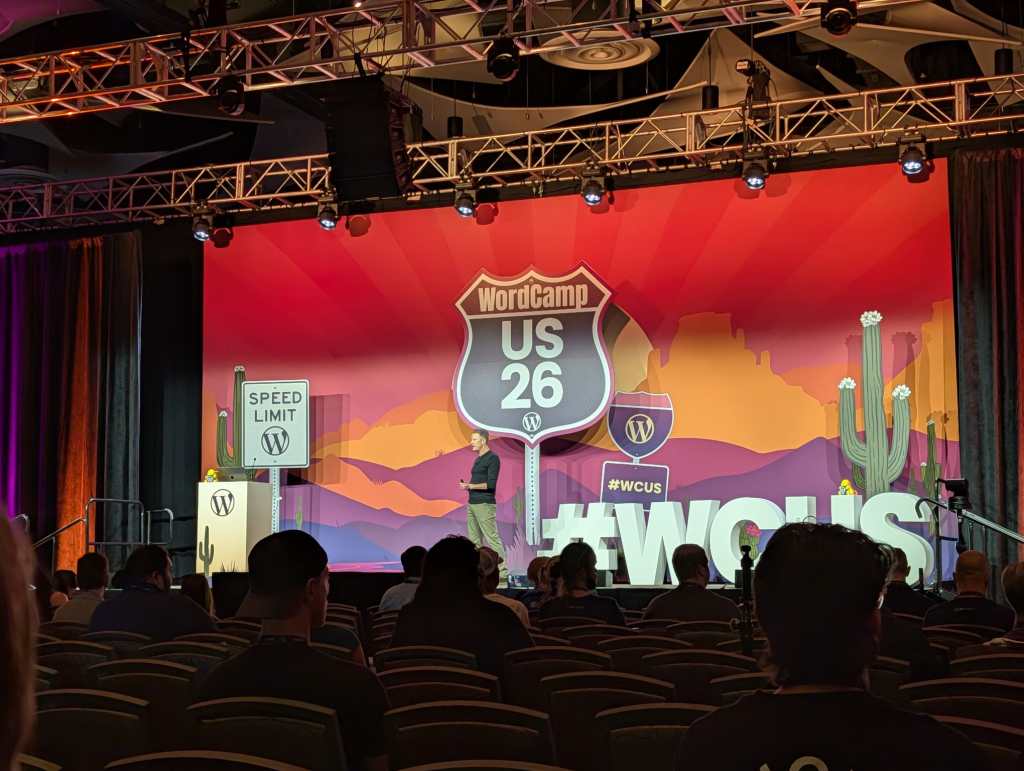
The clearest account of the human side of this transition came early in the week. Bo English-Wiczling opened Showcase Day with The Taste Gap: How AI Is Rewiring Developer Experience, a keynote focused less on AI’s ability to produce code than on what happens once the code appears. Her name for one of the defining problems was the “almost right tax.” AI can produce something remarkably close to the desired result, and close is not correct.
The “Almost Right Tax”
A first draft arrives faster, and a task can move from blank screen to functioning code in seconds. The last stretch still demands considerable expertise. Something can look correct while violating the design system, or work as a function while creating an architectural problem. A generated solution might pass a basic test and then fail under unusual conditions, or look polished while quietly introducing accessibility problems.
The labour has moved instead of disappearing. English-Wiczling described developer work as shifting away from constant production and toward direction and evaluation. That is not a downgrade in technical expertise. When producing a plausible solution becomes cheap, telling a robust solution from a merely plausible one becomes far more valuable. Knowing what good architecture looks like matters, as do performance, accessibility, security awareness and product judgment. AI makes those skills harder to fake.
Human Judgment at the Centre of Innovation
Loyal Pyczynski came at the same territory from another direction. His keynote drew on more than two decades of work spanning Walt Disney Imagineering and Meta Reality Labs, including autonomous drone experiences, robotics, generative AI and virtual reality, though his session kept returning to the human conditions that make technological experimentation productive.
His “10% Gap” framework examines the tendency to become consumed by what remains unknown instead of operating confidently from what is already known. At WordCamp US, that idea fed a wider discussion about experimentation, creativity, leadership and trust.
His message complemented English-Wiczling’s. AI can increase the volume of possible ideas and possible implementations without determining which of them deserve to exist. That decision still belongs to people.
Preparing for Agents as Well as Human Visitors
Miriam Schwab’s session, The Agentic Web Is Coming. Is WordPress Ready?, captured another shift running through the conference.
Websites have traditionally been built around human interaction. Someone visits a page, reads navigation labels, searches, clicks buttons and completes forms. Agents introduce another participant. An AI system may need to discover information, compare options or execute a task without experiencing the site in anything resembling the way a person does, which raises the value of machine-readable structure, clearly defined functionality and predictable permissions. Schwab treated the agentic web as an architectural question already worth preparing for.
Governance Became One of the Conference’s Strongest Themes
One sign of AI maturing inside the WordPress conversation was how often sessions moved away from generation and toward governance.
Michelle Hunt’s Everything is Fine and Nothing is Good: Design Systems in the Age of AI explored what happens when systems built to create consistency meet technology capable of generating almost unlimited variation. Brian Coords approached AI from the content and architecture side in The Site Is the Source of Truth: Block Themes, AI, and Agency Workflows. Kathy Zant examined legal readiness for AI, and Hans Skillrud focused on privacy compliance, while other sessions covered security, editorial workflows, large-scale migrations and production-ready AI development.
On a conference schedule, those topics can look unrelated. But they share a common subject, which is constraint. A mature digital platform has rules about what can be published, who can modify it, where data moves, what must remain accessible, which components can change and how changes reach production. AI does not make those rules less important. It increases the number of ways they can be violated, which makes governance part of AI architecture.
An organization with a clean content model, well-defined permissions, reusable components, documented workflows and a disciplined release process starts from a very different position than one built on years of exceptions and undocumented customizations. Some of the most important AI preparation has very little to do with selecting an AI model. It looks like good platform engineering.
The Agentic Web Is No Longer Abstract for WordPress
Several sessions approached websites from the same angle, most directly Emma Young’s AI Search: Why Your Whole Company Should Care, which pushed search well past a marketing concern. Content is increasingly consumed outside the interface where it was published. Search engines have done this for decades, and AI systems extend the pattern, assembling answers from information retrieved across multiple sources, while agents may go further and act on what they find.
For WordPress, that raises the value of structure. A page designed only as a visual composition works perfectly well for a person looking at it. A platform that also provides understandable content relationships, metadata and discoverable functionality can serve a much wider range of consumers. The argument is not for building one web for humans and another for machines. Good content architecture simply has more audiences now.
Contributor Day Shows What AI Cannot Replace
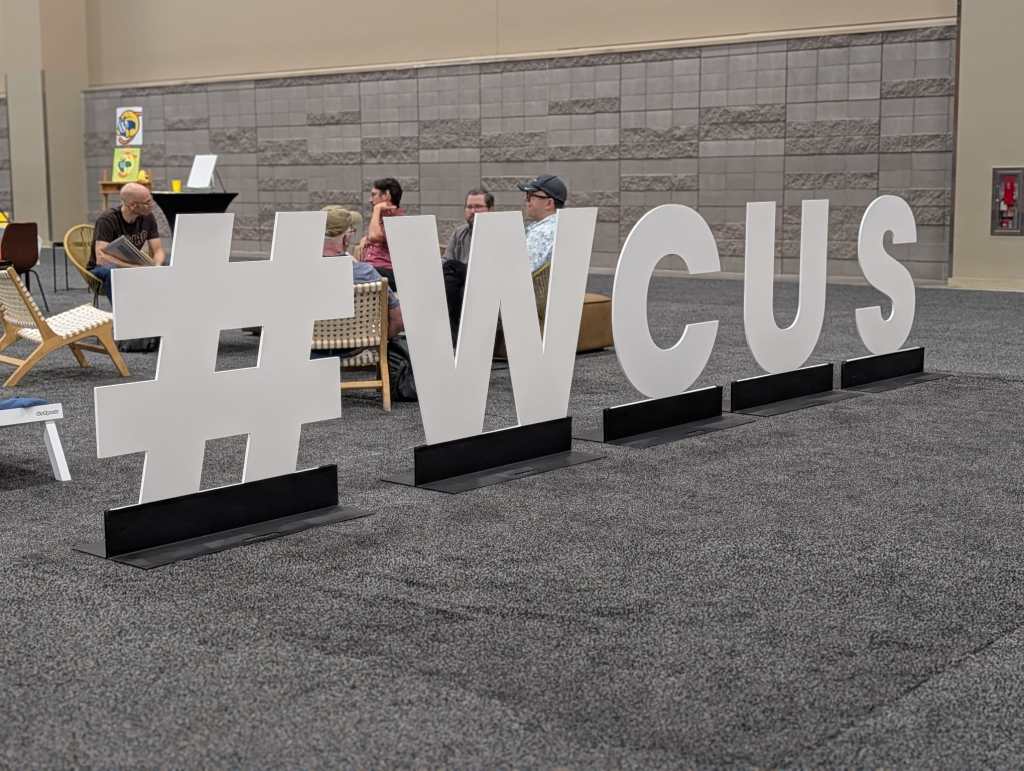
Before the keynotes and conference sessions, WordCamp US began with something distinctly WordPress: hundreds of people sitting together and contributing to an open source project.
Contributor Day brought together 425 participants, including 29 first-time contributors, working across 26 goal-based teams. Twenty two pull requests were opened and 21 shipped, alongside contributions involving accessibility, documentation, education, AI tooling and other parts of the project. The day was open to technical and nontechnical contributors alike, with teams spanning Core, Core AI, accessibility and many other areas, and remote participation was available as well.
The numbers matter less than what they represent. AI can generate code. It cannot independently maintain the social contract that makes an open source project work. Someone still has to discuss whether a change belongs in Core, review it, document it, notice an accessibility problem, disagree with an implementation and explain why, or help a first-time contributor understand how the project works. AI may make parts of that process more efficient. It does not make the process unnecessary.
Open Source Still Sits at the Centre of the WordPress Story
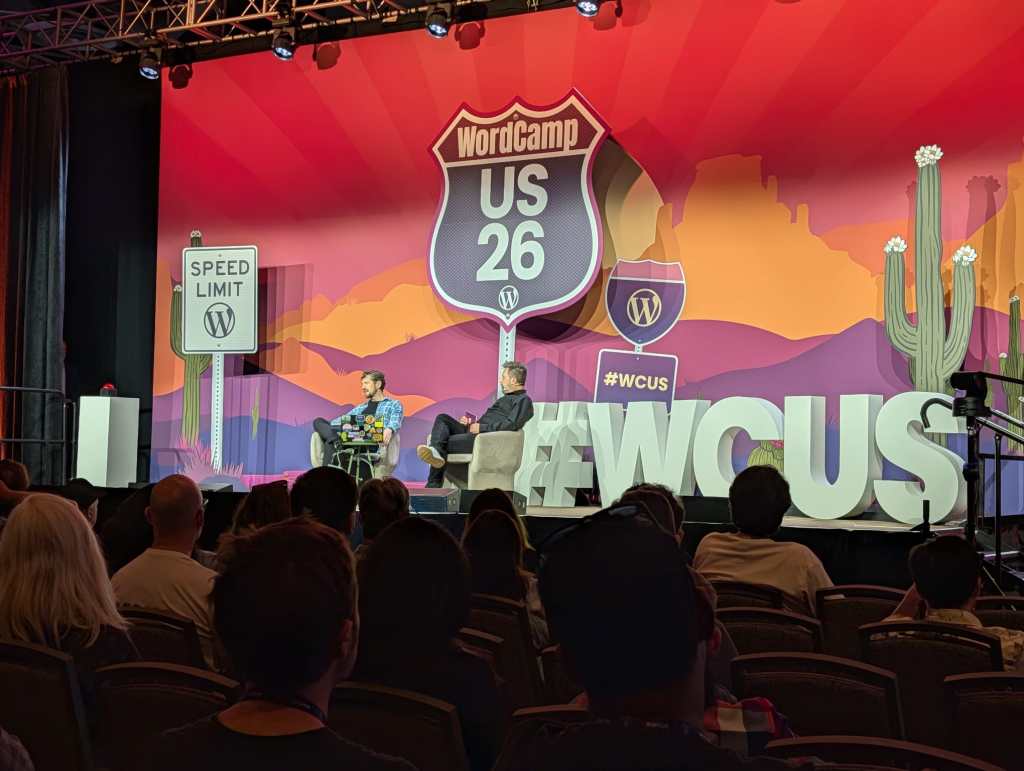
WordCamp US closed by zooming out. WordPress cofounder Matt Mullenweg joined Robert Jacobi for a fireside discussion on the state of open source, AI, community and the future of WordPress, with the final portion of the session reserved for audience questions.
The subject felt especially relevant after several days dominated by systems capable of producing software, content and digital experiences faster than before. What happens to open source when software becomes easier to generate? The simplistic answer is that open source loses importance once code stops being scarce. The conference pointed toward the opposite reading.
Code is only one part of an open source project. Open source also provides inspectability, shared standards, portability, governance, extensibility and the ability for people outside a single company to influence how technology develops. As AI works its way deeper into digital infrastructure, those properties may become more valuable, since control over a system outlasts the act of generating it.
WordPress 7.1 “Mary Lou” Arrives Live at WordCamp US
WordPress 7.1, named Mary Lou, was released live from the stage on the final day. The release brought improvements across responsive design, editing, media, collaboration and developer tooling. Notable additions included more responsive block styling, greater control over breakpoints, a redesigned media experience, richer Notes functionality, Tabs, custom icon support and more image processing handled directly in the browser.
Work also continued beneath the visible editor, including development of the Abilities API and other foundations intended to make WordPress easier to extend in increasingly sophisticated environments.
The two directions are related. A stronger editor reduces dependency on developers for routine publishing, while better platform primitives give development teams more reliable ways to control what can happen around that content. The CMS becomes easier to use without becoming simpler underneath, a balance that has defined much of WordPress’s recent evolution.
What WordCamp US 2026 Means for Enterprise WordPress
The enterprise takeaway is about architecture, permissions and process, none of which require an AI project to justify.
AI Readiness is Becoming an Architecture Question
The most useful AI systems need access to reliable information and clearly defined capabilities, which makes architecture important before any agent enters the picture. A fragmented content model, inconsistent permissions or undocumented custom functionality creates ambiguity for people, and AI can magnify it. A governed WordPress platform gives both a stronger foundation.
Structured Content Becomes More Valuable
The idea of the site as a source of truth grows more important when content may appear in search results, AI answers, conversational interfaces and agent workflows. Content cannot depend entirely on visual presentation to communicate meaning. Relationships, metadata, reusable components and consistent information architecture become part of how an organization’s knowledge is understood outside individual pages.
Governance Is Part of the Build
Privacy, accessibility, legal responsibility and security were not peripheral topics in Phoenix. They repeatedly intersected with AI. Enterprise adoption lies in deciding what a system may access, produce, modify or publish without creating unacceptable risk. Governance is part of determining whether an AI project works at all, and it cannot be applied afterwards as a finishing layer.
Human Expertise Becomes More Valuable
The “almost right tax” may be the most useful concept to come out of WordCamp US 2026. As AI lowers the effort required to produce plausible work, organizations need stronger ways to recognize when that work is not good enough. That puts more weight on architecture, design judgment, editorial expertise, security knowledge, accessibility experience and understanding of the organization itself. AI changes the production equation without eliminating the need for expertise.
The WordCamp US 2026 Picture
WordCamp US 2026 offered plenty of AI, though it did not feel like a conference chasing the newest capabilities. WordPress is adapting its architecture to a web where AI systems can consume information, discover functionality and potentially act on behalf of people. But more automation does not reduce the value of people making thoughtful decisions together; it raises the value of knowing which decisions matter. AI is moving deeper into WordPress at the same time as human judgment is moving closer to the centre of it.
For organizations exploring what that shift means for enterprise WordPress, AI integration, content architecture and long-term digital strategy, Trew Knowledge can help connect emerging technology with the platform, governance and workflows needed to make it useful in practice. Let’s build what comes next.