Enterprise editorial teams did not adopt sprawling toolchains because they enjoy complexity. They did it because shipping content at scale has historically required stitching together drafting, review, approvals, and publishing across multiple systems. A draft begins in one place. Feedback lives somewhere else. Final copy gets pasted into WordPress. Then someone double-checks that nothing broke, nothing is missing, and nothing slipped past governance.
That workflow is familiar, but it has always carried a quiet cost: friction, delays, duplicated effort, and avoidable risk.
WordPress VIP’s newly released collaborative editing capabilities point to a different future. Not simply because multiple people can type in the same post, but because the WordPress editor is starting to behave less like a final destination and more like the workspace where content actually gets made.
The Problem Enterprise Teams Have Been Working Around
In high-stakes publishing environments, writing is rarely the hard part. Coordination is.
Enterprise teams must balance speed with accountability. Multiple stakeholders need to review content for accuracy, brand alignment, accessibility, and compliance. Changes must be traceable. Permissions must be respected. The CMS cannot become a point of failure during peak moments.
For years, the workaround was to push collaboration outside the CMS. Drafting moved to external documents. Reviews fragmented into long comment threads. Publishing became a final act of transfer rather than a continuous process.
What WordPress VIP is signalling is that this separation no longer has to define enterprise publishing. Collaboration can happen where content is structured, governed, and ultimately published, without abandoning the controls enterprise teams depend on.
What WordPress VIP introduced
WordPress VIP’s announcement describes two distinct collaboration layers working together:
Real-time collaboration in the editor
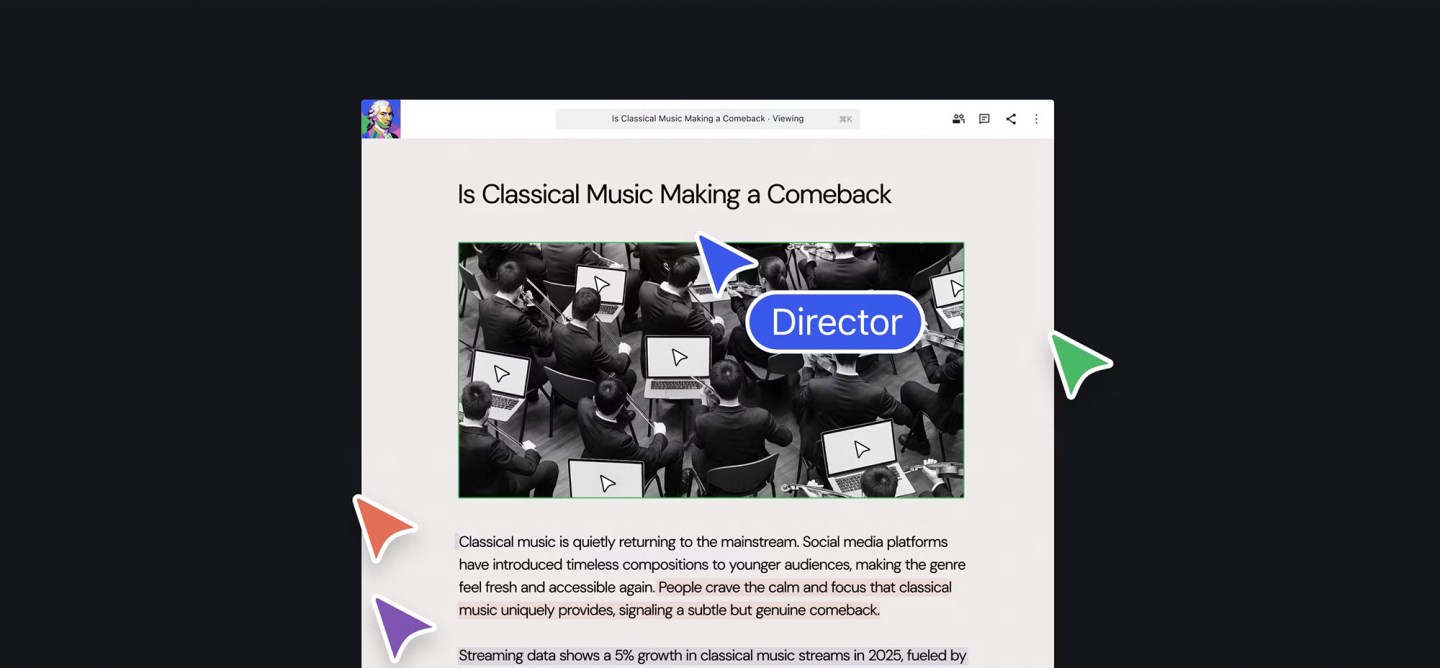
Multiple users can edit the same post or page simultaneously, with presence indicators showing who is in the document and where they are working. Changes are synchronized live, reducing version conflicts and the risk of overwrites.
Notes for block-level commenting
With WordPress 6.9, “Notes” enables in-context feedback directly attached to blocks in the editor. Teams can leave comments, reply in threads, and resolve notes as feedback is addressed, so drafts stay readable.
Taken together, these features aim to bring drafting, review, and publishing back into WordPress while maintaining enterprise-grade governance expectations.
Why this matters more than “Google Docs inside WordPress”
The comparison to Google Docs is useful as shorthand, but it undersells the enterprise reality.
For many organizations, the “collaboration” problem is not about whether multiple people can edit at once. It is about whether the platform can support that collaboration without compromising:
- permissions and role-based control
- auditability and traceability
- editorial accountability
- reliability under load and at scale
- security expectations tied to enterprise infrastructure
WordPress VIP is positioning collaborative editing as a feature that can exist inside those constraints, rather than as a tradeoff against them. This is the real unlock: collaboration becomes part of the governed system instead of happening in a parallel universe.
The Workflow Shift That Enterprise Teams Can Expect
Content stops moving in serial
One of the most common CMS bottlenecks is waiting. Waiting for someone to finish edits. Waiting for someone to paste in the “latest” copy. Waiting for approvals buried in chat.
Real-time co-editing changes the shape of that work. Instead of sequential handoffs, multiple contributors can work in parallel on the same draft, reducing anxiety about overwriting each other’s work.
Feedback becomes anchored to content structure
Notes move review from generalized commentary to contextual feedback that is attached to the specific block that needs attention. In enterprise environments, this matters because so many review cycles are really about precision: the wording of a claim, the placement of a disclaimer, the presence of an accessible label, the correctness of a callout.
It also matters because WordPress content is structured. Block-level feedback aligns better with structured content than long comment threads that assume everyone is looking at the same paragraph layout in the same external document.
Governance becomes less abstract
WordPress core’s ongoing collaboration work has explicitly framed Notes as a step toward deeper collaboration capabilities in WordPress.
When feedback is embedded into the publishing process, governance becomes less of a “final checklist” and more of a living part of the workflow.
WordPress core is heading in the same direction
WordPress VIP’s announcement also points ahead: real-time collaboration is expected to become part of WordPress core in the future, and WordPress core contributors have been actively gathering early user feedback and planning broader Phase 3 collaboration initiatives.
It is important to keep the nuance: core planning and roadmap posts reflect priorities and active work, not guarantees. Still, the through-line is clear. The Notes feature is already part of WordPress 6.9, and real-time collaboration is under exploration and testing with a view toward future releases.
For enterprise teams making long-term platform decisions, that direction matters. It suggests the editor is evolving into a more complete collaboration surface rather than just a content entry point.
The Questions That Determine Whether This Delivers Value
Collaborative editing is a capability. It will not automatically replace every external tool or fix every workflow issue. The organizations that benefit most will treat it as an opportunity to tighten the full content lifecycle.
Here are the practical questions that matter most in enterprise environments:
1) Who is allowed to collaborate live?
Not every role needs real-time edit access. Some teams will want editors and writers co-authoring in real time. Others will restrict live edits to a smaller set of roles while letting stakeholders participate through Notes and approvals.
2) Where does compliance sit in the workflow?
Notes are particularly relevant for compliance-heavy organizations because they keep discussions tied to specific content blocks. The opportunity is to reduce the “side channel” risk where critical feedback is scattered across email threads and chat messages.
3) What becomes faster, and what becomes clearer?
Enterprise publishing often confuses speed with velocity. Speed is publishing quickly. Velocity is publishing quickly without creating rework, confusion, or quality degradation. Collaborative editing should be evaluated against the second definition.
4) What tool sprawl can realistically be reduced?
Some tools are still essential for broader planning, ideation, and campaign coordination. The goal is not to eliminate everything. The goal is to stop forcing teams to move content between systems just to collaborate.
What This Means for Enterprise WordPress Strategy
In enterprise publishing, risk is rarely created by bad intent. It is created by fragmentation.
When content is drafted in one system, reviewed in another, and published in a third, the highest-risk moments tend to happen during transfer. Copy is pasted without full context. Late edits bypass reviewers. Small changes slip in after approvals because the system does not reflect the full history of decisions.
Collaborative editing inside WordPress changes where that risk concentrates.
Instead of risk accumulating at the moment of publishing, it is distributed across the lifecycle of the content. Edits are visible as they happen. Feedback remains attached to the exact content it refers to. The path from draft to publication becomes more continuous and less transactional.
For enterprise teams, this matters because risk management is not only about permissions and approvals. It is about reducing the number of moments where intent, context, and execution can drift apart.
WordPress VIP’s approach does not eliminate risk. It relocates it into a system that is already governed, monitored, and auditable.
Designing for Collaboration at Enterprise Scale
As collaboration moves into the CMS, the cost of poor platform design increases.
As one of the top WordPress agencies worldwide and WordPress VIP’s first Gold Agency Partner in Canada, Trew Knowledge designs enterprise WordPress platforms that balance speed, accountability, and resilience, helping organizations scale content operations with confidence.
Talk to our team about designing a platform that supports enterprise collaboration.