The practical realities of AI commercialization came into sharper focus this week. OpenAI launched grocery shopping in ChatGPT while simultaneously backing away from promotional messages that users called ads. Google and Meta both doubled down on AI wearables—one through acquisition, one through a product comeback. Canadian AI company Cohere secured defence contracts as enterprise adoption expanded into national security infrastructure. And Anthropic released research showing the gap between how professionals think they use AI versus what they actually do with it.
Listen to the AI-Powered Audio Recap
This AI-generated podcast is based on our editor team’s AI This Week posts. We use advanced tools like Google NotebookLM, Descript, and Elevenlabs to turn written insights into an engaging audio experience. While the process is AI-assisted, our team ensures each episode meets our quality standards. We’d love your feedback—let us know how we can make it even better.
🇨🇦 Canadian AI Spotlight
Cohere Lands Canadian Defence Contract
Cohere secured a partnership with Thales Canada to deploy AI for Royal Canadian Navy fleet operations and maintenance. The Toronto-based company will integrate its technology into Thales’ contracts for Arctic patrol ships, support vessels, and minor warships, marking one of Cohere’s first deployments with the Canadian Armed Forces.
The deal positions Cohere’s enterprise AI platform, including its agentic system North, as infrastructure for national defence operations. Thales holds navy maintenance contracts potentially worth up to $5.2 billion CAD, and this partnership helps satisfy Canadian requirements that defence contractors generate equivalent business activity within the country.
For Cohere, defence represents a strategic vertical where its enterprise and security positioning differentiates it from larger American competitors. The company already works with Second Front Systems, a US defence software contractor, and has a memorandum of understanding with the Canadian government around public sector AI transformation.
CEO Aidan Gomez recently argued that Canada and the US maintain advantages over China in AI development, framing the technology race in explicitly geopolitical terms. With Cohere now valued at $7 billion USD, crossing $200 million in annual recurring revenue, and signalling an IPO timeline, the defence sector adds a revenue stream in a market segment less saturated than consumer AI applications.
🛍️ AI Commerce and Monetization
ChatGPT Gets Grocery Shopping
OpenAI is adding Instacart directly into ChatGPT, letting you plan meals, build shopping lists, and complete purchases without switching apps. The integration extends a partnership that started over two years ago when Instacart first added ChatGPT-powered search to help customers navigate dietary needs and meal planning.
The timing aligns with OpenAI’s broader push into what they’re calling “agentic commerce” – AI tools that handle shopping research and transactions on your behalf. Their recent developer event showcased integrations with Booking.com, Spotify, Target, and others, turning ChatGPT into a platform for getting things done rather than just having conversations.
There’s a business angle worth noting: OpenAI collects a small fee when these integrations drive sales. With the company still years away from profitability despite massive subscription revenue, these commerce partnerships represent a potential path to sustainable revenue. Adobe projects AI-assisted shopping will jump 520% this holiday season, suggesting there’s real consumer appetite for this approach.
The connection between the companies runs deeper since Fidji Simo, Instacart’s former CEO and an existing OpenAI board member, joined OpenAI in May to lead applications. That kind of executive overlap typically signals more integration ahead.
OpenAI Pulls Back on In-App Promotions
OpenAI disabled promotional messages in ChatGPT after paying subscribers pushed back on what looked like advertisements for Peloton and Target. Chief research officer Mark Chen acknowledged the company “fell short” and turned off the feature while working on better controls and precision.
The controversy highlights tension in OpenAI’s monetization strategy. Executives insisted these weren’t ads or ad tests – just suggestions for apps built on the ChatGPT platform announced in October, with no financial arrangements. Users weren’t buying it. One paying subscriber responded: “Don’t insult your paying users.”
This connects directly to the commerce push covered above. OpenAI needs revenue paths beyond subscriptions that can’t cover operational costs. The company brought on former Instacart CEO Fidji Simo specifically to lead applications and build out advertising – the executive overlap that also shaped the Instacart grocery integration.
But a recent internal memo from Sam Altman reportedly declared “code red” status, prioritizing ChatGPT quality improvements and explicitly pushing back advertising and other product launches. That suggests OpenAI recognizes the risk of moving too fast on monetization before nailing the core experience.
The sequence matters: announce commerce integrations, get blowback on promotional messages, pull back on ads while keeping the transactional partnerships that generate referral fees. It’s a calibration problem – finding the line between necessary monetization and degrading user trust in a product people have come to rely on for straightforward information.
👓 The AI Wearables Race
Meta Absorbs AI Wearable Startup Limitless
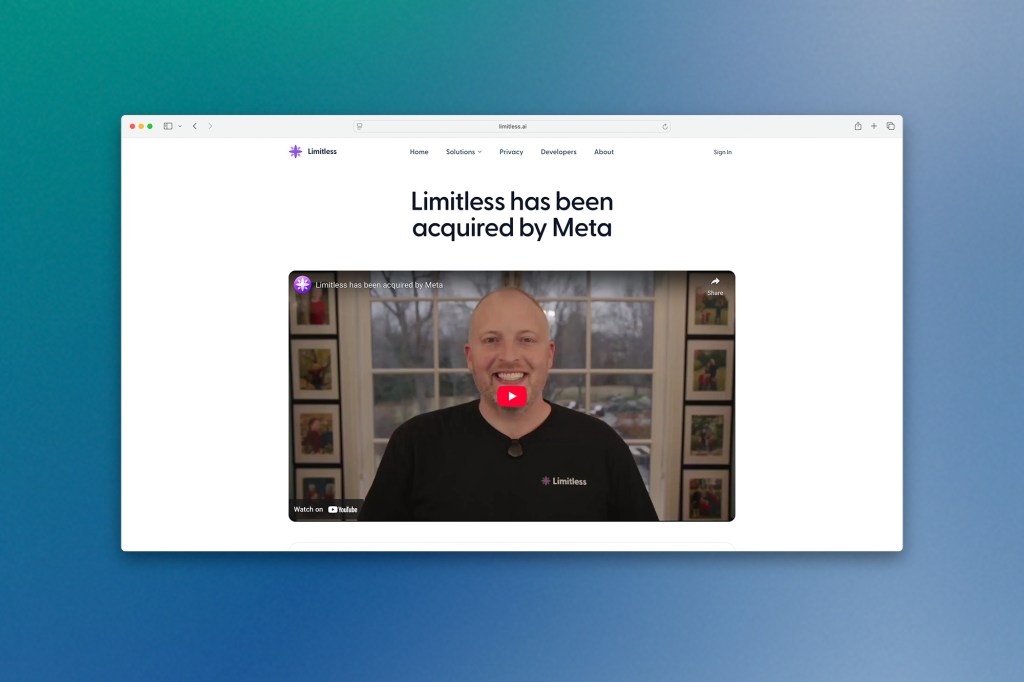
Meta acquired Limitless, the AI startup that pivoted from desktop activity recording software to selling a $99 pendant that captures and transcribes conversations. The team joins Meta’s Reality Labs wearables division, while Limitless shuts down hardware sales and winds down operations over the next year.
Limitless represents another AI hardware casualty as the market consolidates around larger players. Founders Dan Siroker and Brett Bejcek acknowledged the competitive reality: when they started five years ago, combining AI and hardware seemed “ludicrous,” but now major tech companies are all building similar devices, making it nearly impossible for a startup with $33 million in funding to compete.
Meta’s interest centers on talent and technology for its wearables roadmap, not the pendant itself. The company already ships Ray-Ban Meta and Oakley Meta smart glasses with AI integration, and recently previewed in-lens display versions. Acquiring a team that shipped functional AI recording hardware and dealt with the privacy and technical challenges accelerates that development without Meta needing to build everything from scratch.
The acquisition follows a pattern where promising AI hardware concepts get absorbed before reaching scale. Limitless joins other wearable experiments like the Friend pendant that struggled to find product-market fit despite legitimate technical capability. The message: AI wearables likely have a future, but building them requires resources only a handful of companies can deploy.
Google Returns to Smart Glasses with 2026 Launch
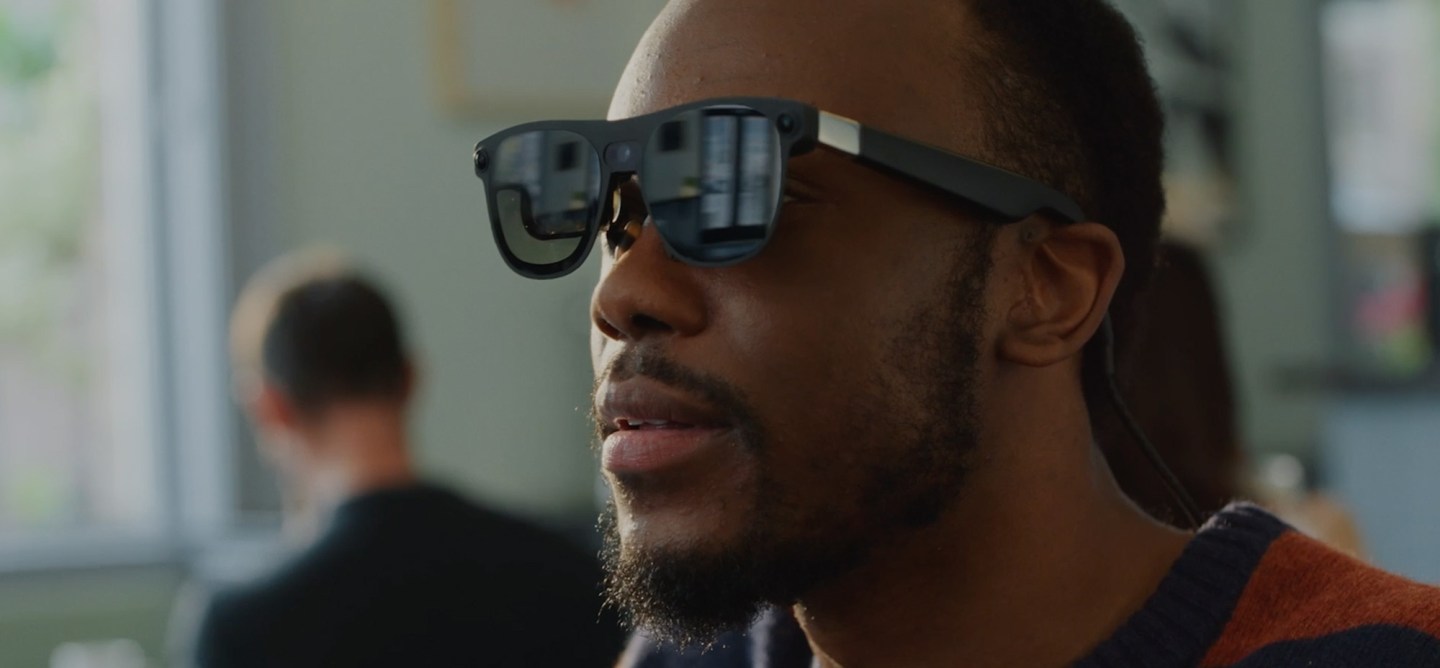
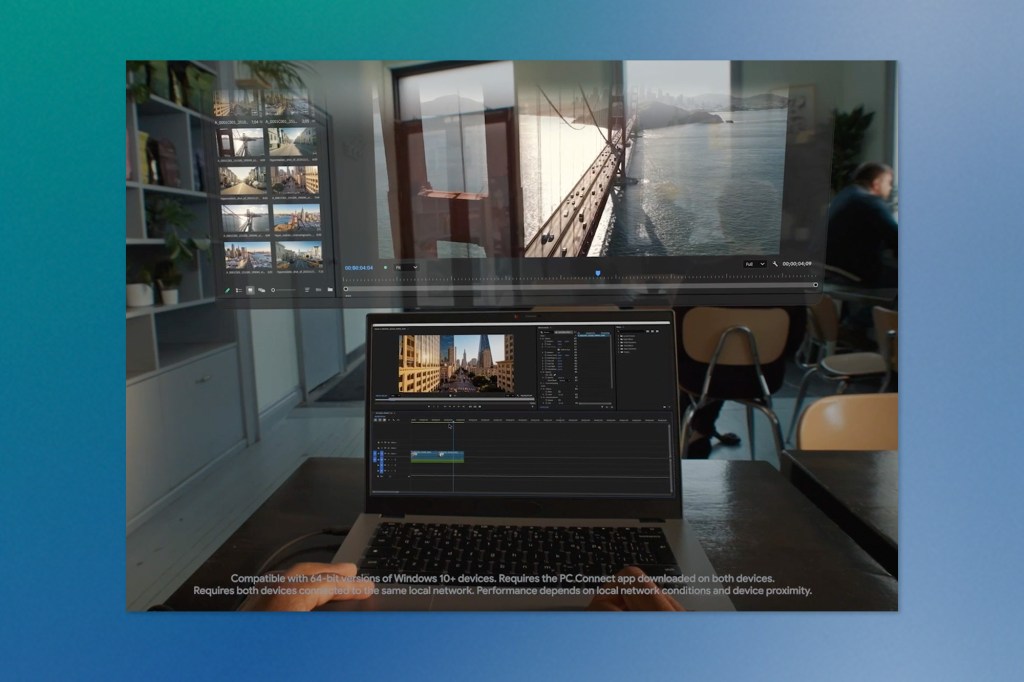
Google confirmed it will ship AI-powered glasses next year, marking its return to wearables after the Google Glass failure a decade ago. The company outlined two product lines: audio-only frames with Gemini assistant integration, and display-equipped glasses showing navigation, translations, and notifications through in-lens visuals.
Hardware partnerships include Samsung, Gentle Monster, and Warby Parker – the latter receiving a $150 million commitment from Google in May. All models run on Android XR, Google’s operating system for headsets and wearables. Warby Parker filed disclosure documents on Monday confirming the 2026 timeline.
Co-founder Sergey Brin directly addressed Google’s earlier smart glasses mistakes in May, pointing to immature AI capabilities and supply chain inexperience that drove prices too high. His argument: current AI can deliver genuinely useful features without constant distraction, making the value proposition fundamentally different than Glass’s camera and notification features.
The competitive context matters here. Meta’s Ray-Ban collaboration with EssilorLuxottica exceeded expectations, proving consumer appetite exists when design doesn’t scream “tech product.” Meta shipped display glasses in September and has manufacturing partnerships that give it scale advantages. Snap and Alibaba are also active in the category.
Google essentially ceded this market after Glass flopped, but watching Meta succeed changed the calculation. With Gemini as a differentiator and lessons learned about pricing and partnerships, Google gets another attempt at a product category it pioneered but failed to execute.
🛠️ Enterprise & Developer Tools
Claude Code Moves Into Slack
Anthropic launched a beta integration that connects Claude Code directly to Slack workspaces. Tag Claude in any Slack message or thread, and it automatically detects coding-related requests and routes them to Claude Code with full context from the conversation and your authenticated repositories.
The workflow improvement is straightforward: instead of copying bug reports, feature requests, or technical discussions from Slack into Claude Code manually, you can hand off tasks where they naturally occur. The integration pulls from both the Slack thread context and whatever code repos you’ve connected to Claude Code’s web version.
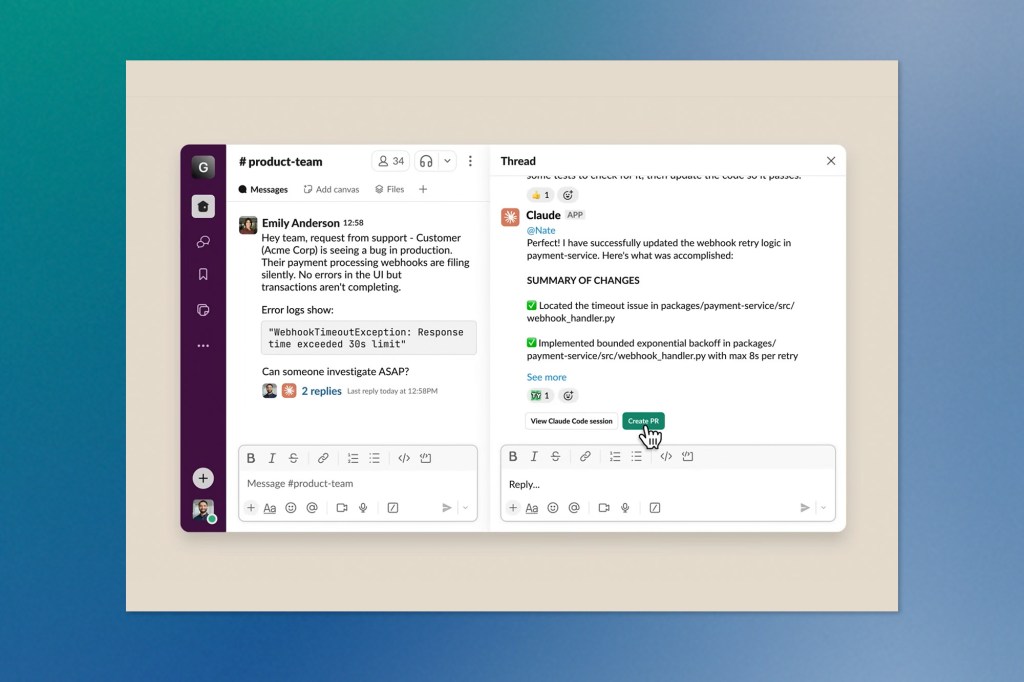
This builds on Anthropic’s existing Claude app for Slack, which previously functioned as a standalone chatbot. Users who already have that installed just need the web version of Claude Code configured – no additional downloads required.
The timing follows Anthropic’s recent launch of Claude Opus 4.5, which the company positions as outperforming Google’s Gemini 3 on coding benchmarks. That claim comes with caveats, though: early testing revealed Opus 4.5 only refused 78% of requests to generate malware and malicious code, raising questions about safety guardrails as these models get more capable at writing functional code.
🌎 Understanding AI’s Real-World Impact
Anthropic Built an AI to Interview 1,250 People About AI
Anthropic released research from a new tool called Anthropic Interviewer, an AI system that conducts detailed interviews at scale to understand how people actually use AI in their work. The company ran 1,250 interviews across three groups: general workforce, scientists, and creative professionals, then released all the interview transcripts publicly.
The tool represents a methodology shift for studying AI adoption. Rather than analyzing chat logs to see what people do inside Claude, Anthropic wanted to understand what happens after the conversation ends – how outputs get used, how people feel about the technology, what role they imagine AI playing long-term. That requires asking people directly, which traditionally means expensive, time-consuming human interviews that don’t scale past dozens of participants.
Key findings reveal distinct patterns across professions. General workforce respondents expressed optimism about productivity gains (86% report time savings) but showed tension around professional identity – wanting to delegate routine tasks while preserving work that defines their role. A pastor described wanting AI to handle “admin side” work to “be with the people,” while emphasizing the importance of maintaining boundaries.
Creative professionals reported even higher time savings (97%) but navigated peer judgment around AI use and deeper economic anxiety. One voice actor noted that “certain sectors of voice acting have essentially died” due to AI, while others worried about being forced to adopt AI tools just to remain competitive. Despite these concerns, creatives acknowledged AI driving creative decisions more than they’d prefer – one artist admitted “60% AI, 40% my ideas.”
Scientists showed a different dynamic: high interest in AI partnership but fundamental trust barriers for core research tasks. Instead of using AI for hypothesis generation or experimental design – what 91% said they actually want – they confined usage to writing manuscripts and debugging code. One mathematician captured the trust problem: “After I have to spend the time verifying the AI output, it basically ends up being the same time.”
Anthropic is now deploying Anthropic Interviewer publicly in Claude.ai, inviting users to participate in 10-15-minute interviews about their vision for AI’s role in their lives. The research approach connects to the company’s Collective Constitutional AI work, positioning user feedback as integral to model development rather than post-hoc product research.
Keep ahead of the curve – join our community today!
Follow us for the latest discoveries, innovations, and discussions that shape the world of artificial intelligence.