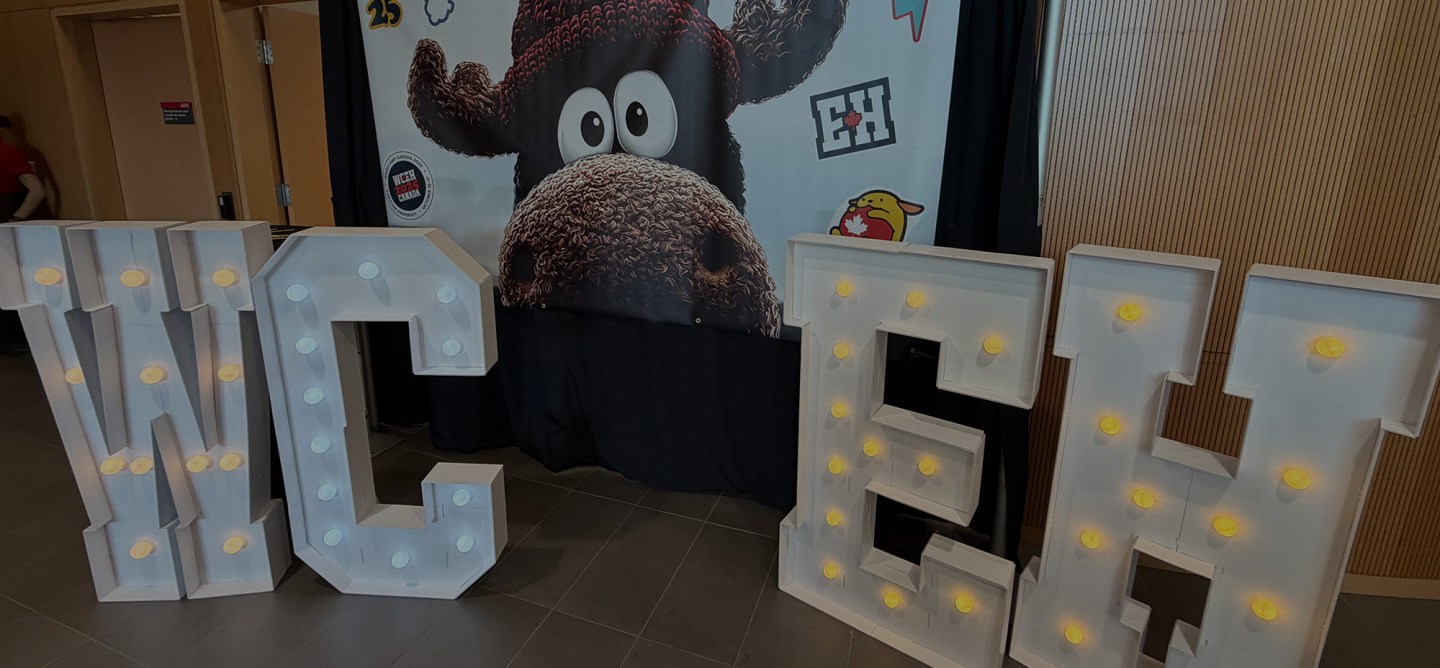
Canada didn’t rush into the national WordCamp scene. It watched from the sidelines for a while as Europe and the U.S. took centre stage with mega-events. But WordCamp Canada has found its footing. After a promising 2024 debut, the 2025 edition showed it wasn’t just a one-off success.
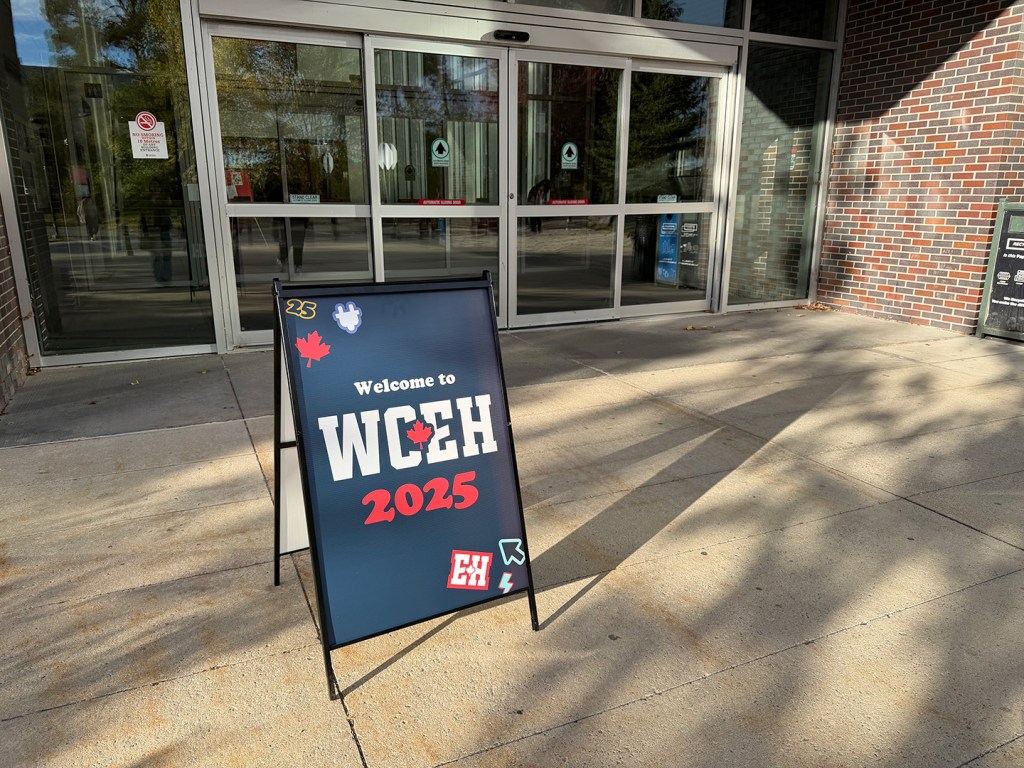
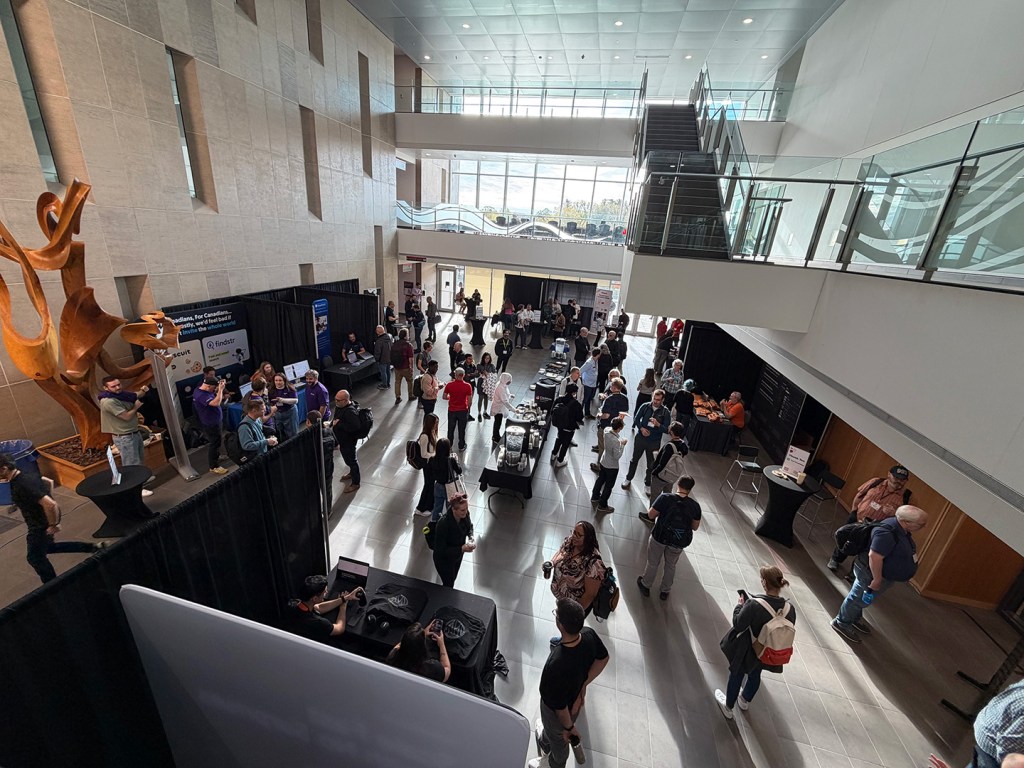
Hosted at Carleton University’s Richcraft Hall, it brought together nearly 300 attendees and an impressive mix of core contributors, plugin developers, content creators, agency leads, and newcomers testing the waters of open source for the first time.
The venue worked. High ceilings, riverside light, a campus that felt navigable without being clinical. It had room for the formalities of keynotes and the informality of hallway chats. And that balance echoed across the event itself. The schedule started with Contributor Day, followed by two days of multi-track sessions.
Substance Over Sales
WordCamp Canada kept the focus where it belonged: on ideas, not pitches. Sponsors were present, but they didn’t dominate the agenda. They supported the event, showed up in the hallway track, and let the sessions speak for themselves. That absence of commercial noise made room for real conversations and sharper insights. Attendees didn’t have to filter out sales talk; they could just listen, learn, and respond.
Matt Mullenweg connects the dots: AI, federation, and human creativity
The Town Hall with Matt Mullenweg gave attendees a look at what WordPress leadership is wrestling with in real time. AI came up, but not in the way most events present it. Matt talked about tools like WordPress Playground and Day One in the context of creativity and user empowerment. He didn’t push features; he pointed to shifts.
Highlights of Talks, Workshops, and Panels
With 25 sessions, 27 speakers, and 2+ tracks of content, WordCamp Canada 2025 offered a rich array of talks. Here’s a cross-section of sessions alongside a few moments we caught live.
“How Edutopia Uses AI for Hyper-Personalized Content” – Anthony Moore & Jeffrey Zalischi (Trew Knowledge)
This session opened up the architecture behind a real-world AI integration built entirely on WordPress. Anthony Moore and Jeffrey Zalischi from Trew Knowledge shared how our team developed a personalized content engine for Edutopia.org using a combination of WordPress, AWS, Neo4j, and OpenAI. The system maps user behaviour into a graph database, then surfaces relevant content through AI-driven recommendations.
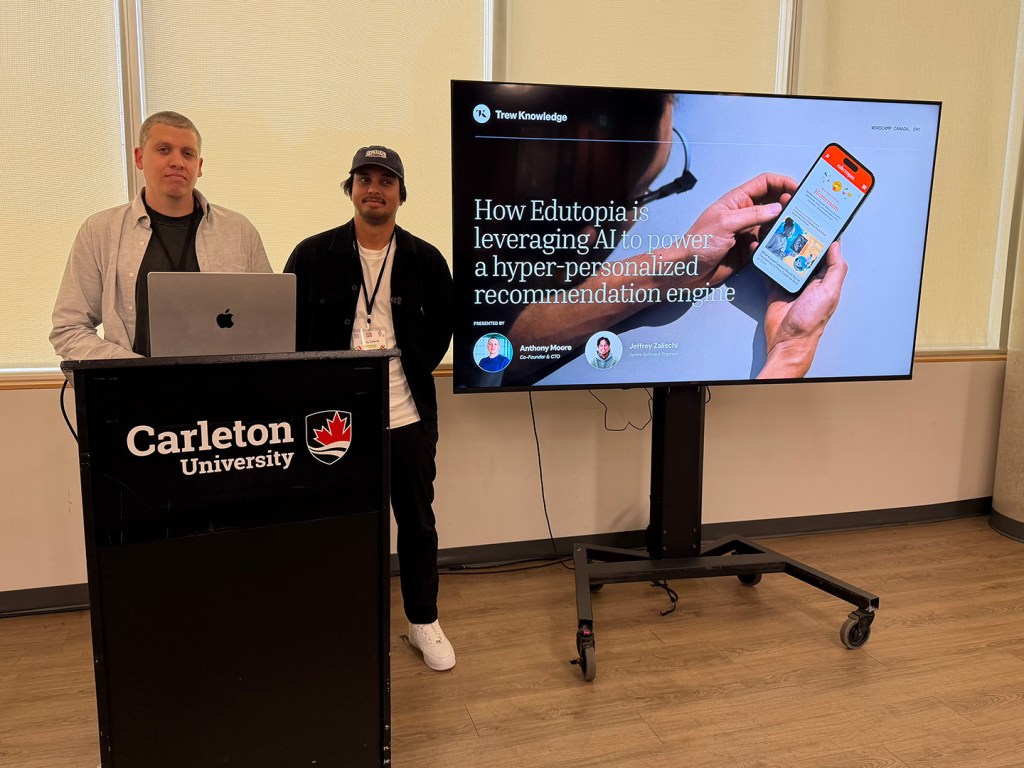
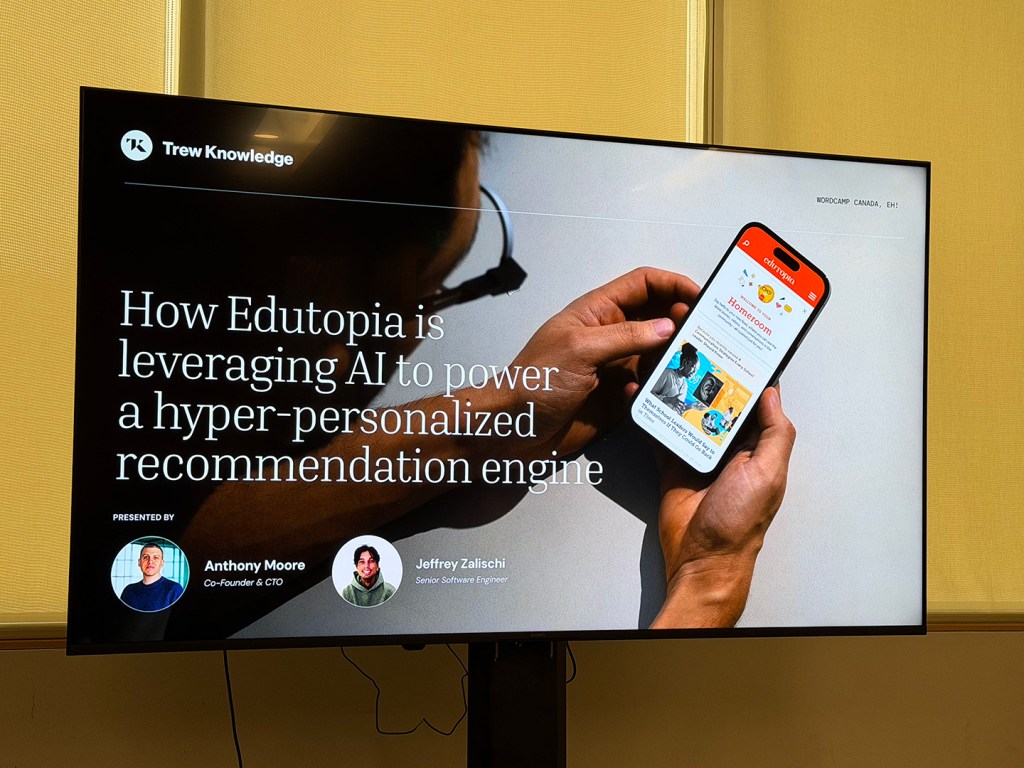
The session gave attendees a clear look at how enterprise-level personalization can be done inside WordPress without relying on external platforms. It showed that editorial scale and machine learning don’t have to be mutually exclusive, and that WordPress, when architected right, is more than capable of powering intelligent, dynamic experiences.
Other standout sessions covered everything from federation and accessibility to developer workflows and modern content tools. Here are just a few more that kept the rooms full and the conversation going:
Thinking Long-Term? Work With the People Already Building It
As WordPress evolves—from CMS to framework, from publishing tool to platform—the need for strategic partners grows. It’s not just about themes and plugins anymore. It’s about aligning business goals with technology that moves fast but stays open.
Partner with Trew Knowledge
Trew Knowledge has worked with the tools discussed on stage and built the integrations others are still thinking about. From personalization at scale to accessibility-first design, we’ve helped organizations like Edutopia push WordPress to its full potential without losing the simplicity that makes it so powerful.
Looking to evolve with WordPress, not just use it? Connect with Trew Knowledge and build what’s next.