
Anthropic released Claude Fable 5.2 at a lower price, with prerelease results ranging from a formalized proof of Fermat’s Last Theorem to working hardware. Meta and Anthropic also gave their assistants more memory and more access, from planning projects to reading bank transactions. OpenAI moved to make ChatGPT a place to discover businesses and released a security model powerful enough to earn its highest risk rating. Meanwhile, Fireworks and Automattic made the case that companies should own the models and infrastructure underneath, not just the prompts on top. The common thread: as AI takes on more real tasks, trust, cost and control are becoming the deciding factors.
Listen to the AI-Powered Audio Recap
This AI-generated podcast is based on our editor team’s AI This Week posts. We use advanced tools like Google NotebookLM, Descript, and ElevenLabs to turn written insights into an engaging audio experience. While the process is AI-assisted, our team ensures each episode meets our quality standards. We’d love your feedback—let us know how we can make it even better.
TL;DR
- OpenAI launched a Business Hub in beta, letting companies claim verified ChatGPT profiles, deploy business agents and track engagement.
- Meta brought Muse Wonder’s memory and persistence features to Muse and Meta AI and launched Spaces, goal-based workspaces that update in the background.
- Anthropic launched Personal Finance in Claude, a read-only beta that answers money questions from connected bank and card accounts.
- Anthropic released Claude Fable 5.2 and Mythos 5.2, which are faster and cheaper than the 5.1 versions and post top scores in coding, science and robotics.
- Fireworks used its first Forge conference to push faster, cheaper inference, model routing inside existing tools and on-premise deployment.
- Automattic launched Spacefast, infrastructure for hosting vibe-coded apps built with any agent.
- OpenAI released GPT-6 Cyber to vetted security teams, its first model rated Critical for cybersecurity.
🏢 AI For Business
OpenAI Launches Business Profiles in ChatGPT
OpenAI has launched a Business Hub in beta, where companies can create verified profiles in ChatGPT and keep information about their products and services up to date. The setup closely resembles the business profiles Google and other search engines already offer. Eligible companies can also launch a dedicated business agent that answers ChatGPT users’ questions about the business and what it sells.
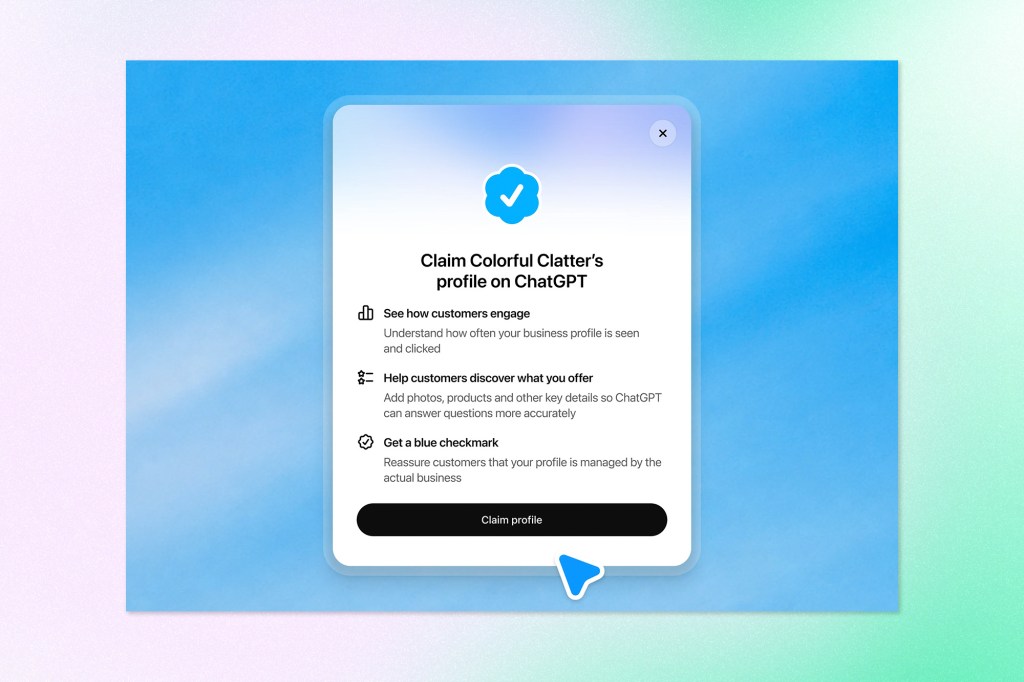
The Hub includes basic analytics showing how ChatGPT users engage with a business, including profile views, mentions and website clicks. Businesses must go through a verification process, though OpenAI has not explained how it works beyond saying it uses different methods for different types of businesses and markets.
The launch follows OpenAI’s earlier attempt to turn ChatGPT into a shopping destination, which let users buy products directly in exchange for a commission. That effort never gained traction, and OpenAI retired it in March.
Why it matters: After failing to make ChatGPT a store, OpenAI is now trying to make it a storefront, which is a role Google has held for decades. For businesses, this turns AI visibility from something they can only hope for into something they can claim, manage and measure. The analytics may be the most valuable part, since most companies currently have little insight into how they appear in AI answers. Expect claiming a ChatGPT profile to become as routine as claiming a Google Business Profile, and expect the competition for visibility inside AI answers to grow with it.
🤖 Agents & Assistants
Meta Upgrades Muse With Specialized Models and Spaces
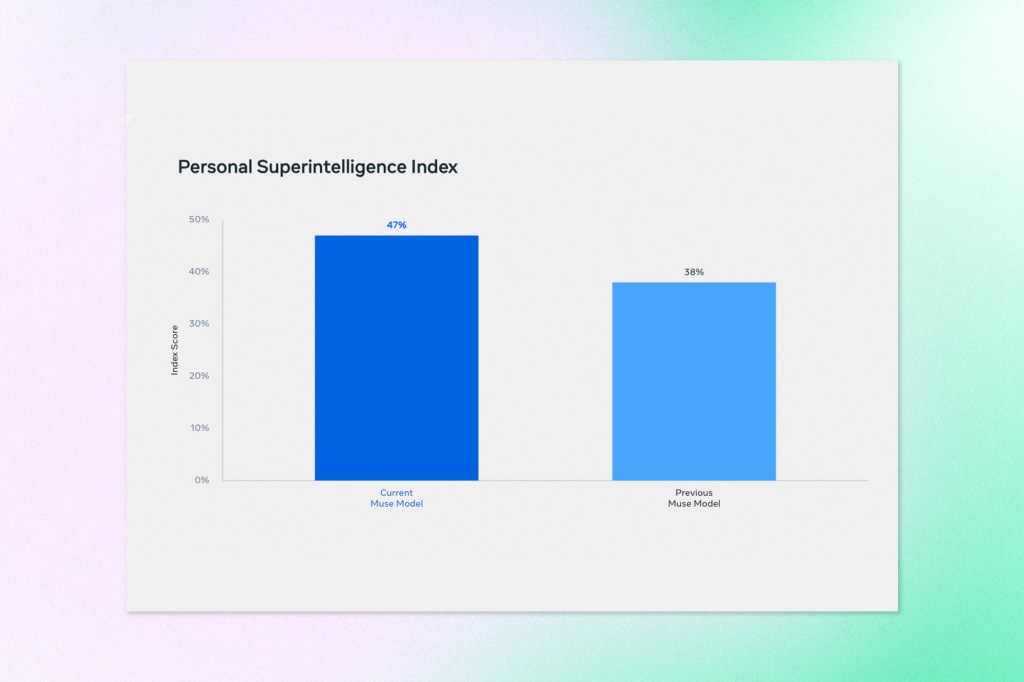
Meta is rolling out specialized versions of its existing models to Muse and Meta AI, trained using Muse Wonder, the flagship series it introduced a few weeks ago. The upgrade brings two Muse Wonder features to a wider audience. Active Memory helps the models tell temporary details from lasting ones and spot when an earlier piece of context becomes relevant. Meta says that change cuts forgetting of critical information by 2.4x. Active Focus trains the models to keep going when a task hits an obstacle, and Meta reports a 67% improvement on everyday tasks where something unexpected goes wrong. On Meta’s own Personal Superintelligence Index, the new Muse model scores 47%, up from 38%.
The same week, Meta launched Spaces, dedicated workspaces in the Muse sidebar built around a single goal. You describe an idea in chat and Muse builds a tracker, planner or project board, such as a gift list, a wedding plan or a DIY project. Once you connect third-party apps, Spaces update in the background with things like new concert dates or price changes. Spaces arrived a day after Muse Voice, which lets US users video chat with their Muse avatar.
The pace reflects early traction. On Meta’s October earnings call, Mark Zuckerberg said Muse agents had reached 10 million users in the US and Canada less than two months after launch. Meta is competing with other agents that also have friendly avatars, including OpenAI’s dots and SpaceXAI’s Grokbot.
Why it matters: Memory and persistence separate a chatbot from an agent, and Meta is pairing both with Spaces, which give that memory a place to live and a job to do. Using its frontier model to train cheaper models that run at consumer scale is how Meta can put these capabilities in front of millions of people without frontier-level serving costs. The caveat is that every number here comes from Meta’s own benchmarks, including an index it created itself. Until outside testing confirms the gains, the 10 million users are the strongest evidence that the approach is working.
Anthropic Launches Personal Finance in Claude
Anthropic has introduced Personal Finance, a beta feature that lets people connect their bank and card accounts to Claude and ask about their money in plain language. Claude pulls from balances and transactions across connected accounts to answer questions like where the month’s spending went, what is left before payday, or whether a bill has been creeping up. It can flag duplicate charges and unexpected fees, explain terms like APR alongside the interest actually paid, and build charts, calendars and dashboards that users can keep adjusting.
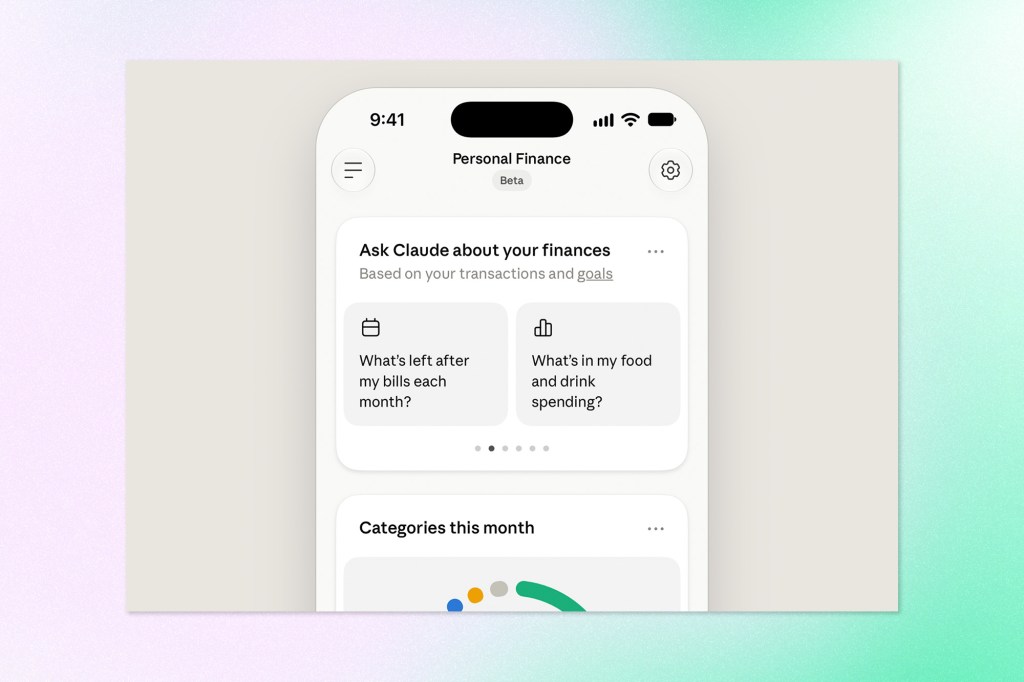
Access is read-only, so Claude cannot move, manage or invest money, and the feature is not designed to give investment advice. Accounts connect through Plaid, so users sign in with their bank directly and Claude never sees their password. For connected accounts, Claude can see account names and types, the last four digits, balances, credit limits and up to two years of transactions. Conversations inside the Personal Finance hub are not used to train models, and Anthropic stresses there are no ads, sponsored recommendations or in-house financial products.
The beta is rolling out this week on Pro, Max and Ultra plans in the US. Anthropic calls it a first step and says it is exploring how Claude could work alongside licensed professionals and regulated firms on bigger financial decisions, inviting banks and wealth managers to help shape that.
Why it matters: Personal finance is where trust is hardest to earn, and Anthropic is building around that by design: read-only access, no products to sell and no training on hub conversations. The no-ads position sets it apart from fintech apps that make money by recommending cards and loans, and it tells users that the answers aren’t being steered. The more telling line is the closing one. Inviting banks and wealth managers in suggests the real goal is to become the layer between consumers and regulated advice, not to replace advisors. For financial institutions, the question is shifting from whether customers will ask AI about their money to whose AI they will be asking.
Get AI This Week, along with industry news, delivered straight to your inbox
🚀 New Models
Anthropic Releases Claude Fable 5.2 and Mythos 5.2
Anthropic has upgraded Claude Fable and Claude Mythos, the same underlying model with different access levels. Fable 5.2 includes cybersecurity and biology safeguards and is available to everyone, while Mythos 5.2 is reserved for vetted organizations in those fields. Both generate outputs up to 30% faster than the 5.1 versions at a lower price of $8 per million input tokens and $40 per million output tokens, with an optional fast mode that runs up to 2.5 times faster at double the price. On FrontierCode 2.0, Fable 5.2 matched Opus 5.5’s best score for roughly half the cost per task at High effort, and reached 49.1% at Xhigh, the highest of any released model Anthropic tested.
Anthropic highlighted a long list of prerelease results. A team of about 1,000 Fable 5.2 agents formalized the proof of Fermat’s Last Theorem in 30 hours, compared with 11 days for an earlier research model. Fable 5.2 also solved two open problems in black hole physics, designed three working electronic devices from a one-paragraph prompt and built a bootable prototype operating system over eight days. In robotics, it scored 64.9% on RoboDojo, more than double GPT-6 Astra. Mythos 5.2 found 10.2% more known vulnerabilities than Opus 5.5 on Anthropic’s internal CVE test.
On safety, Fable 5.2 blocks about 55% fewer legitimate requests than Fable 5.1, and Anthropic says it has its strongest protections yet against distillation. The company also limited the model’s abilities in areas that could most directly speed up AI development, keeping them at about Opus 5.5’s level. Fable 5.2 is available now across Anthropic’s platforms, AWS, Google Cloud and Microsoft Azure.
Why it matters: Anthropic deliberately held back the model’s capabilities in AI research, a rare case of a lab limiting its own product to slow the pace of AI development. For buyers, the guidance is practical: Opus 5.5 remains the recommended starting point, and Fable is the step up for the hardest work, now at a lower price.
🛠️ Tools & Platforms
Fireworks Pitches Owned Intelligence at Its First Forge Conference
Inference provider Fireworks used its first annual Forge conference to argue that companies should own the AI built around their own expertise rather than rely on a few closed frontier labs. The launches focus on speed and cost. Ultra-fast, now in public preview on NVIDIA Blackwell GPUs, reaches up to 1,500 tokens per second on DeepSeek V4.1 Flash and cuts a benchmarked 30-turn agent task from one minute to eight seconds. For work that can wait, Background Mode runs at half price, and multi-day prompt caching lowers the cost of agents that resume after a pause. Fireworks also says its Ember-1 model scores within about a point of Claude Opus 5 at roughly a fifth of the cost per task, based on its own evaluations.
Fireworks Nexus now has a desktop app that adds open models to tools employees already use, including the Codex app, Claude Desktop and OpenCode, with routing between open and closed models and centralized spend tracking. Pro plans start at $8 per month and Teams at $10 per seat. On training, No Eval (private preview) turns production traces into task-specific evaluations, and Specialized Model Inference (public preview) serves fine-tuned LoRA adapters serverlessly, starting with GLM 5.3 Flash, with no charge while idle. Free training on Muse Glimmer 30B runs through November 30.
For regulated enterprises, Fireworks Sovereign (private preview) brings its inference engine into customers’ own clouds or data centres, so data and models stay under their control. Governance, spending controls and exportable audit logs are now generally available. Fireworks says it already manages over 25,000 GPUs in customer environments.
Why it matters: Fireworks is betting that the next phase of enterprise AI is about economics, not raw capability. As agents make dozens of model calls per task, latency and token costs compound, and a model that is nearly as good at a fifth of the price starts to win on the balance sheet. Nexus is the sharper move: by sitting inside Claude Desktop and Codex, Fireworks routes work away from the labs whose tools it runs in. Sovereign speaks to a concern that’s growing among regulated buyers: that a provider’s pricing change or model retirement shouldn’t dictate their roadmap. The benchmark claims are self-reported, but the strategic pitch that companies should treat models as interchangeable and their own data as the real asset is one closed labs will have to answer.
Automattic Launches Spacefast to Host Vibe-Coded Apps
Automattic, the company behind WordPress.com, has launched Spacefast, a service that gives vibe-coded projects the infrastructure they need to become working websites and apps, including databases, authentication, file uploads, email and analytics. Users can connect it to the agent or chatbot they already use, such as ChatGPT, Claude, Cursor, Muse or OpenCode, or link a Git repository. That openness is the main contrast with rivals like Lovable and Emergent, which bundle the building interface and the hosting together.

The product started as a hackathon project by Batuhan Icoz, who kept getting Vercel links from non-technical friends and saw no reason to rely on outside providers when Automattic already had its own infrastructure. After a soft launch in September, early uses include internal mockups, slideshows and offer-specific websites. Automattic plans to lean on its existing stack, with web analytics, WordPress integration and WooCommerce commerce features, and is pitching enterprises looking to rein in the landing pages their marketing teams spin up across tools like Lovable.
Icoz was candid about the wider shift. He acknowledged that people now build sites with ChatGPT or Claude rather than deploying on WordPress, and said some sites won’t need a content management system at all. He also expects churn, since many users who try vibe coding may not stick with app building.
Why it matters: This is Automattic acknowledging that the front door to the web is moving from the CMS to the AI agent, and positioning itself as the infrastructure behind whichever agent people choose. The bet is that hosting, data and commerce stay valuable even when the building happens elsewhere. The enterprise angle may be the most durable part: as marketing teams generate pages faster than IT can track them, governance and consolidation become the real problem. For the WordPress ecosystem, the signal is clear. The CMS is no longer the default starting point for every site, and the value is shifting to what sits underneath and around it.
🔐 Security
OpenAI Releases GPT-6 Cyber for Vetted Security Teams
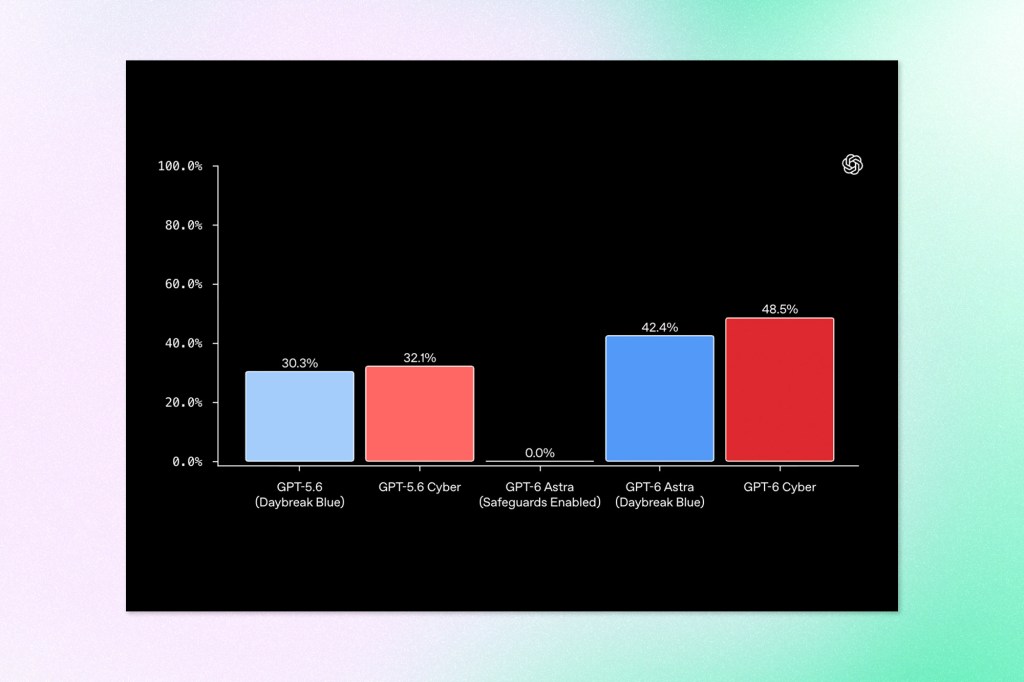
OpenAI has introduced GPT-6 Cyber, a model built to find, exploit and help patch software vulnerabilities. It scores 48.5% on ExploitGym, up from 32.1% for GPT-5.6 Cyber, and OpenAI now rates it Critical for cybersecurity under its Preparedness Framework, a step up from High. The company reports real-world results: 81 previously unknown high-severity flaws in Firefox, which Mozilla has started fixing, and working exploits for 948 Linux kernel vulnerabilities, more than five times the number from its previous research model using the same setup. Cisco, Calif and CodeRabbit are among the teams already using it.
OpenAI made staying within scope a central training goal. In a honeypot test where nearby services were deliberately easy to attack, GPT-6 Cyber avoided out-of-scope targets in 99.93% of cases without its deployment prompt and 100% with it, compared with 94.49% for the previous model. New safeguards include monitoring for actions that exceed a user’s authorization, default IP allowlisting for API access and stricter blocks on attacks against industrial control systems.
Access is limited to approved customers in Daybreak Red, OpenAI’s tier for advanced exploit work, through the API and Codex, with wider availability planned. A new Daybreak Red for Critical Infrastructure group lets approved defenders test systems like power and water facilities, backed by a $1 billion grant program for under-resourced teams. In testing with security firm Dragos, a model given almost no guidance on a mock power plant found two zero-days in software that manages protective relay data.
Why it matters: OpenAI is openly saying its model is now dangerous enough to warrant the top risk rating, and releasing it anyway on the theory that defenders need it before attackers get something similar. The Linux and Firefox results show why: well-tested codebases still hold large numbers of exploitable flaws, and AI can now find them faster than maintainers can fix them. That puts the pressure on patching, not discovery. The Dragos finding is the sobering part, since the skill needed to map and probe critical infrastructure is dropping quickly. For any organization running open-source software, assume vulnerability disclosures will speed up and plan update cycles to keep pace.
Keep ahead of the curve – join our community today!
Follow us for the latest discoveries, innovations, and discussions that shape the world of artificial intelligence.