Everyone is fighting over where agent work actually happens. Perplexity says on your desk. Slack says in your channels. Mistral says inside your documents. Instinct says everywhere at once, which is exactly what worries people. OpenAI is building the silicon to make all of it cheaper to run. And Z.ai spent a weekend proving a model can top the leaderboards before anyone knows who made it. Here is what landed.
Listen to the AI-Powered Audio Recap
This AI-generated podcast is based on our editor team’s AI This Week posts. We use advanced tools like Google NotebookLM, Descript, and ElevenLabs to turn written insights into an engaging audio experience. While the process is AI-assisted, our team ensures each episode meets our quality standards. We’d love your feedback—let us know how we can make it even better.
TL;DR
- An anonymous lab drops Ox Alpha, a free million-token model topping coding benchmarks.
- Perplexity and Nvidia launch Portable Computer, running a full agent stack on your own hardware with no token costs.
- Slack launches Slack Code, pulling coding agents out of private tabs into shared team channels.
- Mistral launches Agentic Search, swapping one-shot RAG for a retrieval loop and tripling accuracy on financial filings.
- Instinct wows testers, while its terms claim a perpetual licence and binding authority.
- OpenAI publishes first Jalapeño results, claiming more work per watt and lower latency.
⚙️ Model Releases
A Stealth Launch, a Weekend of Speculation, Then Z.ai Claimed It
Ox Alpha appeared on OpenRouter last Thursday as a stealth model from an anonymous third-party provider, and spent the weekend climbing leaderboards while developers argued about who made it. Bloomberg reported Tuesday that the answer is Z.ai, and the company confirmed Ox Alpha is the newest entry in its GLM series. The weights landed on Hugging Face the same evening under the public name GLM-5.3-Flash: a 320-billion-parameter mixture of experts with 18 billion active per token, a one-million-token multimodal context window, and an MIT licence that permits downloading, modifying, and self-hosting.
The model is described as built for coding, sustained agentic work and production workloads, with strength in long-horizon software engineering and workflows that combine text with visual context. The specs are not modest: a million tokens of context, 131K max output, and text, image and video input. It supports native tool calling with tool_choice, schema-shaped JSON via response_format, and streams its reasoning before answering. Access has been free during the stealth period, with no sign-up required, and the provider says chats are not stored on its servers.
A community benchmark of 10 real-world coding tasks has Ox Alpha solving 8, against 65 percent for Fable 5, 62 percent for GLM-5 and Grok 4, and 52 percent for GPT-5. The sample is small, and the reference models were scored across four attempts while Ox Alpha was scored pass or fail. Directional at best.
The speculation before the reveal is worth remembering. Early guesses landed on GLM, then cooled. Wccftech ran the GLM case, then updated to suggest an unreleased Microsoft MAI model. Reddit produced confident threads in both directions. AI analyst Andrew Curran noted on Friday that people seemed less sure of anything than they had been a day earlier. Stripe CEO Patrick Collison, whose company is acquiring OpenRouter, called the model very impressive.
This follows GLM-5.3 earlier in the month, which Z.ai positioned as competitive with Anthropic’s Fable 5 on several benchmarks.
Why it matters: The anonymous launch worked exactly as intended. Developers evaluated the model on output alone, with no lab reputation and no country of origin to argue about, and it was already on leaderboards by the time anyone could attach a label to it. Z.ai got a clean capability read and a weekend of free attention, then claimed the result. Expect more stealth drops now that the playbook is public.
💻 Local AI
Perplexity and Nvidia Launch Portable Computer
Perplexity released Portable Computer, a version of its agentic Computer platform that runs entirely on hardware users already own, starting with Nvidia’s DGX Spark and Linux machines with RTX GPUs. Work done locally consumes no billing credits. Every task starts on the device by default, and the system asks permission before sending any step to a cloud frontier model.
The pitch is packaging. Local models, agent harness, inference engine, tools, connectors and a security sandbox ship as one system rather than pieces users assemble themselves. It connects to Google Drive, Gmail, GitHub and Slack. At launch, users can run Qwen 3.8 27B or PPLX 27B, Perplexity’s post-trained variant, with Nvidia’s Nemotron 3.5 Lightning coming. Available now for Pro, Max and Enterprise subscribers on Linux and Windows in September. The floor is any RTX GPU with 24GB of VRAM, roughly a 3090 or newer.
Perplexity also published a paper arguing the model and the harness need to be designed together, since general-purpose harnesses assume a frontier model that can handle huge contexts and sprawling tool surfaces. It found Qwen 3.8 27B struggles past 100,000 tokens despite advertising a 260,000-token window, so it built a minimal harness with a short system prompt, a small core toolset and capabilities that load on demand as skills. Connectors were converted from MCP servers into compact command-line tools. Sandboxing is always on, and the harness disables itself if the sandbox is unavailable.
On Perplexity’s internal benchmark of 53 knowledge work tasks, Computer running Qwen scored 82.6% against 77.6 for the Pi harness and 74.0 for Hermes on the same model. PPLX 27B reached 85.4. On BrowseComp, the gap widened to 66.7 versus 50.2 and 43.9, using 51% less wall time and 70% fewer tokens than Pi. These are the company’s own evaluations.
The hybrid numbers are the interesting ones. On Terminal Bench 2.1, the local model scored 59.6% at near-zero marginal cost. Escalating to a Claude Opus 5 advisor in the cloud raised it to 73.0% at an estimated $0.415 per task, against 82.4% at $0.65 for the frontier model alone. Before any advisor call, a PII classifier runs over the outgoing context and shows the user what would leave the device. The remote model returns text guidance only and never touches local files.
Why it matters: Chat was bursty. Agents are not, and an agent that runs for hours verifying its own work is a metered bill that grows with how useful it is. Moving that to hardware you already own changes the constraint from budget to what your box can do, which is the whole argument for local. The escalation tier is the sharper move: recovering most of the frontier gap at roughly two-thirds the cost, with the user deciding each time. Caveats stand out though. Linux only, 24GB VRAM excludes most consumer PCs, no Apple silicon on the roadmap, and every headline number comes from Perplexity’s own bench.
🏢 AI at Work
Slack Wants Your Coding Agents Out of Private Tabs
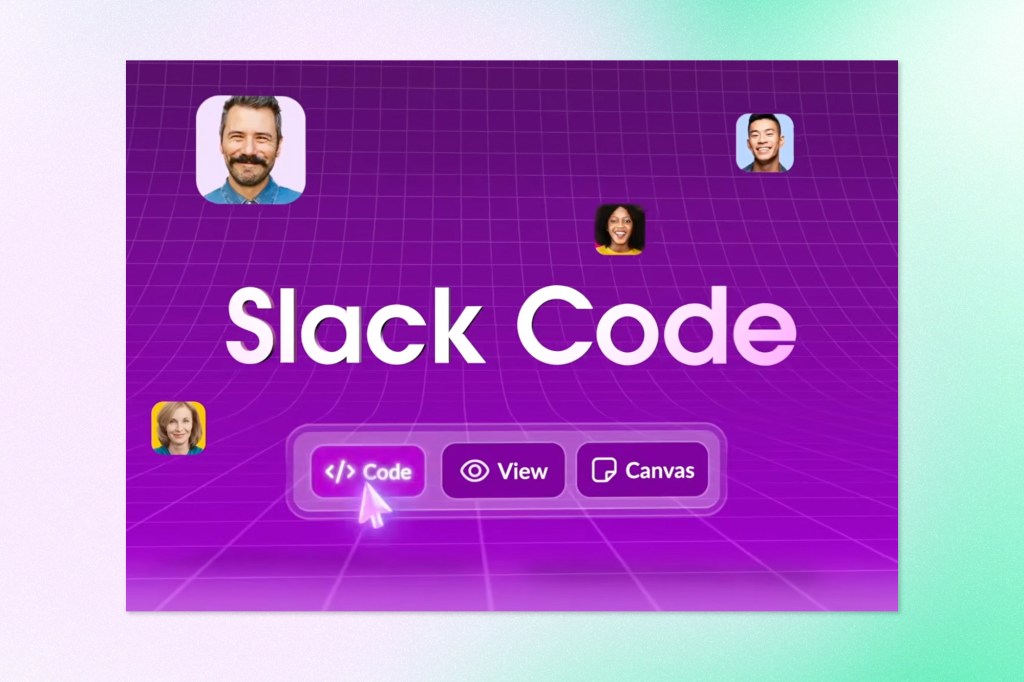
Slack launched Slack Code, a feature built around a new object called a code channel. Mention a coding agent on a project and a channel spins up around that specific task, visible to the whole team rather than to whoever kicked it off. The agent assembles the space around the work, surfacing code diffs, planning docs or live HTML previews in the channel itself. When the work lands, the channel archives itself but stays searchable as a record.
The stated problem is agent isolation. Slack’s argument is that the current pattern, one person prompting an agent in a private tab and reappearing later with output, removes the review and course correction that makes team work better than solo work. Slack says it hit this internally: agent sessions were too noisy for a standard thread, but pushing engineers into browser tabs meant losing visibility. The company reports that more than 70% of code channels open and close within a day.
Code channels inherit Slack’s existing permissions and admin controls, so IT does not configure anything new, and high-stakes changes can route to a person for approval inside the channel.
Launch partners are Anthropic, Cognition, GitHub and Vercel, with OpenAI coming soon. Claude Tag can invoke a code channel and post progress summaries back to the original thread. Devin responds when flagged and returns a working preview. GitHub Copilot lets a non-technical teammate describe a problem in plain language, have an agent draft a fix, and tag an engineer for review. Vercel’s agent posts a shareable live preview when a change ships. Slack says the same model will extend past engineering into marketing, legal review and IT onboarding.
Alongside this, Slack is adding an Agents and Tools tab as a central place to manage agent conversations across threads, DMs and code channels.
Why it matters: Slack is making a claim about where agent work belongs, and the claim is strategically convenient. If the coding agent’s output surfaces in Slack rather than in a terminal or an IDE, Slack becomes the layer that owns the review, the approval and the audit trail, while Claude, Devin and Copilot become interchangeable engines underneath. Note that the partner list includes four direct competitors sitting in the same room. That only works if the room itself is the product.
🔍 Search and Retrieval
Mistral Launches Agentic Search
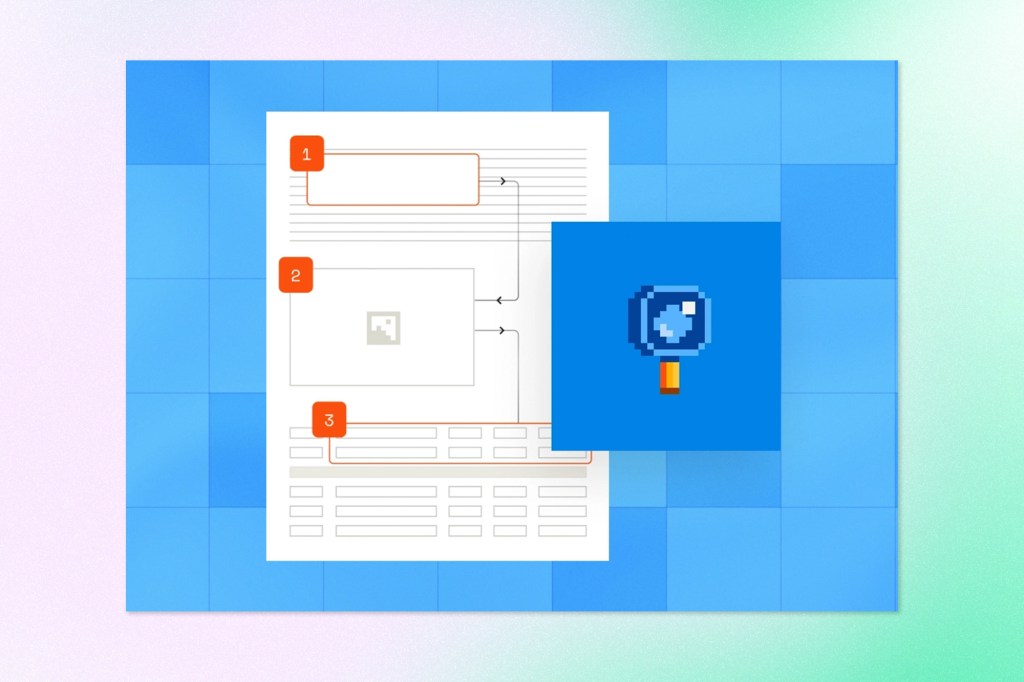
Mistral released Agentic Search, a retrieval layer that replaces single-pass RAG with a loop. Rather than pulling a fixed set of chunks and answering from whatever came back, the model gets five tools that behave like file system operations: search to find documents, open to open one, navigate to move to a page or section, read to pull content at that location, and grep to find a pattern inside an open document. It builds on an existing index rather than replacing it.
The argument against one-shot RAG is that it cannot recover from a bad first retrieval. If the answer sits in a specific table, footnote or clause, or requires comparing several documents, the model is stuck with whatever the initial top-k returned and has no way to refine, follow a reference or verify what it found.
The numbers Mistral published are large. On FinanceBench, 150 questions across 368 SEC filings averaging around 147 pages each, correctness moves from 26.7% to 86%. On OfficeQA Pro, a harder set of 133 numeric questions over scanned, table-heavy Treasury Bulletins, GLM-5.2 goes from 6.3% to 51.9%.
The breakdown is more interesting than the headline. Most of the lift comes from simply making the loop iterative: moving to a search-only loop adds 47.3 points for Mistral Medium 3.5 and 52.6 points for GLM-5.2. Adding the navigation tools contributes a further 8.7 and 6.7 points, but does so while cutting token use by 23.9 and 33.7%, respectively. p90 latency on FinanceBench drops from 255 seconds to 154. Precise navigation is replacing repeated broad searching, not stacking on top of it.
Mistral tested with both its own model and a third-party one and saw the same pattern, which it frames as evidence the approach is model-agnostic. The tools need no fine-tuning, so retrieval quality tracks model capability rather than being capped by a chunking strategy. Mistral also cites Kimi research showing GLM-5.2 scoring 41.4% on OfficeQA Pro under the Claude Code harness versus 51.9% under Mistral’s, a 10.5-point gap on the same underlying model.
Notably, Mistral does not claim this replaces indexed retrieval. Short documents, direct lookups and high-volume keyword search are still better served by one-shot RAG, and a well-configured index remains the foundation either way. Available through the Mistral Search Toolkit for cloud or on-premises deployment, and built into Libraries in Studio and Vibe.
Why it matters: Agentic search addresses one of RAG’s biggest weaknesses: a bad first retrieval can derail the entire answer. By letting the model refine searches, navigate documents, follow references, and verify specific passages, it can handle complex, multi-document questions with much higher accuracy while also reducing unnecessary token use and latency.
🔧 Chips and Compute
OpenAI Publishes First Results From Jalapeño, Its Custom Inference Chip
OpenAI released performance figures for Jalapeño, the custom inference chip it announced earlier, along with the system built around it. The headline claim is that it improves throughput and latency at once rather than trading one for the other, which is the usual constraint in inference hardware.
Testing was done on InferenceX, a public benchmark from SemiAnalysis, across GPT-OSS 120B, DeepSeek R1 670B and Kimi K2.5 1T. Against comparison systems, OpenAI reports 1.5 to 1.9 times more work per watt at peak throughput and 1.7 to 3.6 times lower end-to-end latency, rising to 2.1 to 4.1 times higher performance on highly interactive workloads. Results were normalized by published chip power ratings, with Jalapeño rated at 700 watts against 1,200 for GB200 and 1,400 for GB300, though measured sustained draw stayed at or below 550 watts. OpenAI says the advantage grows further on its own frontier models.
The design brief was language model serving specifically. Prefill is compute-bound and decode is memory-bandwidth-bound, so the architecture keeps model state including the KV cache local and activates different mixes of compute, memory and networking per phase. The network domain is large enough to hold an entire workload inside one connected system, cutting data movement.
The AI-in-the-loop detail is worth noting. OpenAI says earlier models helped take the chip from design to tapeout in nine months, and that the chip was deliberately built as a predictable programming target so models could handle mapping and scheduling. Using Codex with GPT-Astra, the team brought three open-weight models not in the original production plan to high performance in two months, and on selected GPT-OSS attention and MoE blocks, AI-written implementations ran 1.5 to 1.8 times faster than expert human ones.
Deployment inside OpenAI’s own infrastructure is planned by year-end. Gen 2 is in development, Gen 3 is taking shape, and OpenAI says it will keep deploying Nvidia and other accelerators widely.
Why it matters: The most striking numbers are the matched-speed comparisons, where Jalapeño shows 50 to 100 times the throughput per kilowatt at the competitor’s own fastest decoding speed. That is less a claim about raw silicon than about where GB200 and GB300 fall off a cliff when pushed to maximum interactivity. Purpose-built inference hardware wins exactly there, which is also where agentic workloads live, since every sequential step compounds the delay.
Ready to explore what AI can do for your organization?
🤖 Personal AI
Instinct Impresses Testers and Alarms Them
Instinct, a personal AI assistant still in private access, has been drawing strong reactions in both directions. Testers describe it as feeling like magic and one of the most exciting launches since OpenClaw. Others are circulating its terms of service with considerably less enthusiasm.
The agent connects to email, messaging apps, calendar, and device audio, location and screen. Users interact by text or through WhatsApp, handing off tasks like booking reservations, arranging airport rides, cleaning out an inbox, shopping or hunting for cheap flights. It was built by a small team led by Noah Shinn, formerly a research scientist at Sierra, and operates out of San Francisco under Spear Street Technology. TechCrunch reports that Kleiner Perkins and Conviction have both invested, with those rounds closed.
The terms are the flashpoint. They grant Instinct a perpetual and irrevocable licence to access, store, reproduce, transmit, publish, distribute and modify user materials, including for model training. They describe receiving screen captures, cursor movements and keyboard input from user devices. They also permit Instinct to enter into agreements, commitments or transactions on a user’s behalf, and those would be binding.
The reported behaviour has not helped. Peter Yang found Instinct would not delete his Gmail records on request, a gap the team later closed by adding a deletion tool in settings. Claire Vo found it still summarizing her inbox after she disconnected access, and the bot told her the emails were stored in plain text for later search. One tester watched it pull a sign-up code out of their inbox to finish booking a restaurant table. Hello Patient co-founder Alex Cohen deleted his account after seeing how easily the agent could be phished. Moxxie Ventures founder Katie Jacobs Stanton said it sent an email on her behalf without asking first.
Instinct’s team has not publicly responded to any of it, and requests for comment from TechCrunch went unanswered.
Why it matters: The capability and the risk here are the same feature. An agent that can read your inbox, hold your credentials and act without waiting is useful for exactly the reason it is dangerous, and no amount of polish separates those. The phishing observation is the one to sit with: an assistant that reads email and takes action on what it reads has an attack surface that includes anyone who can send you a message.
Keep ahead of the curve – join our community today!
Follow us for the latest discoveries, innovations, and discussions that shape the world of artificial intelligence.