
OpenAI made its most capable model run 14 times faster, then Google halved the price of its workhorse and shipped a successor three weeks after the last one. Z.ai found that scaling post-training produced offensive security skills it did not plan for, and is holding the weights for two weeks before release. Cursor launched a GitHub rival on the day GitHub went down worldwide for six hours. OpenAI also began recording what people do on their Macs, Hugging Face published data showing the models everyone talks about are not the models anyone runs, and Automattic’s unannounced agent hosting product turned up early.
Listen to the AI-Powered Audio Recap
This AI-generated podcast is based on our editor team’s AI This Week posts. We use advanced tools like Google NotebookLM, Descript, and ElevenLabs to turn written insights into an engaging audio experience. While the process is AI-assisted, our team ensures each episode meets our quality standards. We’d love your feedback—let us know how we can make it even better.
TL;DR
- Cursor launched Origin, a code host with two-way GitHub sync, on the day GitHub went down worldwide for six hours.
- Google shipped Gemini 3.7 Flash three weeks after 3.6, at half the price and with roughly double the score on business workflow benchmarks.
- Z.ai released GLM-5.3 with state-of-the-art vulnerability discovery, having surfaced 2,436 flaws across 269 open-source projects, some sitting untouched since 1981.
- OpenAI previewed Ultrafast, running GPT‑5.6 Sol at up to 14x speed and 750 output tokens per second through Cerebras.
- OpenAI’s Computer History records clicks, typing, and app switches on macOS to build a searchable memory of your work.
- Google added Sheets canvas, turning spreadsheet rows into prompt-built interactive apps that sync both ways.
- Automattic’s Spacefast, an agent-first static host built on WordPress.com accounts, surfaced before its launch.
- Hugging Face found the models the field talks about and the models it runs overlap by exactly one.
🛠️ Agents and Tooling
Cursor launches Origin as GitHub’s Reliability Slips
Cursor has launched Origin, a code hosting platform covering repositories, pull requests, code browsing, and GitHub sync. It rolled out this week in early beta to all paid plans, excluding enterprise organizations whose administrators opt out. Cursor describes the initial feature set as the essentials, designed for agent scale, with agent-native features to follow.
The interoperability design is the notable part. Origin does not require abandoning GitHub. Users connect a GitHub organization, choose which repositories to sync, and Cursor pulls them in, with synced repositories updating in real time. Pushes continue to GitHub, which stays the source of truth for anything that started there, and icons distinguish Cursor-hosted repositories from synced ones. Pull request activity moves in both directions, so a comment left in Cursor posts to GitHub and a reply on GitHub appears in Cursor within seconds, including reviews assigned on GitHub that can be merged from Cursor.
Agents sit in every repository alongside the code and pull requests, able to answer questions, make changes, update PRs, or push a branch. Cursor is also building an app ecosystem, with Vercel, Depot, and Buildkite integrations available now. Vercel gives each PR a preview deployment; Depot and Buildkite run existing GitHub Actions workflows.
The timing is difficult to miss. Origin launched on the same day GitHub suffered a worldwide outage lasting more than six hours, with error rates reported near 20 percent. LeadDev’s analysis counts 257 GitHub outages over the past year and describes a visible exodus of high-profile users. The scale gap remains enormous: GitHub reported roughly 180 million developers as of last October and is still the largest source-code host in the world. Cursor, for its part, closed its acquisition by SpaceX earlier this month.
Why it matters: Code hosting has been effectively unchallenged for a decade because switching costs were prohibitive and reliability was assumed. Cursor is attacking the first problem by refusing to make it a switch at all. Bidirectional sync means adoption carries no migration project, no cutover date, and no argument with whoever owns the CI pipeline, which removes the objection that has protected GitHub from every previous challenger.
⚙️ Model Releases
Google Ships Gemini 3.7 Flash Three Weeks After 3.6
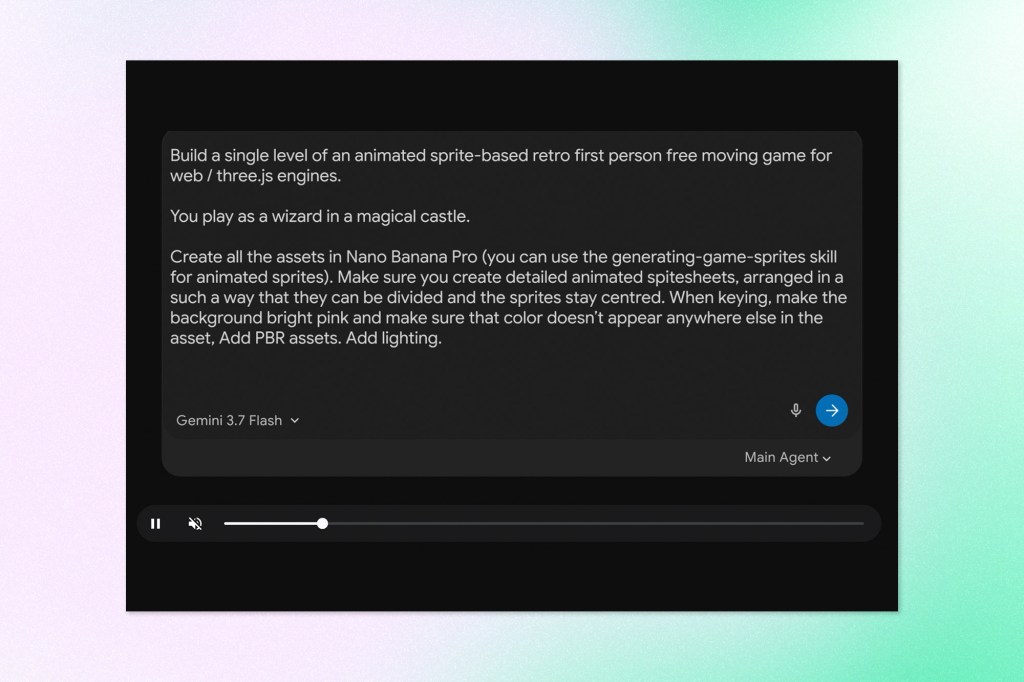
Google has released Gemini 3.7 Flash, positioning it as the most capable model in the Flash line for coding and agent work. The release lands roughly three weeks after Gemini 3.6 Flash, which Tulsee Doshi attributes to developer feedback and algorithmic work the team plans to carry into later models.
The benchmark gains are wide rather than narrow. On FrontierCode 1.1 Main, 3.7 Flash reaches 43.6 percent against 34.4 percent for its predecessor, and on DeepSWE v1.1 it hits 65.3 percent against 49.0 percent. Web development shows a similar pattern, with an Elo of 1588 on Arena.ai’s WebDev Arena compared to 1538. The larger jumps come in document and workflow evaluations: 34.0 percent versus 22.0 percent on the GDP.pdf comprehension benchmark, and 30.4 percent versus 17.0 percent on AutomationBench, which measures completion of real business processes.
Google also describes behavioural changes that do not show up in scores. The model is said to handle roadblocks better, ask for clarification when intent is unclear, follow instructions more faithfully, and put more effort into multi-step planning and tool calls, which the company frames as less manual oversight and fewer retries.
Pricing is the sharper detail. Through the end of the year, 3.7 Flash runs at an introductory $0.75 per million input tokens and $3.75 per million output tokens, described as half the original 3.6 Flash cost per million tokens. Gemini Spark, the always-on personal agent available to Google AI Pro and Ultra subscribers in more than 160 countries, moves to 3.7 Flash starting today, with improved tool use across Google Workspace apps. The model ships with updated Frontier Safety safeguards covering CBRN and cyber offence domains, and is available through Google Antigravity, the Gemini API via AI Studio and Android Studio, and the Gemini Enterprise Agent Platform.
Why it matters: The three-week gap between releases is the story more than any single benchmark. A workhorse tier iterating that fast breaks the procurement rhythm most enterprises still run on, where model selection is treated as an annual or semi-annual architecture decision requiring evaluation cycles and sign-off. Teams that spent six weeks validating 3.6 Flash have a successor in production before the report is filed. The practical response is to invest in evaluation infrastructure that can be re-run cheaply rather than in one-time model comparisons, because the comparison is now a recurring cost.
Z.ai Releases GLM-5.3 with Unexpected Cyber Capability Gains
Z.ai has released GLM-5.3, built on the same base model as GLM-5.2 with every improvement coming from post-training alone. The company describes roughly a month of continued scaling on its existing stack: IndexShare for long-context processing, SAO for reinforcement learning on long-horizon tasks, and Slime, its open-source post-training framework.
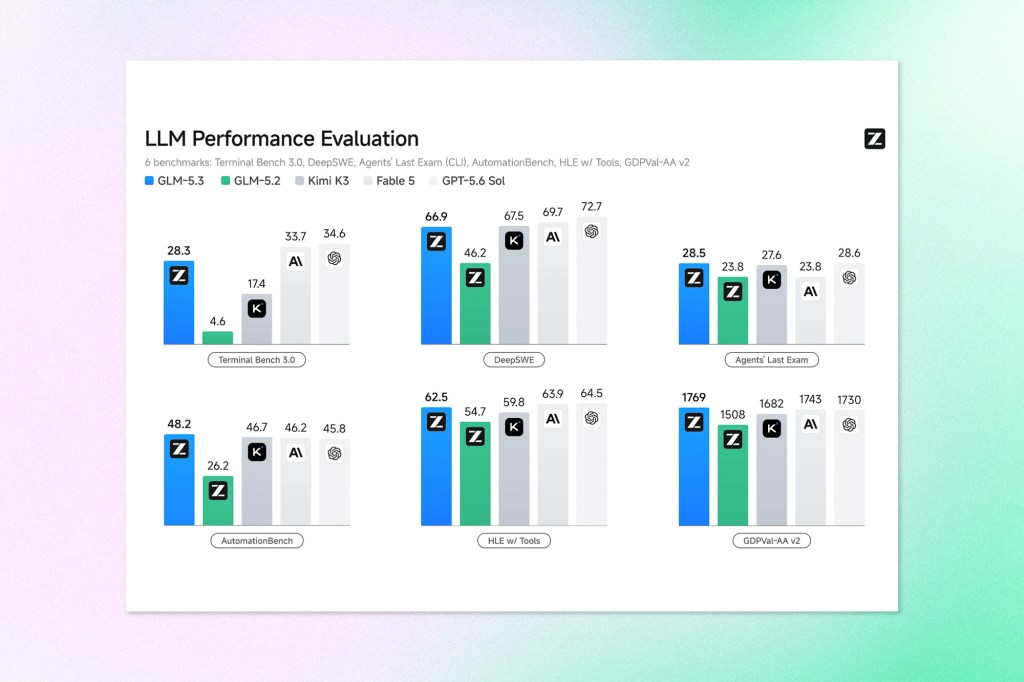
On coding, Z.ai positions GLM-5.3 as the strongest open-weights model available, with a 50 percent improvement over its predecessor on the in-house Z.ai Code Bench. Public results include a jump from 4.6 to 28.3 on Terminal Bench 3.0 and from 46.2 to 66.9 on DeepSWE v1.1. Token efficiency improved alongside accuracy: at High effort, the model reaches 31.4 percent on Z.ai Code Bench using roughly 50K output tokens, ahead of Claude Opus 4.8 at 29.5 percent with 120K. Z.ai notes it still trails Claude Fable 5, which reaches 39.5 percent at Max effort.
Much of the engineering effort went into environments rather than the model. Z.ai built pipelines that synthesize long-horizon task environments end to end, along with reward signals for some tasks, using research agents to convert real work patterns into runnable environments and judge agents to confirm each task is solvable. Verifiers are generated without access to reference solutions. Some environments represent several days of work for an experienced engineer, such as diagnosing bottlenecks across a training stack and delivering a measured end-to-end speedup.
The cyber results are the part Z.ai flags as unexpected. Vulnerability discovery data was added to the training mix with the expectation of modest gains, but the capability kept developing as training scaled, and the model began reasoning across multiple stages of exploitation rather than identifying isolated flaws. GLM-5.3 scores 84.5 percent on CyberGym, up from 77.2 percent, which Z.ai reports as the best result on that benchmark. On benchmarks further up the exploitation chain, the gains are larger, and the remaining gap to closed frontier models is wider: 54.4 percent on ExploitBench against 24.4 percent previously, with the leading closed models in the high seventies. Z.ai’s own summary of the pattern is that capability is growing fastest precisely where the lab is furthest behind.Those capabilities were also tested outside benchmarks. Working with security teams in China against real codebases, and after expert review and deduplication, the model surfaced 2,436 vulnerabilities across 269 open-source projects, including 1,097 rated medium-to-high severity. Findings span kernels, operating systems, browser engines, infrastructure, web applications, and network protocols. The average flaw had gone unnoticed for 26.6 years, with the oldest introduced in 1981. Z.ai has published a Security Disclosure Ledger tracking these findings; 53 are public, and 2,383 remain under embargo.
Weights are scheduled for release two weeks after launch, once safety evaluation and hardening are finished. GLM-5.3 now requires thinking to be enabled, with three effort levels and no option to disable it, so existing integrations using the disabled setting need migration before switching model IDs.
Why it matters: The delay between launch and weight release is the most consequential line in the announcement. Z.ai is holding an open-weights model for two weeks specifically because its offensive security capability outran expectations, which is a lab voluntarily doing what no regulation currently requires of it. Once the weights are out, hardening is a one-time gate on an artifact that can be modified indefinitely, and the same 26-year-old flaws sitting in kernels and browser engines are reachable by anyone with the file.
⚡ Speed and Infrastructure
OpenAI Previews Ultrafast, a Speed Tier for GPT‑5.6 Sol
OpenAI has opened an early look at Ultrafast, a new service tier that runs GPT‑5.6 Sol at up to 14 times the speed of standard processing. The tier is launching in the OpenAI API first and generates up to 750 output tokens per second, with inference supplied through the company’s ongoing partnership with Cerebras.
The pitch rests on a trade-off OpenAI says no longer applies. Getting real-time response speed has generally meant dropping down to a smaller or more narrowly scoped model. Ultrafast is positioned as a way to keep frontier-level capability in workflows where a delay of several seconds carries a cost: incident response while an outage is still unfolding, transaction and market analysis while conditions shift, multi-step customer support inside a live voice call, and commerce interactions that need to resolve before a shopper abandons a cart.
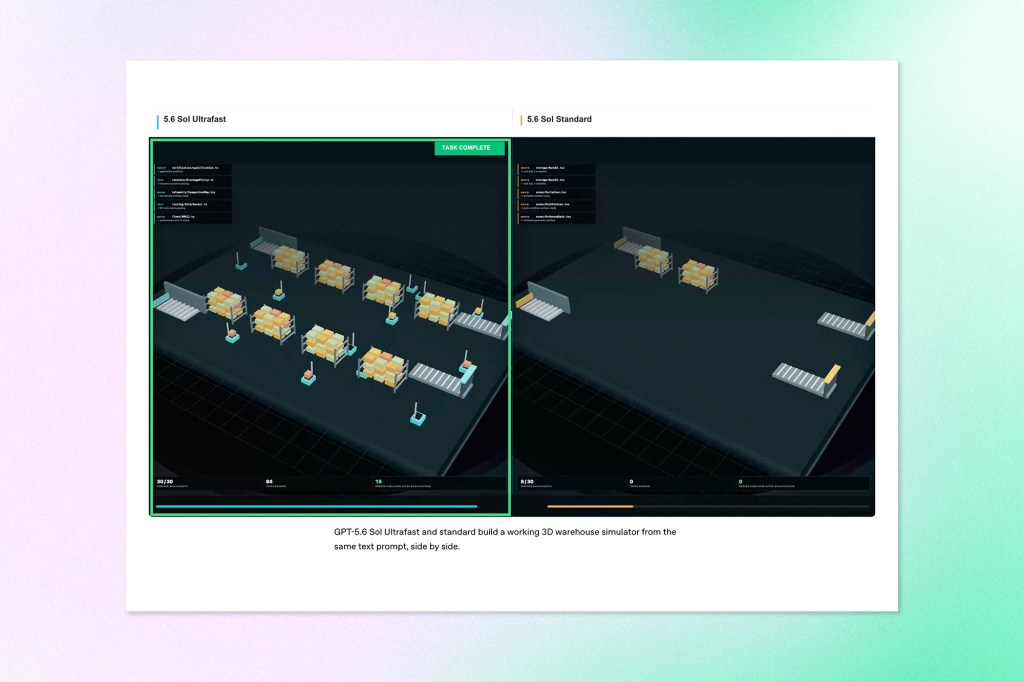
OpenAI is also running the tier internally. Engineering teams use it during alerts to read logs, analyze traces, and prepare or validate fixes, with humans still owning deployment decisions. Research teams report a more interesting shift: experiment batches that used to run overnight for morning review now cycle several times within a working day.
Early testers include Jane Street, Podium, Basis, and Rogo. Jane Street’s John Crepezzi said the speed gain changes how developers work alongside the models rather than simply shortening waits. Access remains limited to a selected group during the preview, expanding as capacity allows.
Why it matters: Latency has quietly shaped more production architecture than most teams admit. The standard pattern has been to route interactive surfaces to small fast models and reserve the strongest model for asynchronous work, which means the reasoning quality users actually encounter is often the quality that fit inside a response-time budget rather than the best available. Decoupling speed from model size invalidates that routing logic, and any organization that made those choices in the past two years now has a design decision worth revisiting.
🔓 Privacy and Security
OpenAI’s Computer History Turns Mac Activity into Memory
OpenAI has shipped Computer History, a macOS desktop feature that converts activity across apps and websites into a timeline and set of memories that ChatGPT and Codex can draw on. The stated uses are recovering context after an interruption, locating a document by describing it rather than naming it, and converting repeated sequences into skills or automations.
The mechanism differs from what came before it. Computer History replaces the Chronicle research preview, which worked from screenshots, and OpenAI is explicit that this is a rebuild rather than a rename. The new system records interaction events instead: clicks, typing, keyboard shortcuts, app switches, and context surfaced through macOS accessibility APIs. It does not capture screenshots, screen recordings, microphone input, or system audio, and it does not require Screen Recording permission. Private browsing is never included.
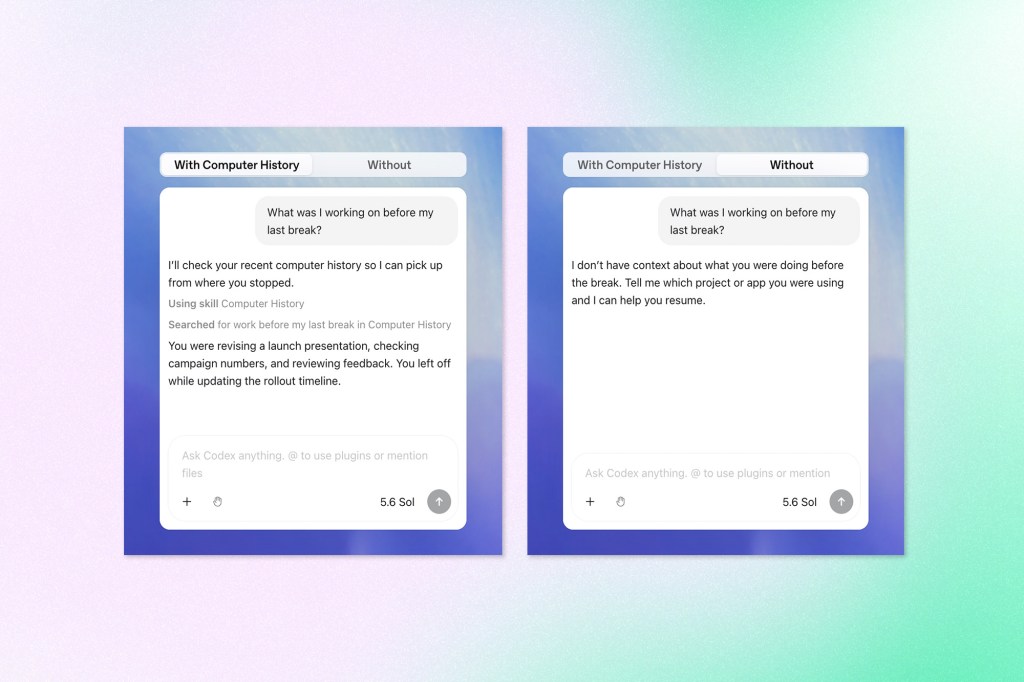
Those events are summarized periodically into plain-text Markdown memory files stored locally under the Codex memories directory. The processing itself is not local. OpenAI starts an ephemeral Codex session that reads the event stream on its servers to generate summaries, then stores the result on the machine. Event files are deleted after 48 hours and are not used for training. The memory files persist until deleted, and OpenAI notes they are not encrypted, meaning other programs running under the same macOS user may be able to read them.
Controls are layered. The feature is off by default and requires Memories to be enabled. Business and Enterprise workspaces cannot use it until an administrator grants access, and that grant only permits individual members to opt in. Users choose which apps and sites contribute, can pause collection from the menu bar, and can clear history in windows ranging from the last ten minutes to everything. OpenAI’s documentation excludes the European Economic Area, Switzerland, and the United Kingdom; Cybernews reports availability as limited to the United States, so the exact geographic footprint is worth confirming before planning around it.
Two warnings appear in OpenAI’s own documentation. Prompt injection risk rises, since a website containing malicious instructions could have those instructions picked up as context. And OpenAI advises turning the feature off during communications with other people absent their express consent, alongside pausing it around apps holding health, financial, or personal information.
Why it matters: The consent problem sits with the person who did not install anything. A collaborator typing in a shared Slack channel or a client on a call has no way to know the other side of the conversation is being summarized into a persistent file, and OpenAI has pushed that obligation onto the user with a documentation line about express consent. For regulated industries and anyone under professional privilege, that is a policy question that arrives before the technical one.
🏢 AI at Work
Google Adds Sheets Canvas, a Prompt-Built Layer Over Spreadsheet Data
Google has introduced Sheets Canvas, a Gemini-powered feature that turns spreadsheet data into custom interactive views described in plain language. Eric Birnbaum, director of product management for Google Sheets, frames the problem as the gap between having data organized and being able to see what matters in it.
The mechanic is a read-write layer sitting on top of existing sheet data rather than a separate export. A prompt such as a request for a visual study tracker produces a layout, and changes made in either the canvas or the underlying sheet sync in both directions in real time. The canvas lives as a tab inside the spreadsheet, so sharing and permissions work the way they already do. Users can keep prompting Gemini to adjust layout, design, and functionality after the initial build.
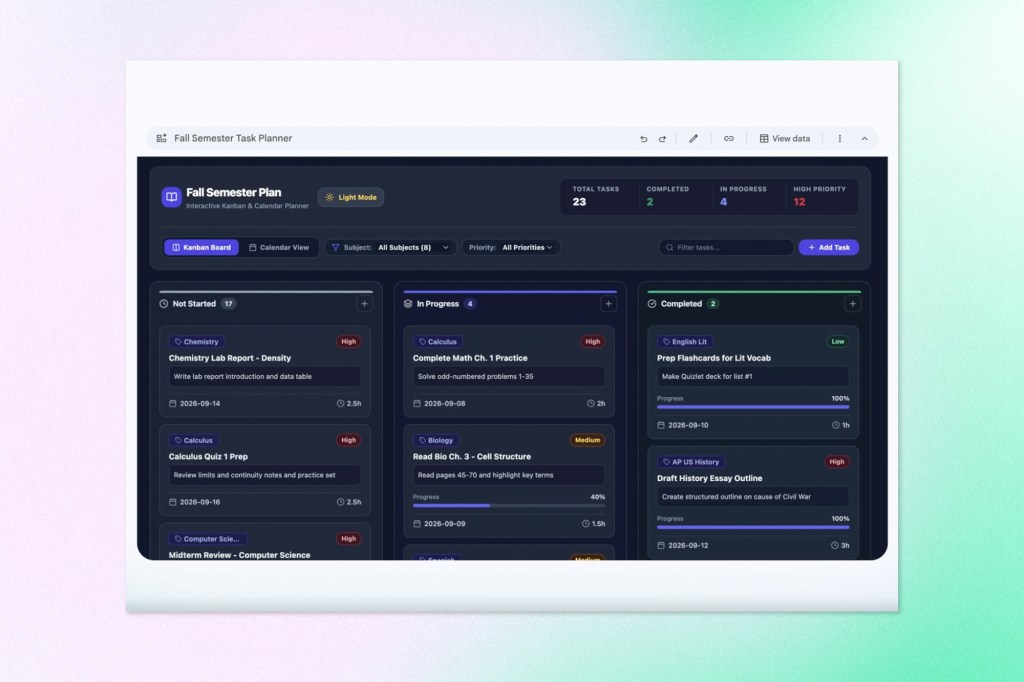
Google’s examples run to personal use: assignment trackers for students, fantasy football roster dashboards, and wedding seating charts where guests are dragged between tables while the source RSVP data updates behind the view.
Availability is global in English for Google AI Pro and Ultra subscribers, and is rolling out to Workspace customers on Business or Enterprise Standard and Plus plans, plus Google AI Pro for Education add-on subscribers. The entry point is the Create canvas option in the Ask Gemini side panel.
Why it matters: The spreadsheet has quietly been the most widely deployed application platform in most organizations, and its constraint has never been the data model but the interface. Anyone who has built a shared tracker knows the pattern: the sheet works fine for whoever created it and becomes unusable for everyone else, so the workaround is either a rebuild in a proper tool or a colleague who acts as human middleware. A prompt-generated view over the same rows removes that step without introducing a new system of record.
Ready to explore what AI can do for your organization?
📊 Ecosystem and Business
Automattic’s Spacefast Surfaces Before Launch
Automattic has been building Spacefast, an agent-first static hosting service that lets people publish sites and web apps directly from AI coding tools including Claude Code and Codex, as well as from the CLI or by drag and drop. The product runs on WordPress.com accounts and has not been formally announced.

The positioning is unusually direct about who the user is. The setup path is a prompt pasted into an agent’s chat with nothing to install, and the site lists integrations across ChatGPT, Codex, Claude, Claude Code, Claude Cowork, Cursor, VS Code, OpenCode, Raycast, Devin, and others, with a catch-all for anything that can fetch a URL. Publishing happens through an MCP endpoint.
Several features address the specific failure modes of agent-generated output. Anonymous publishing means a space goes live before any account exists, with a six-hour window to claim the same link. Every change is retained as a version with its own permalink and one-step rollback. Spaces are private by default, with options to invite people, create visitor links, or go public. Reviewers can pin comments to an exact spot on a page and hand the thread back to an agent as Markdown. Agent keys can be scoped to particular spaces, or configured to require human approval before a publish goes live.
The free tier includes unlimited spaces and unmetered bandwidth served from 28 edge locations, plus custom domains with certificates handled automatically and privacy-respecting analytics with optional GA, PostHog, Parse.ly, or Jetpack. The site also publishes a long list of prompt recipes covering everything from status pages and pitch decks to browser games and WordPress paired with Astro or React.
Why it matters: The interesting design decision is treating the agent as the account holder problem rather than the user. Anonymous publish with a claim window, mandatory version history, scoped keys, and optional publish approval all assume the thing pushing to production is fast, prolific, and occasionally wrong. That is a different set of primitives than existing static hosts, which were built around a developer with a git repository and an opinion about what should ship. For Automattic specifically, this is a hedge worth reading closely. The company’s core business depends on people choosing a CMS, and a growing share of small sites now start as something an agent generated in one shot. Owning the destination for that output keeps Automattic in the flow even when no WordPress install is involved, and the WordPress-plus-Astro and WordPress-plus-React recipes suggest the intent is to pull that traffic back toward the platform rather than abandon it.
Hugging Face Publishes its Summer Read on Open Models
Hugging Face has released its biannual survey of the open model ecosystem, covering January through August 2026. The Hub itself grew over the period: model repositories from 2.43 to 2.96 million, datasets from 711,000 to a million, Spaces from 1.00 to 1.44 million. The distribution beneath those totals is heavily skewed, with roughly 85.6 percent of models drawing fewer than 200 lifetime downloads and 1.5 percent of repositories accounting for 99.2 percent of all downloads.
Several findings stand out. Chinese labs have skipped the traditional progression from small models upward, with monthly release ceilings running between 754 billion and 2.78 trillion parameters, while American open releases stayed under 130B in five of seven months. The exceptions were NVIDIA’s Nemotron 3 Ultra at 561B and Thinking Machines Lab’s Inkling. The report also notes that the two organizations publishing the most new open models this year are AMD and NVIDIA, each past 200 new repositories, which the authors read as hardware vendors using freely available optimized models to demonstrate their chips.
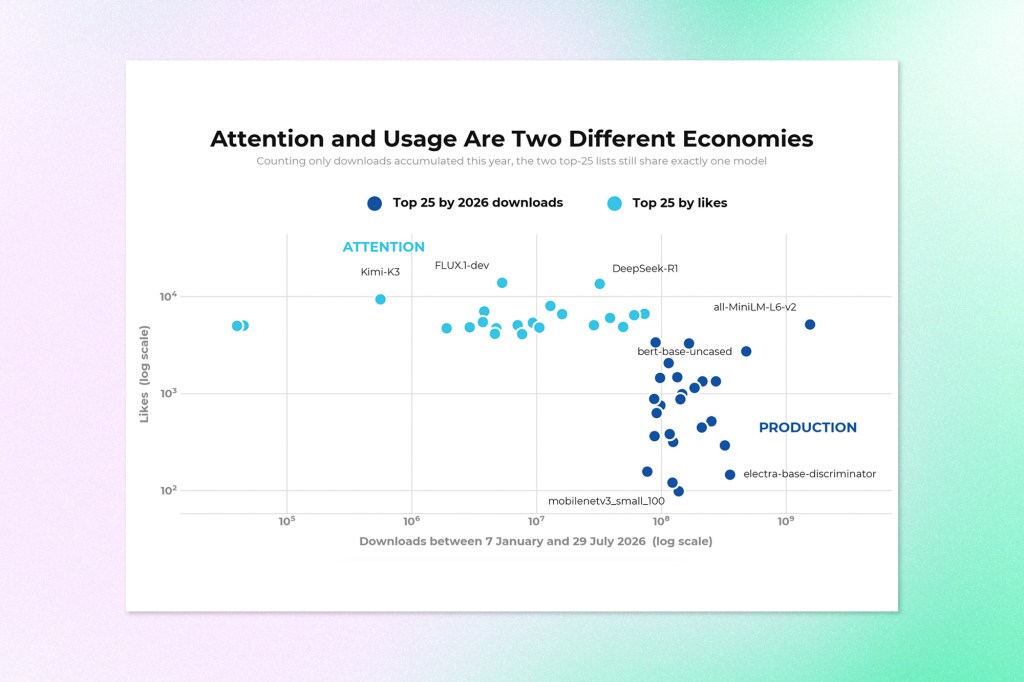
The report separates attention from adoption in a way worth internalizing. Comparing the top 25 repositories by 2026 downloads against the top 25 by likes, exactly one appears on both lists. No model published in 2026 makes the download list at all, while thirteen of the twenty-five date from 2022. all-MiniLM-L6-v2 was pulled 1.55 billion times against 5,156 likes. Likes measure what the field is excited about; downloads measure what it currently depends on.
Licensing runs counter to intuition as well. Of 178 Chinese releases above 20B parameters, 59 percent carry Apache 2.0 and 22 percent MIT, with DeepSeek and Z.ai shipping models between 700 billion and 1.65 trillion parameters under plain MIT. In the same size band on the American side, 29 percent is Apache or MIT, 41 percent uses custom terms, and 30 percent declares nothing. The authors note a recent shift, with Kimi K3 and Qwen3.8 adding non-commercial restrictions and revenue share requirements.
Qwen emerges as the community’s default foundation, with 151,448 derivatives on the Hub, 2.6 times Meta’s total footprint, growing at 180 to 210 new repositories daily. Nearly all of that is downstream community work: of 28,531 GGUF conversions of Qwen models, Qwen published 54.
Small models remain where the volume sits. Models under 1B take 83 percent of all-time downloads, and only 3 percent of 2026 volume goes to models above 70B. The route by which trillion-parameter models reach anyone is llama.cpp, whose ggml team joined Hugging Face in February, with the project remaining community-governed. Repositories declaring the gguf library rose 464 percent over the period against 16 percent for transformers.
The final section is new. A dataset published in July tracks the agent identifier that coding harnesses send when calling the Hub. Claude Code led July at 44.4 percent, but held 67.8 percent in April and 6.4 percent in May. Nearly a quarter of agent-tagged traffic in July came from harnesses not yet named in the dataset, down from 59.8 percent in May. Hugging Face also discloses what it describes as the first documented case of an autonomous agent conducting a sustained intrusion on its own initiative, against its own infrastructure. When the team tried to analyze the captured attack code with frontier closed models, safety guardrails refused the work, and the analysis was completed on a quantized GLM-5.2 running locally.
Why it matters: The attention and adoption split is the finding most likely to correct bad decisions. Procurement conversations tend to anchor on whatever launched recently and generated discussion, but the models actually load-bearing in production pipelines are years old, small, and boring. Any team auditing its own stack will probably find the same shape, and the strategic question is less about which frontier model to adopt than about which small ones have quietly become dependencies nobody owns.
Keep ahead of the curve – join our community today!
Follow us for the latest discoveries, innovations, and discussions that shape the world of artificial intelligence.