
OpenAI killed its browser this week, nine months after launching it. Atlas was supposed to make ChatGPT the window to the web, and instead OpenAI is folding those capabilities into a Chrome extension and a beefed-up desktop app, which is a quiet admission that the fight was never about owning the browser. It was about which agent sits closest to your work and what it can reach once it gets there. The rest of the week ran along the same line. LangChain made the case that agent memory should live in open files rather than inside anyone’s assistant, 1Password started tracking what all this agentic activity is quietly costing, and Spotify built a conversational layer grounded in the one thing a general model cannot replicate, your own listening history. Meanwhile, ElevenLabs planted a flag in Toronto, and sixteen Nobel laureates asked whether any institution is ready for what comes next.
Listen to the AI-Powered Audio Recap
This AI-generated podcast is based on our editor team’s AI This Week posts. We use advanced tools like Google NotebookLM, Descript, and ElevenLabs to turn written insights into an engaging audio experience. While the process is AI-assisted, our team ensures each episode meets our quality standards. We’d love your feedback—let us know how we can make it even better.
TL;DR
- OpenAI is shutting down Atlas, the AI browser it launched last October, and redistributing its capabilities into a ChatGPT extension for Chrome and a more capable desktop app.
- LangChain released OpenWiki Brains, an open-source memory framework that pulls context from tools like Gmail, Notion, and git into plain Markdown files agents can consult, positioning memory as an inspectable layer outside any single model rather than a feature locked inside a vendor’s assistant.
- ElevenLabs formally launched its Canadian business with a Toronto office, a new country GM, and plans to double local headcount, backed by production deployments at TELUS, The Globe and Mail, and Boosted.ai that suggest voice AI has crossed from novelty into procurement.
- More than 200 economists and AI researchers, including sixteen Nobel laureates, published a statement warning that AI could reshape the economy faster than institutions can adapt, and calling for policy and research to begin now rather than after the transformation arrives.
- 1Password launched AI Spend and Consumption Management, giving IT and finance teams a real-time view of token spend across Anthropic, OpenAI, and Cursor, and betting that AI costs will become the next enterprise budget crisis the way cloud spend once did.
- Spotify began rolling out a conversational AI assistant that lets Premium users shape playback, ask about what’s playing, and query their own listening history, a reminder that in a world of interchangeable models, the moat is the proprietary context you can put in front of one.
🌐 Agents & Infrastructure
OpenAI Shuts Down Atlas, Spreads its Browser Ambitions Everywhere Else
OpenAI is sunsetting Atlas, the AI-powered browser it launched in October 2025 with ChatGPT at its centre. The company is not abandoning agentic browsing. It is redistributing the capabilities Atlas tested across two new homes: a ChatGPT extension for Google Chrome and a beefed-up ChatGPT desktop app.
The Chrome extension gives ChatGPT access to the page a user is viewing, enabling questions about web content, summarization, and the ability to kick off longer tasks directly from the browser. It competes head-on with Google’s own Gemini Side Panel. The desktop app, meanwhile, gains a more capable built-in browser that lets users visit websites, log into accounts, download files, and interact with pages without leaving ChatGPT. A separate cloud browser running on OpenAI’s servers gives the company’s agents a remote environment to complete tasks on a user’s behalf.
The shutdown follows a broader push inside OpenAI to trim what former CEO of applications Fidji Simo called “side quests,” a directive that already claimed the video-generation tool Sora in March. It also lands after a year in which Perplexity’s Comet, The Browser Company’s Dia, and AI-upgraded versions of Chrome and Edge all fought to become the new default window to the web.
Why it matters: OpenAI just conceded something the rest of the industry has been reluctant to admit. Getting hundreds of millions of people to switch browsers is one of the hardest asks in consumer software, and even ChatGPT’s brand gravity could not pull it off in nine months. The pivot reframes the competition entirely. Instead of fighting Chrome for real estate, OpenAI is colonizing it, placing an agent inside Google’s own product while building a parallel agentic workspace in its desktop app. For enterprises, the signal is that the browser wars were never really about browsers. They were about which company’s agent sits closest to the user’s work, with access to logged-in sessions, page context, and the authority to act. That contest is now playing out inside whatever software people already use, which raises harder questions for IT and security teams than a new browser ever did.
LangChain Wants to Give Every Agent a Brain that Maintains Itself
LangChain has released OpenWiki 0.1.0, expanding its open-source codebase documentation tool into a general-purpose memory framework for AI agents called OpenWiki Brains. The original tool generated a wiki for a git repo and kept it current as the code changed. That workflow now lives on as Code Brain, and it is joined by a new mode called Personal Brain.
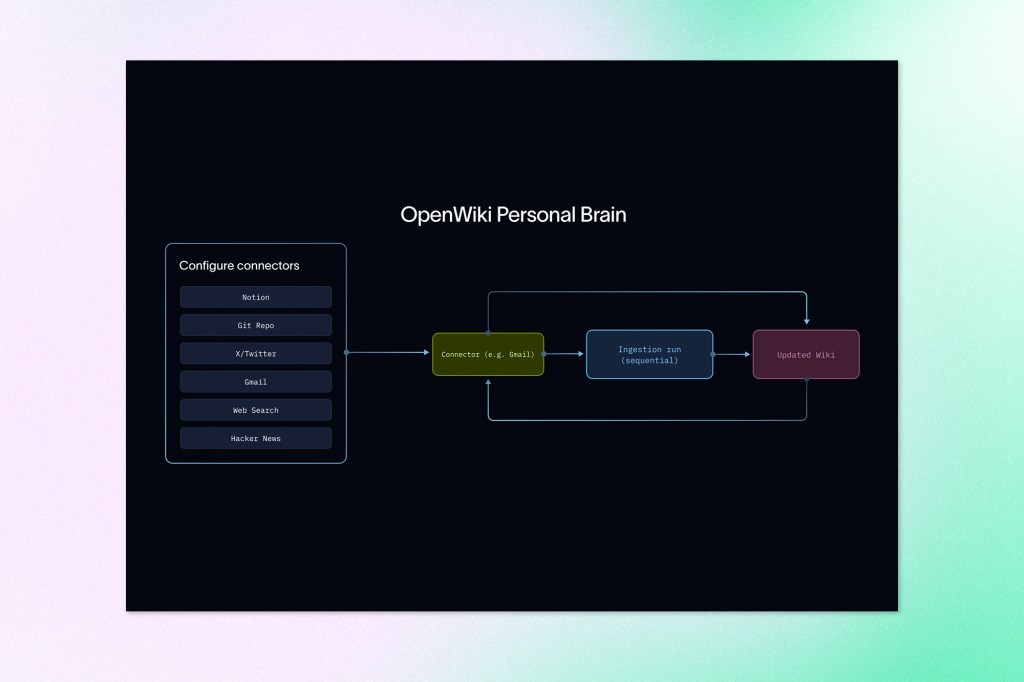
Personal Brain connects to sources where work context already lives, including Gmail, Notion, git repositories, Twitter/X, Hacker News, and web search, with Slack support coming soon. It pulls information from those connectors and writes it into a local wiki of plain Markdown files that agents can consult as memory. During setup, users describe what the brain should focus on, such as active projects, research topics, or customer context, and that prompt guides what gets preserved during ingestion. A scheduled job refreshes the wiki on a cadence the user chooses, with no server to provision.
LangChain draws a sharp distinction from the built-in memory in assistants like Claude and ChatGPT, which it describes as mostly reactive: those systems remember what users explicitly tell them or what surfaces in conversation. OpenWiki Brains is positioned as proactive memory that gathers relevant context from connected tools without anyone pasting it into a chat. The company plans more connectors, better retrieval through options like semantic search and MCP, and richer knowledge formats over time.
Why it matters: Memory is quietly becoming the real battleground in agent infrastructure, and this release stakes out a distinct position in it. Model providers are building memory as a feature inside their assistants, which means the context lives in their product and moves at their pace. LangChain is betting that memory should be an open, inspectable layer that sits outside any single model, in plain files a team can read, audit, and version. That framing will resonate with organizations already nervous about how much institutional knowledge is accumulating inside closed assistant platforms.
1Password Moves into AI Cost Management
1Password has launched AI Spend and Consumption Management, a new capability inside its SaaS Manager platform that gives IT and finance teams a real-time view of what their organizations are spending on AI services. It launches with support for Anthropic, OpenAI, and Cursor, connecting to vendor admin APIs to pull token-level consumption data daily, normalizing it into a single dashboard, and letting teams set vendor spend limits, configure threshold alerts through Slack and email, and break usage down by team, user, vendor, and model. It is in public preview now, with broad availability planned for fall, and carries no separate fee for existing SaaS Manager customers.
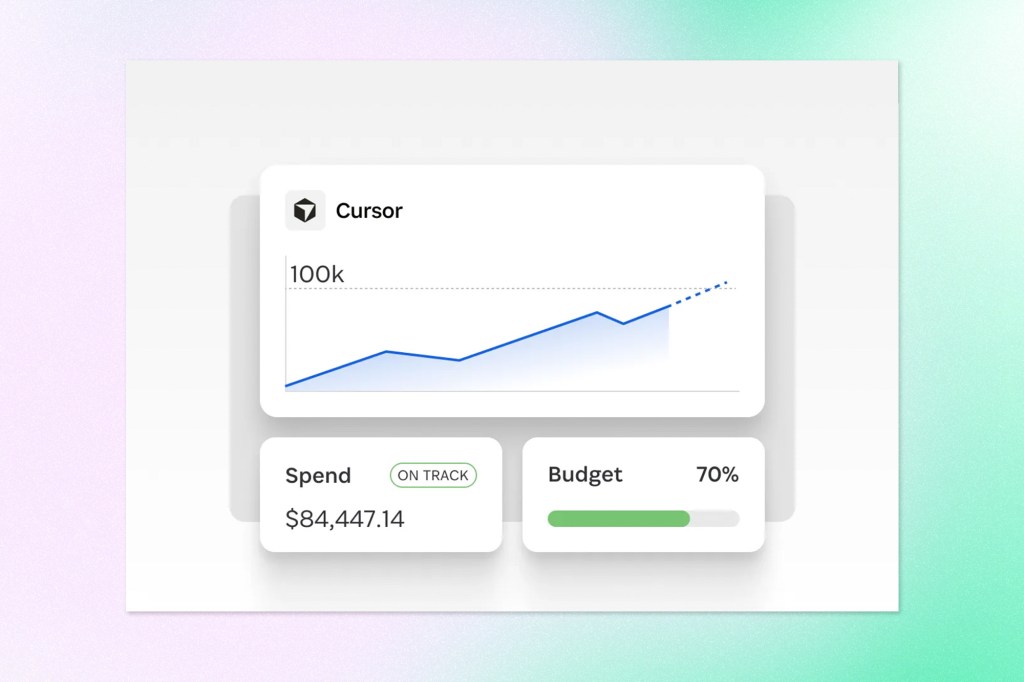
The problem it targets is structural. Traditional SaaS pricing is per-seat and per-year, which is straightforward to budget. AI pricing is not. Costs vary by model, by input versus output, and by task complexity, and an engineering team running agentic workflows can burn through a prepaid token budget in weeks before finance sees the invoice. 1Password CFO Greg Henry drew the comparison to cloud, where consumption pricing arrived years before the tooling and discipline to manage it, spawning the entire FinOps industry in the gap.
Agents make the problem sharper. The system captures consumption at the API level regardless of whether a human or an agent generated it, which matters because an agentic coding assistant stuck in a retry loop can consume thousands of dollars in tokens in minutes with nobody watching. For now, the product alerts but does not enforce, though Henry said automatic cutoffs are under evaluation.
Henry also pushed back on the assumption that heavy token use means waste. A team burning through tokens may be building something valuable while a low-usage project moves nothing, and the point of the data is to see which spend produces business outcomes rather than to cut across the board.
Why it matters: The FinOps parallel is the right one, and it is worth taking seriously rather than treating as vendor framing. Cloud taught enterprises that consumption pricing without visibility means overpaying for years before anyone notices, and AI is arriving with the same shape and a faster clock. The agent angle is what makes this urgent rather than merely prudent, because agentic tools are built to run for hours and generate far more API calls than a person typing prompts, which means every organization adopting them is quietly adopting an unbounded cost surface. The harder problem Henry names is ownership: AI spend sits between finance, IT, and engineering, and right now it belongs to nobody, which means the choice of which model a team uses has become a financial decision made by people who do not see the bill.
🍁 AI in Canada
ElevenLabs Plants its Flag in Canada with a Toronto Office and a Doubled Team
Voice AI company ElevenLabs is formally launching its Canadian business, appointing Max Lemmens as General Manager for the country, planning to double its Canadian headcount this year, and opening its first Canadian office in Toronto. The move formalizes an existing footprint: the company already counts 30,000 users in Canada, ranging from individual creators to national telcos, with team members spread across Montreal, Toronto, and Vancouver.
The company framed Ontario as a natural base, citing Toronto’s role as the country’s business and financial capital, Ottawa’s proximity to public-sector institutions, and the talent concentrated along the Toronto-Waterloo corridor. Ontario’s Minister of Economic Development, Vic Fedeli, welcomed the announcement as an addition to the province’s innovation ecosystem.
ElevenLabs also pointed to Canada’s bilingualism as a structural advantage for voice AI adoption, alongside industries like financial services, healthcare, retail, telecom, gaming, and film production that could deploy expressive voice agents and multilingual content. Its Canadian customer roster already includes TELUS Digital, which cut call centre onboarding time by 20 percent using simulated calls with AI voice agents, The Globe and Mail, which narrates articles with ElevenLabs voice models, coding platform Blackbox AI, and Boosted.ai, which built conversational agents for investment research. Co-founder Mati Staniszewski cited strong demand from Canadian businesses, and the company tied its expansion to Canada’s national AI strategy, which targets lifting enterprise AI adoption from 12 percent to 60 percent by 2034.
Why it matters: Canada has spent years exporting AI research talent and importing AI products, so a frontier-adjacent company choosing to build a physical presence here, rather than serving the market remotely from the US, deserves attention. The customer list tells the more interesting story. TELUS, The Globe and Mail, and Boosted.ai are not experimental pilots. They are production deployments in telecom, media, and finance, three of Canada’s most regulated and risk-averse sectors. That suggests voice AI has crossed from novelty into procurement, and vendors are now competing on local presence, support, and compliance posture rather than raw capability. The 12 to 60 percent adoption target ElevenLabs cites is doing quiet work here too. Companies are starting to treat Canada’s national AI strategy as a commercial signal worth organizing around, which is exactly what the strategy was designed to provoke.
Ready to explore what AI can do for your organization?
📊 The Bigger Picture
Sixteen Nobel Laureates Call for Urgent Preparation on AI’s Economic Impact
A group of more than 200 economists and AI researchers, including sixteen Nobel laureates, released a statement on July 13 titled “We Must Act Now: A Statement on AI’s Transformation of the Economy.” It warns that increasingly capable AI systems could reshape the economy at unprecedented speed, and it calls on economists, policymakers, and technology leaders to deepen research on AI’s economic effects and start building the policies and institutions needed to steer the technology toward complementing human capabilities rather than simply replacing them.
The statement was organized by four economists: Erik Brynjolfsson of Stanford, Anton Korinek of the University of Virginia, Tom Cunningham of METR, and Ajay Agrawal of the University of Toronto’s Rotman School of Management. Signatories include Nobel laureates Daron Acemoglu of MIT and Michael Spence of NYU.
The urgency argument rests on timing. Korinek framed it against earlier transformations, noting that steam, electricity, and computers each gave societies decades to adapt while AI may allow only a few years, and that waiting for certainty means arriving too late. Brynjolfsson argued that AI capabilities are advancing faster than economic understanding of their implications, and that the task is guiding AI to complement humans rather than imitate them. Agrawal put the stakes plainly: whether AI broadly raises living standards or concentrates wealth is not predetermined, and depends on how political and economic systems are rebuilt now rather than after the transformation arrives. Cunningham described the current position as driving in fog.
Why it matters: This is an unusually broad coalition making an unusually specific complaint, which is that the institutions meant to manage economic disruption were designed for a slower world. The signatories are not predicting doom or disputing the productivity gains. They are arguing that the adjustment window has collapsed, and that policy built at the pace of past technological shifts will arrive after the fact. For enterprises, the practical read is that workforce and productivity planning around AI can no longer be treated as a distant strategic question, since the group most qualified to estimate the timeline is saying openly that it does not know how fast this moves and that the uncertainty itself is the reason to prepare now.
📱 Consumer AI
Spotify Adds a Conversational AI Assistant to the App
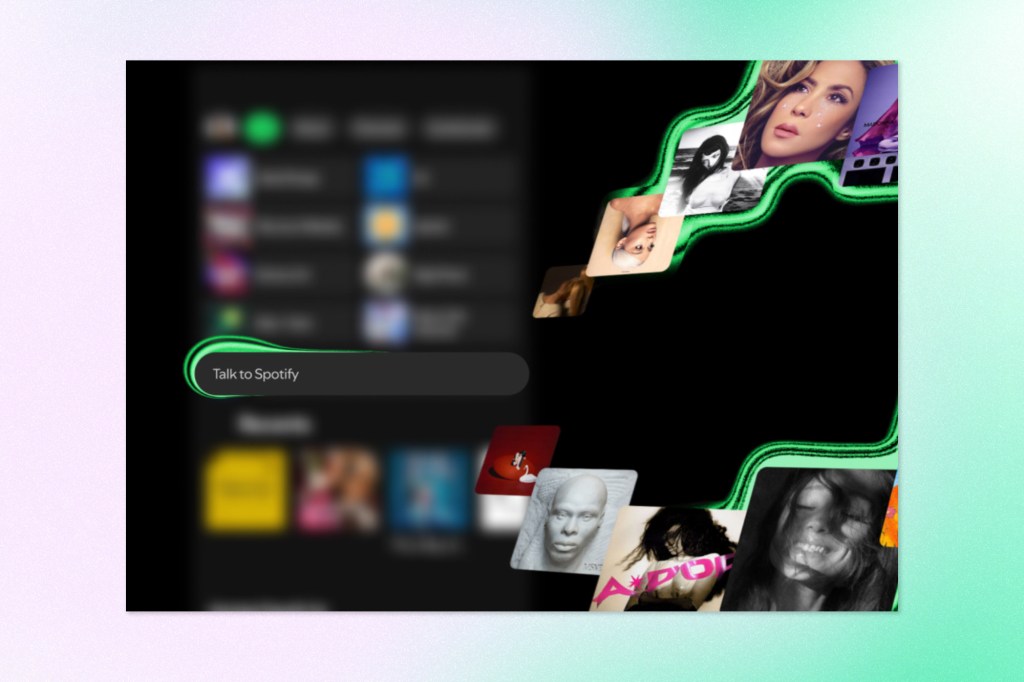
Spotify has begun rolling out a conversational feature that lets Premium users talk or type to the app to shape what they hear. It appears across the Home and Now Playing views on mobile, and it is a beta release limited to users 18 and over in the United States, Ireland, and Sweden, in English, on iOS and Android.
The feature works in three directions. Users can shape playback conversationally, asking for artists they have not heard before, then narrowing with follow-ups like adding a specific artist, restricting to recent tracks, or asking for something more upbeat, and can tell the app to save a song, queue it, or follow an artist. They can ask about what is playing, including an album’s release date, its genre, or the inspiration behind a record, and the same applies to podcasts and audiobooks, where questions can reach the people and ideas behind them. And they can query their own listening history, asking when they first played a track or what genres they have been drawn to lately.
Spotify did not detail the technology underneath, but confirmed to TechCrunch that it uses a mix of its own AI and models from multiple providers, picking whatever suits the task. The feature extends conversational interaction beyond the AI DJ and sits alongside Spotify’s prompt-based playlist tools and its existing hooks into third-party chatbots.
Why it matters: Spotify is doing something more interesting than bolting a chatbot onto a music app. The assistant is grounded in a specific corpus and, crucially, in the user’s own history, which means it can answer questions no general model can: when you first played a song, what your genre drift looks like, what your repeat listens say about you. That grounding is the whole product. It also explains the model-agnostic approach, since if the value sits in the catalogue and the personal data, the underlying model becomes an interchangeable component rather than a differentiator. For anyone with a deep content library and rich behavioural data, that is the transferable lesson: the moat is not the model; it is the proprietary context only you can put in front of it.
Keep ahead of the curve – join our community today!
Follow us for the latest discoveries, innovations, and discussions that shape the world of artificial intelligence.