This week’s issue is heavy on a single theme: AI is moving from finding and generating toward fixing, remembering, and self-correcting. OpenAI’s Daybreak expansion bets that patching vulnerabilities, not discovering them, is now the hard problem in cybersecurity. Perplexity and Shanghai AI Lab both went after agent reliability from different angles, one teaching agents to remember their own work and the other letting them rewrite their own rules, and Anthropic putting Claude into Slack as a taggable teammate that learns and acts on its own. Meanwhile, the consumer and enterprise hardware races kept moving, with Alibaba inheriting a thinned-out AI video market and Meta pushing smart glasses toward a mass-market price. Here’s what mattered.
Listen to the AI-Powered Audio Recap
This AI-generated podcast is based on our editor team’s AI This Week posts. We use advanced tools like Google NotebookLM, Descript, and Elevenlabs to turn written insights into an engaging audio experience. While the process is AI-assisted, our team ensures each episode meets our quality standards. We’d love your feedback—let us know how we can make it even better.
TL;DR
- OpenAI expands Daybreak to push AI cybersecurity past finding vulnerabilities toward automatically patching them, releasing the full GPT-5.5-Cyber to vetted defenders, a partner program, and an open-source initiative. Canada is among the first Trusted Access partners.
- Anthropic launches Claude Tag, bringing Claude into Slack as a taggable team member that learns from its channels, works asynchronously, and can act on its own.
- Perplexity launches Brain, a memory system that remembers what its agent did rather than facts about the user, learning from past work to cut costs and improve accuracy. Now in research preview for top-tier subscribers.
- Alibaba’s HappyHorse climbs to No. 2 in AI video as OpenAI’s Sora shuts down and ByteDance’s Seedance freezes, leaving a thinned field. The catch for Western buyers is a Pentagon listing that complicates procurement.
- Self-Harness, from Shanghai AI Lab, lets agents rewrite their own operating rules and posts gains up to 60 percent, but only works where success is machine-checkable.
- Meta launches cheaper AI smart glasses at $299, down from $800, dropping the Ray-Ban branding and shipping its first Superintelligence Labs model as it presses a 76 percent shipment lead.
🔒 Cybersecurity
OpenAI Expands Daybreak to Automate Vulnerability Patching
OpenAI has broadened Daybreak, its set of cybersecurity tools, with a focus on helping organizations patch vulnerable software faster rather than just locate problems. The company frames the move around a change in where the hard work now sits. For most of the field’s history, finding serious vulnerabilities was the difficult part, requiring rare expertise and time. AI models have made discovery far easier, and defenders are now buried in findings they cannot close quickly enough. OpenAI argues the constraint has shifted from finding flaws to fixing them.
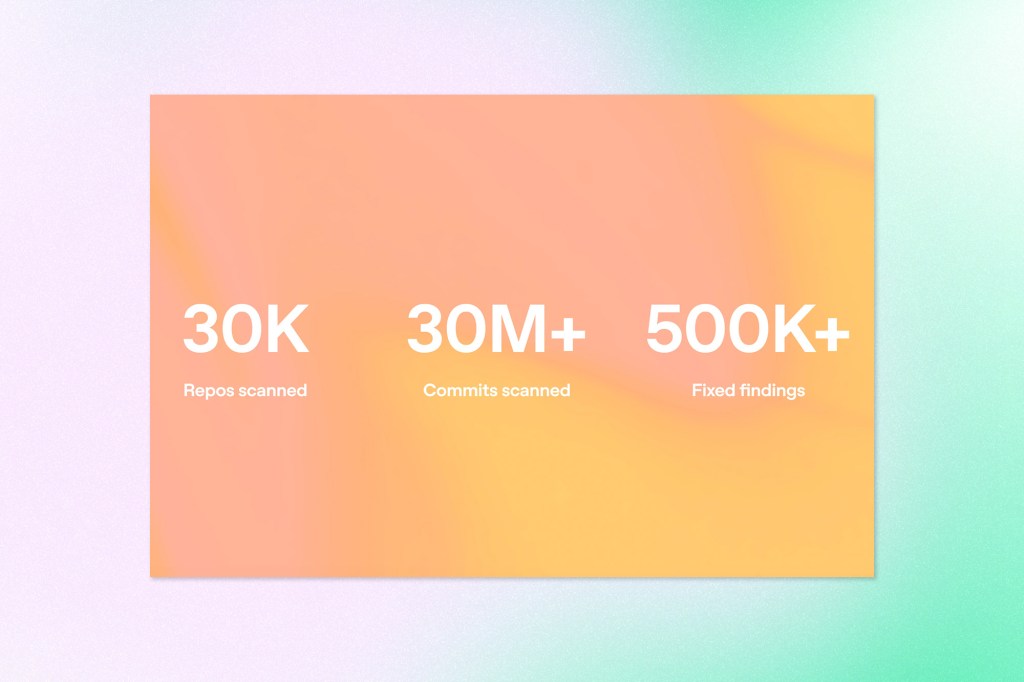
The expansion has several components. An updated Codex Security plugin scans codebases, checks whether vulnerable code is actually reachable, generates targeted patches, and verifies the results, while leaving humans in control of what to investigate and apply. OpenAI says the tool has scanned more than 30 million commits across over 30,000 codebases since its March research preview, with reviewers marking more than 70,000 findings as fixed and over 500,000 determined to be fixed automatically.
The company also released the full version of GPT-5.5-Cyber, which it describes as both more permissive and more capable for authorized security work, available only through a limited release to vetted defenders. OpenAI reports it scored 85.6 percent on CyberGym, a benchmark measuring whether an agent can reproduce known vulnerabilities, up from 81.8 percent for GPT-5.5. The company also reported gains on two other benchmarks, ExploitGym and SEC-bench Pro, the latter measuring long-horizon vulnerability discovery.
Two further pieces complete the announcement. A Daybreak Cyber Partner Program lets security vendors such as CrowdStrike, Cloudflare, and Palo Alto Networks build OpenAI’s primary defensive model into their own products while keeping direct model access limited to those partners. Patch the Planet, founded with Trail of Bits alongside HackerOne and others, funds security researchers to work with open-source maintainers on validating and landing fixes. More than 30 projects have committed to participating, including cURL, Go, Python, and Sigstore.
OpenAI says it has established Trusted Access for Cyber partnerships over the past month with several governments, including Canada, Australia, France, Germany, Japan, South Korea, and EU institutions such as ENISA, plus an ongoing relationship with the UK.
Why it matters: The claim that discovery is now solved does a lot of strategic work. It lets OpenAI position patch automation as the responsible frontier and present a more permissive model as a defensive instrument rather than an offensive one. The trouble is that the same model that improves on CyberGym also improves on ExploitGym, which measures the ability to turn known vulnerabilities into working exploits. That overlap is why the entire release leans on gated access, partner-only distribution, and government vetting, and it is the real subject of the announcement, even though the patching story is the headline.
🤖 Agentic AI
Anthropic Launches Claude Tag, Bringing Claude into Slack as a Team Member
Anthropic introduced Claude Tag, a way for teams to delegate work to Claude inside the tools they already use, starting with Slack. Once an administrator grants Claude access to selected channels and connects it to chosen tools, data, and codebases, anyone in a channel can tag @Claude and hand off a task while they move on to other work. Claude breaks the request into stages, works through them with the tools it has, and replies in a thread with what it produced. Anthropic frames it as an evolution of Claude Code that is more proactive and built to work with a whole team rather than one person.
Several things separate it from a single chat. Claude Tag is multiplayer, meaning one Claude in a channel interacts with everyone, so anyone can see what it is doing and pick up where a colleague left off. It learns over time by following the channels it is in, building context so users do not have to re-explain things, though it does not report from private channels. With ambient behaviour enabled, it takes initiative, flagging relevant information and following up on threads that have gone quiet. And it works asynchronously, including scheduling tasks for itself over hours or days. Direct messages get a private response using the user’s own connectors.
Access is tightly scoped. Administrators decide which tools and data Claude can reach in which channels, and its memories stay confined to those channels, so a sales-configured Claude will not pass context to an engineering one. Admins can cap token spend at the organization and channel level and view a log of every task and who requested it. Anthropic shared that 65 percent of its product team’s code is now created by its internal version of the tool, and that tagging Claude has spread beyond engineering into chasing product metrics, working support tickets, and debugging. Claude Tag is available in beta today for Enterprise and Team customers, runs on Claude Opus 4.8, and replaces the existing Claude in Slack app, with a 30-day window for administrators to migrate.
Why it matters: The shift is from Claude as a tool you open to a participant that stays in the room, accumulating context and acting without being re-summoned. The multiplayer design is the part to watch, since it moves AI from a private assistant toward shared infrastructure that a whole team interacts with, which changes who owns the output.
Perplexity Launches Brain, a Memory System that Learns from the Agent’s Own Work
Perplexity introduced Brain, a memory system for its agent product, Computer, that takes a different angle on what AI memory should store. Most memory features track facts about the user, such as their preferences, role, contacts, and working style, with the goal of making the experience feel more personal. Brain, instead, remembers what the agent did. It records what worked, what failed, and which corrections the user made, then uses that to do better work on the next task.
The system builds what Perplexity calls a context graph of the work Computer performs. At set intervals, often overnight, Brain reviews that graph and revises how it approaches the work. The context layer takes the form of an LLM wiki loaded onto the agent’s sandbox, with pages covering the people, projects, and ideas in a user’s world that the agent can traverse. Perplexity says the wiki updates incrementally as the system synthesizes past sessions, connector results, changes in source documents, and corrections.

The pitch is that this creates a feedback loop. As the agent learns which projects, connectors, and sources lead to good outputs and remembers dead ends, it needs fewer turns and fewer model calls. Perplexity frames current token usage as an investment in cheaper usage later. Early measurements reported by the company show a 25 percent increase in answer correctness on tasks Computer has seen before, a 16 percent gain in recall, and a 13 percent reduction in cost for tasks that need historical context. Perplexity says every memory entry links back to the session, file, or source it came from. Brain is rolling out in research preview to Max and Enterprise Max subscribers.
Why it matters: The interesting move here is reframing memory as being about the agent rather than the user. Personalization features that remember your name and preferences are mostly about engagement and stickiness. Memory about the work itself is aimed at a harder problem, which is making agents reliable enough to trust with multi-step tasks. If an agent can cache hard-won lessons across sessions, the economics shift, and that matters more for enterprises running these agents at volume than for individual users.
Self-Harness lets agents rewrite their own operating rules, with gains up to 60 percent
Researchers at the Shanghai Artificial Intelligence Laboratory introduced Self-Harness, a framework that lets an AI agent improve the system around its model rather than the model itself. That system, the harness, covers the prompts, tools, memory, verification rules, and recovery procedures that let a model act in its environment. As VentureBeat reports, many agent failures come from the harness rather than the model, such as reporting success without checking the work or retrying a failed action endlessly. Today, these are tuned by hand, which gets harder as new models ship constantly.
Self-Harness runs a three-stage loop. The agent mines its failed execution traces for model-specific patterns, a proposer role generates small targeted edits tied to each failure, and a validation step promotes an edit only if it improves performance without hurting held-out tasks. Surviving edits merge into the next version of the harness.
Tested on Terminal-Bench-2.0 with MiniMax M2.5, Qwen3.5, and GLM-5, the framework produced relative improvements of 33 to 60 percent. The fixes were specific: MiniMax got a loop breaker after it kept exploring configurations until timeout, Qwen was barred from retrying duplicate commands after it deleted needed files, and GLM learned to persist variables across shell sessions. Lead author Hangfan Zhang told VentureBeat that a skilled engineer can still propose better edits than an LLM, and that the real bottleneck is the lack of a feedback loop, not human slowness. The method trades that human work for compute, and depends on strict deterministic verifiers. He named coding and DevOps as good fits, and medical, legal, and safety-critical work as domains to avoid.
Why it matters: Most enterprises cannot build a frontier model, but nearly all run a harness around one, and this work identifies significant reliability and many failures in that layer. The value is not that the AI edits better than a senior engineer, but that it can run a feedback loop that no human can run by hand across constantly changing models. The catch is the verifier dependency, which defines the whole boundary: the gains are real only where success is machine-checkable, and Zhang’s off-limits list is essentially every field where outcomes are subjective or expensive to get wrong, which is most of the high-stakes work people most want to automate.
Ready to explore what AI can do for your organization?
🛠️ Products and Platforms
Alibaba’s HappyHorse Climbs to No. 2 in AI Video
Alibaba Cloud released HappyHorse 1.1, an upgrade to its AI video generation model, positioning it as a production-ready tool for enterprise content work rather than a consumer novelty. The model is available on Alibaba Cloud Model Studio with full API access.
HappyHorse first surfaced in April as an anonymous entry on the Artificial Analysis Video Arena, an independent platform where users compare model outputs in blind side-by-side tests, and it immediately topped the rankings before Alibaba was confirmed as its creator. HappyHorse 1.0 now sits at No. 2 across the Arena leaderboards, scoring 1,444 in both text-to-video and image-to-video and leading Google’s Veo 3.1 in text-to-video. Community technical documentation cited in the piece describes a 15-billion-parameter unified transformer that handles text, image, video, and audio in a single generation pass, removing the need for separate dubbing or audio post-processing.

The 1.1 upgrade targets commercial pain points. Its headline feature is multi-image reference, which Alibaba calls R2V, letting users maintain a consistent character identity across shots, a problem that has long pushed brands back toward traditional production. The release also claims improved motion modelling, the removal of telltale artifacts such as facial oiliness and over-sharpening, tighter lip sync, and better handling of long, complex prompts.
The competitive backdrop is the real story. Sora’s web and app experiences were discontinued on April 26, with the API to follow in September, after the product reportedly cost around 1 million dollars a day to run against roughly 2.1 million dollars in total revenue. ByteDance’s Seedance 2.0 ran into legal threats from Netflix, Warner Bros., Disney, Paramount, and Sony over copyright, freezing its global launch. That leaves Veo 3.1 as the main Western competitor.
The launch sits on top of a large infrastructure push. The piece reports Alibaba has committed 52.7 billion dollars to a global cloud network, opened its first French data centers days before the launch, and is rolling out agentic AI services across Europe. Running counter to that ambition, the Pentagon added Alibaba to its list of Chinese military companies on June 8, a designation Alibaba rejected.
Why it matters: This is a case where the best-positioned product won by attrition rather than persuasion. Sora’s collapse is the detail enterprise buyers should sit with, because it shows that a technically impressive video model can still be a procurement liability if its economics do not hold, and teams that built pipelines around it absorbed the cost of that bet. Seedance’s freeze makes the same point from the copyright direction. Alibaba’s pitch is essentially that it will not disappear, and the 52.7 billion dollar infrastructure figure is doing that reassurance work as much as it is serving compute. The harder question is whether benchmark wins and a discount convert into Western enterprise contracts, and the Pentagon listing sits directly across that path. For organizations weighing data residency and digital sovereignty, the irony is sharp: the in-market sovereign infrastructure that would satisfy European or Canadian compliance is being built by a vendor whose national origin is itself the sovereignty concern.
Meta launches a cheaper line of AI smart glasses starting at $299
Meta and EssilorLuxottica announced a lower-cost range of AI smart glasses, building on the momentum of their Ray-Ban wearables. As Reuters reports, the new Meta Glasses start at $299, well below the $800 Ray-Ban Display glasses the companies launched last year. Meta has poured billions into what it calls personal intelligence, betting that consumer hardware is the way to put AI in front of individual users.
Although the glasses were built with Luxottica, they are the first in the line not tied to one of the eyewear firm’s established brands, such as Ray-Ban or Oakley. They come in new shapes and colours, including a rectangular look and a slim oval collection designed with Kylie Jenner. They are also the first Meta glasses to ship with Meta AI powered by Muse Spark, the first model out of the company’s Superintelligence Labs.

The category is drawing in rivals. Reuters notes that the success of Meta’s glasses has pushed Google and Apple to explore similar devices. Global smart glasses shipments reached 9.6 million units last year, with Meta accounting for about 76 percent of the total, according to IDC. The announcement also lands a week after Snap launched a pair of augmented-reality glasses at $2,195, though Snap overlays digital content onto the real world while Meta’s are limited to text display and AI interaction.
Why it matters: The price is the strategy. Dropping to $299 from $800 is an attempt to convert a product that Meta already dominates into something approaching mass-market hardware, and, at 76 percent of shipments, Meta is essentially defining the category rather than competing in it. Severing the Ray-Ban and Oakley branding is the more telling move, since it signals Meta wants the glasses to carry its own platform identity rather than ride a fashion label, which matters once Muse Spark and Superintelligence Labs are the thing being sold.
Keep ahead of the curve – join our community today!
Follow us for the latest discoveries, innovations, and discussions that shape the world of artificial intelligence.