
The biggest story in AI this week had nothing to do with a model update or a product launch. It was about power: who has it, how far they’re willing to push it, and what happens when a company says no. The standoff between Anthropic and the U.S. government dominated the conversation, but underneath it ran a set of quieter questions about where AI is heading in our homes, on our desks, and inside our shopping habits. This is AI This Week.
Listen to the AI-Powered Audio Recap
This AI-generated podcast is based on our editor team’s AI This Week posts. We use advanced tools like Google NotebookLM, Descript, and Elevenlabs to turn written insights into an engaging audio experience. While the process is AI-assisted, our team ensures each episode meets our quality standards. We’d love your feedback—let us know how we can make it even better.
TL;DR:
- OpenAI signed a Pentagon deal while Anthropic refused, triggering a government ban and a consumer backlash that sent ChatGPT uninstalls up 295% and pushed Claude to No. 1 on the App Store.
- Google added real-time AI analysis to home security cameras through a new Gemini feature called Live Search.
- Meta is testing an AI shopping tool inside its chatbot, putting it in direct competition with ChatGPT and Gemini on conversational commerce.
- Lenovo unveiled a robotic desk companion with expressive animated eyes at MWC, running entirely on local AI processing.
- Canada’s ALL IN conference is expanding from Montréal to Vancouver and Toronto ahead of its flagship September event.
🏛️ AI Policy & Government
OpenAI Strikes Pentagon Deal — Users Respond With Mass Uninstalls
On February 28, OpenAI announced an agreement to supply AI technology to the U.S. Department of Defense, now rebranded under the Trump administration as the Department of War, for use in classified settings. The deal came after the Pentagon publicly rebuked Anthropic for refusing similar terms, citing concerns over autonomous weapons and domestic surveillance of Americans. OpenAI CEO Sam Altman acknowledged the negotiations were “definitely rushed,” but maintained the company had secured meaningful protections, including restrictions on fully autonomous weapons and mass surveillance. Anthropic’s refusal earned a scorched-earth response from Defense Secretary Pete Hegseth, who threatened to classify the company as a supply chain risk and bar any military contractor from doing business with it. That threat has since been formalized: the Department of Defense officially notified Anthropic leadership of the supply chain risk designation this week, according to Bloomberg, making Anthropic the first domestic AI company to receive such treatment over an ethical disagreement with the government.
The consumer response was immediate. U.S. uninstalls of ChatGPT’s mobile app jumped 295% day-over-day on Saturday, against a typical daily rate of around 9%, according to Sensor Tower. Downloads fell 13% the same day and kept declining into Sunday. One-star reviews surged 775%. Meanwhile, Claude hit No. 1 on the U.S. App Store, a jump of over 20 positions, with Appfigures noting its daily U.S. downloads surpassed ChatGPT’s for the first time ever.
Why it matters: This episode marks the first time a major AI company has faced measurable, immediate consumer punishment for a government contract decision, and the first time a rival gained directly from taking a principled stand. The OpenAI deal sets a precedent that legal compliance, rather than ethical prohibition, is sufficient grounds for military AI partnerships. Whether that position holds under scrutiny, and whether OpenAI’s own employees accept it, remains an open question.
🤖 AI Hardware
Lenovo’s AI Workmate Concept Brings Physical AI Companions to the Desk
At Mobile World Congress in Barcelona, Lenovo unveiled the AI Workmate Concept, a small robotic arm with an articulating base and a rounded screen displaying expressive animated eyes. The device is designed to sit on a desk, respond to voice commands, physically reposition itself throughout the workday, and provide what Lenovo is calling an always-on AI companion for office workers. All processing happens locally on the device rather than through cloud servers, which Lenovo is positioning as an advantage for both responsiveness and enterprise data privacy. The company also revealed a second, less detailed AI productivity concept alongside it. Both remain concepts for now, with no pricing or production timeline announced.
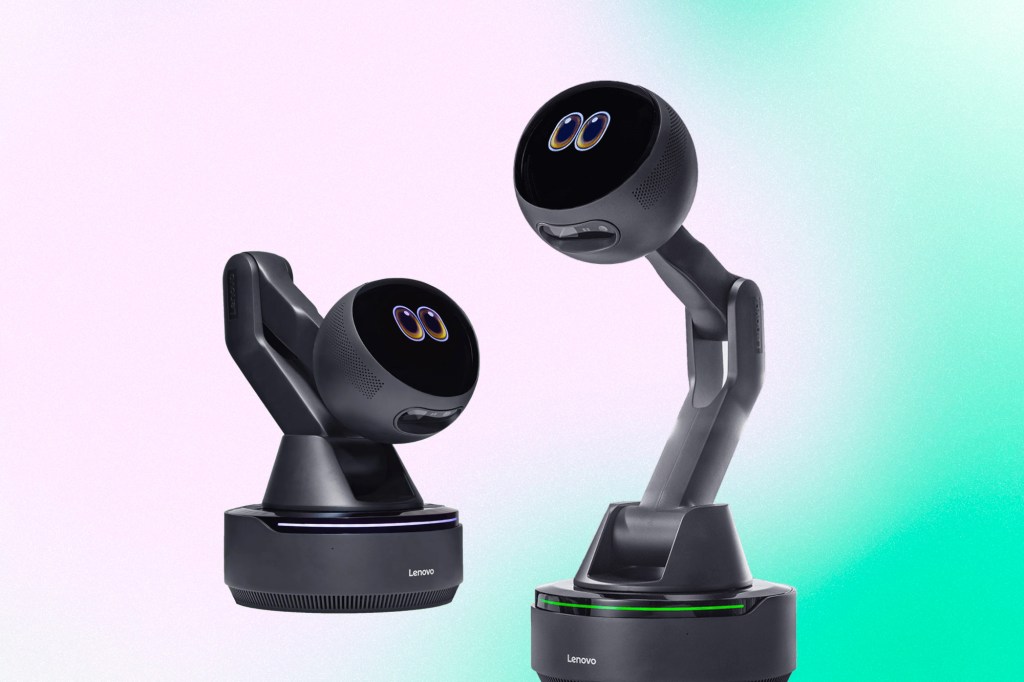
Why it matters: The AI Workmate is a small but telling indicator of where AI hardware investment is heading. The race to find the right physical form for AI, after pins, glasses, and smart speakers all produced mixed results, is pushing companies toward something more ambient and presence-based. Lenovo’s bet is that physical embodiment, something that occupies space on your desk and reacts to you, creates a fundamentally different relationship with AI than a voice on your phone. The local processing angle is worth noting separately: as enterprise AI adoption grows, on-device computation that keeps sensitive data off cloud infrastructure is becoming a genuine differentiator, not just a privacy talking point. Whether workers actually want a robot with expressive eyes watching them is another question entirely.
📱 Consumer AI & Products
Google Home Lets You Query Live Camera Feeds Through Gemini
Google has launched Live Search, a new feature that allows Gemini to analyze home security camera footage in real time. Rather than reviewing recorded clips after the fact, users can ask natural language questions about what their cameras are currently seeing and get an immediate answer. Google Home chief Anish Kattukaran also announced improvements to Gemini’s underlying models for home use and acknowledged fixes to longstanding platform reliability issues. The feature is available to subscribers on the Advanced tier of Google Home Premium, priced at $20 per month or $200 per year.

Why it matters: Smart home cameras have always been reactive, recording events and alerting you after something happens. Live Search flips that model by making your camera network queryable on demand, which is a more fundamental shift than it might appear. The practical difference between “motion detected” and “yes, there is someone at your door right now” is significant, and it points toward a broader pattern: AI is moving from summarizing the past to actively interpreting the present. Privacy questions will follow, particularly around how Google handles continuous video analysis of people’s homes, and the company has not yet provided detailed answers on data retention. That will be worth watching as the feature scales.
Get AI This Week, along with industry news, delivered straight to your inbox
Meta Tests AI Shopping Research Feature Inside Meta AI Chatbot
Meta is running an early experiment with a shopping research tool embedded in its Meta AI chatbot, currently available to a limited set of U.S. desktop users. When prompted for product suggestions, the tool surfaces recommendations in a carousel format showing product images, prices, brand names, and brief explanations for each suggestion. Personalization draws on factors including user location and inferred gender. There is no built-in checkout, meaning users are directed to merchant websites to complete purchases. Meta confirmed the test but offered no details on timing for a broader rollout. The move puts Meta alongside OpenAI and Google, both of which introduced AI-powered shopping features in late 2024.
Why it matters: Meta’s entry into conversational commerce is less about shopping and more about distribution. With over 3.2 billion daily active users across Facebook, Instagram, and WhatsApp, Meta doesn’t need to build the best AI shopping tool; it just needs to make one available at a scale no competitor can match. The more interesting question is how this connects to Meta’s existing advertising business. A shopping tool that learns purchase intent from natural language queries, combined with Meta’s existing behavioural data infrastructure, would be a powerful signal layer for ad targeting. The absence of checkout in this first iteration keeps the focus on discovery, but the underlying data value is likely the real objective.
🍁 Canadian AI
Canada’s ALL IN Conference Expands Beyond Montréal With National Tour
ALL IN, the annual AI conference run by federal innovation cluster Scale AI, is extending its reach across Canada with two satellite events ahead of its main fall gathering. ALL IN Talks will stop in Vancouver on April 15, co-hosted by telecom company Telus, and in Toronto on May 28, co-presented by the Vector Institute. The Toronto event is timed to coincide with Toronto Tech Week. The flagship conference returns to Montréal on September 16 and 17, expecting more than 7,500 attendees from 40 countries. Germany has been named this year’s country of honour following a joint AI declaration signed between Canada and Germany earlier this year. Vancouver robotics company Sanctuary AI and Simon Fraser University are among the confirmed participants for the western edition.
Why it matters: The expansion of ALL IN from a single Montréal event into a national series reflects a deliberate effort to build AI momentum beyond the country’s established research corridor. Vancouver brings robotics and applied AI into the conversation, while Toronto’s Vector Institute connection grounds the event in enterprise and sector-specific deployment across healthcare and manufacturing. With the U.S. government actively politicizing its AI partnerships, Canada has a narrow but real window to position itself as a stable, values-aligned destination for AI investment and talent. A more connected national AI community, with shared infrastructure between clusters in Montréal, Toronto, and Vancouver, strengthens that pitch considerably.
Keep ahead of the curve – join our community today!
Follow us for the latest discoveries, innovations, and discussions that shape the world of artificial intelligence.