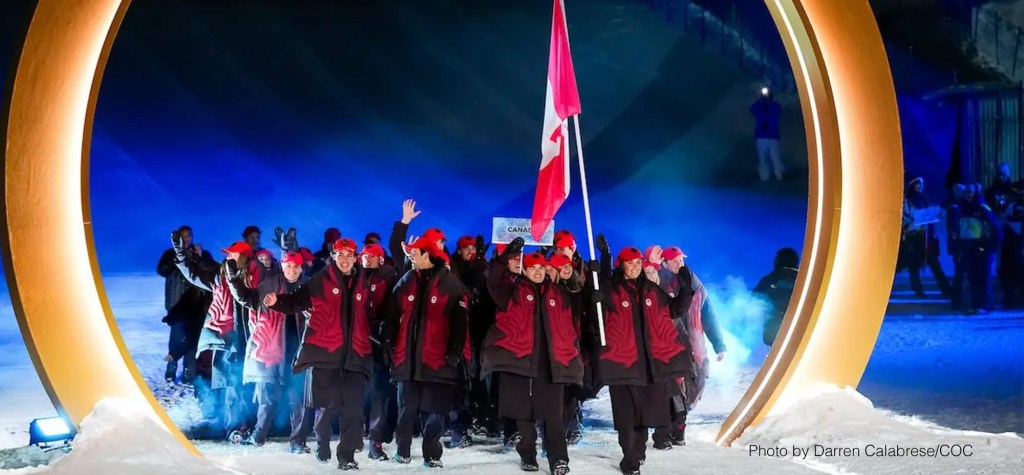
The Olympic Games have always been about more than medal counts. They are moments where decades of preparation, national pride, and individual journeys converge on a global stage. At Milano Cortina 2026, Team Canada delivered a performance that reflected not only elite achievement but also continuity, where established legends strengthened their legacy while a new generation announced its arrival.
A Broad Medal Impact Across the Team
One of the clearest indicators of Canada’s strength in Milano Cortina was the sheer number of athletes contributing to the medal haul. A total of 75 Canadian athletes returned home with Olympic medals, demonstrating the depth of talent across disciplines.
This wasn’t limited to a handful of dominant performances. Canada recorded:
- 62 top-eight finishes
- 38 top-five finishes
- Eight athletes winning multiple medals
These numbers reflect a team competing at the highest level across sports, from freestyle skiing and speed skating to hockey, curling, and figure skating. Success was distributed across the roster, underscoring the strength of Canada’s high-performance system and the breadth of its Olympic program.
Among the standout multi-medal performers was short track speed skater Courtney Sarault, who earned four medals during the Games—one of the most decorated Olympic performances ever by a Canadian in a single Winter Games.
Historic Milestones and Long-Awaited Breakthroughs
Milano Cortina was also defined by milestone moments that marked the end of long droughts and the continuation of historic careers.
Speed skater Laurent Dubreuil captured bronze in the men’s 500m long track event, ending a 28-year gap since Canada last reached the podium in that distance. Meanwhile, Steven Dubois’ gold medal in the men’s 500m short track event represented Canada’s first Olympic gold in that discipline in 16 years.
These moments reflect more than individual achievement. They represent persistence, both personal and institutional. Olympic success often emerges from years of incremental progress, and Milano Cortina provided validation for long-term investment in athlete development.
In freestyle skiing, Mikaël Kingsbury added further chapters to one of the most decorated careers in the sport’s history. With both gold and silver medals at these Games, he brought his career Olympic total to five, cementing his place as Canada’s most successful male freestyle skier.
Short track speed skater Kim Boutin also reached a historic milestone, tying the record as Canada’s most decorated Winter Olympian with six career Olympic medals.
Leadership from Veterans on the World Stage
Milano Cortina also highlighted the continued impact of experienced leaders who have defined Canadian sport for years.
Marie-Philip Poulin extended her legacy as one of hockey’s greatest players, reaching a career total of 20 Olympic goals, the most ever scored in women’s Olympic hockey. Her performance reaffirmed her reputation as one of the defining athletes of her generation.
In ice dance, Piper Gilles and Paul Poirier delivered a bronze medal performance that represented the culmination of years of refinement and partnership.
Curling provided another example of perseverance rewarded. Rachel Homan and her team captured bronze after years of competing at the highest level, finally securing an Olympic podium finish together.
These performances reflect the stability and leadership that veteran athletes bring to Olympic teams. They provide both competitive results and continuity, serving as role models for emerging athletes while sustaining Canada’s international presence.
Breakout Athletes Signal the Next Olympic Cycle
While established athletes delivered major results, Milano Cortina also introduced a new generation poised to shape Canada’s Olympic future.
Figure skater Stephen Gogolev delivered one of the strongest Olympic debuts by a Canadian male skater in more than a decade, finishing fifth overall with a career-best free skate performance.
Freestyle skier Maïa Schwinghammer came within fractions of a podium finish in moguls, finishing fifth and establishing herself as a major contender for future Games.
Naomi Urness, another freestyle skiing standout, reached the top ten in both slopestyle and big air in her Olympic debut. This achievement signals her emergence as part of Canada’s next wave of freestyle stars.
In cross-country skiing, a young Canadian men’s relay team delivered Canada’s best Olympic relay result ever, finishing fifth. Alison Mackie achieved Canada’s strongest Olympic performance in the women’s 10km freestyle event, finishing eighth.
These performances demonstrate the strength of Canada’s athlete pipeline. Olympic success is not built in a single cycle; it is built through continuity, development, and sustained investment in emerging talent.
Moments That Transcended Competition
Olympic success is measured not only in medals but also in moments that reflect the human side of sport.
For Mikaël Kingsbury, competing as a father for the first time brought new meaning to his achievements. His podium celebrations included family moments that symbolized the personal journeys behind Olympic performance. Ted-Jan Bloemen, one of Canada’s most accomplished speed skaters, closed his Olympic career in Milano Cortina, marking the end of an era.
Athletes like Evan Bichon and Francis Jobin demonstrated resilience, competing through personal hardship and injury to represent Canada on the world stage.
These stories are essential to understanding Olympic performance. They reflect the dedication, resilience, and humanity behind elite sport.
Powering the Digital Experience Behind Team Canada
Behind every Olympic performance is a digital ecosystem that enables fans to follow, engage, and experience these moments in real time.
Platforms like Olympic.ca serve as the central hub for athlete stories, results, and engagement, connecting millions of Canadians to Team Canada’s journey.
Trew Knowledge has supported the Canadian Olympic Committee across seven Olympic Games, continuously evolving the digital infrastructure behind Olympic.ca and Olympique.ca. Built for real-time publishing, scalability, and resilience under peak global demand, these platforms enable millions of Canadians to follow Team Canada throughout the Olympic Games.
As the next Olympic cycle begins, the foundation established in Milano Cortina ensures that Canada remains positioned among the world’s leading winter sport nations. And through the digital platforms that bring these moments to life, those achievements will continue to inspire Canadians everywhere.