AI companies spent this week confronting the gap between their product ambitions and operational reality. Meta’s hunt for 6.6 gigawatts of nuclear power made the infrastructure challenge explicit, while Google and Anthropic pushed AI past chat interfaces into commerce transactions and healthcare workflows that demand regulatory compliance and actual reliability. Apple’s $1 billion bet on Google’s Gemini acknowledged what its own efforts couldn’t deliver, and OpenAI’s request for contractors’ real work files revealed how training data needs are outpacing what public scraping can provide. The through-line: moving AI from demo to deployment requires more than better models.
Listen to the AI-Powered Audio Recap
This AI-generated podcast is based on our editor team’s AI This Week posts. We use advanced tools like Google NotebookLM, Descript, and Elevenlabs to turn written insights into an engaging audio experience. While the process is AI-assisted, our team ensures each episode meets our quality standards. We’d love your feedback—let us know how we can make it even better.
🏢 Enterprise AI Applications
Google Pushes Open Standard for AI Shopping
Google unveiled the Universal Commerce Protocol (UCP) at the National Retail Federation conference, introducing an open standard designed to unify digital commerce across AI platforms. Built through collaboration with Shopify, Etsy, Wayfair, Target, and Walmart, the protocol enables direct purchases within AI surfaces like Search and Gemini, eliminating the need for separate integrations at each stage of the shopping journey.
The protocol’s modular design lets merchants select specific capabilities and extensions that match their needs, with support for multiple communication methods including REST APIs, Model Context Protocol, and Agent2Agent. It’s also compatible with Google’s Agent Payments Protocol from last year, ensuring interoperability across major industry standards.
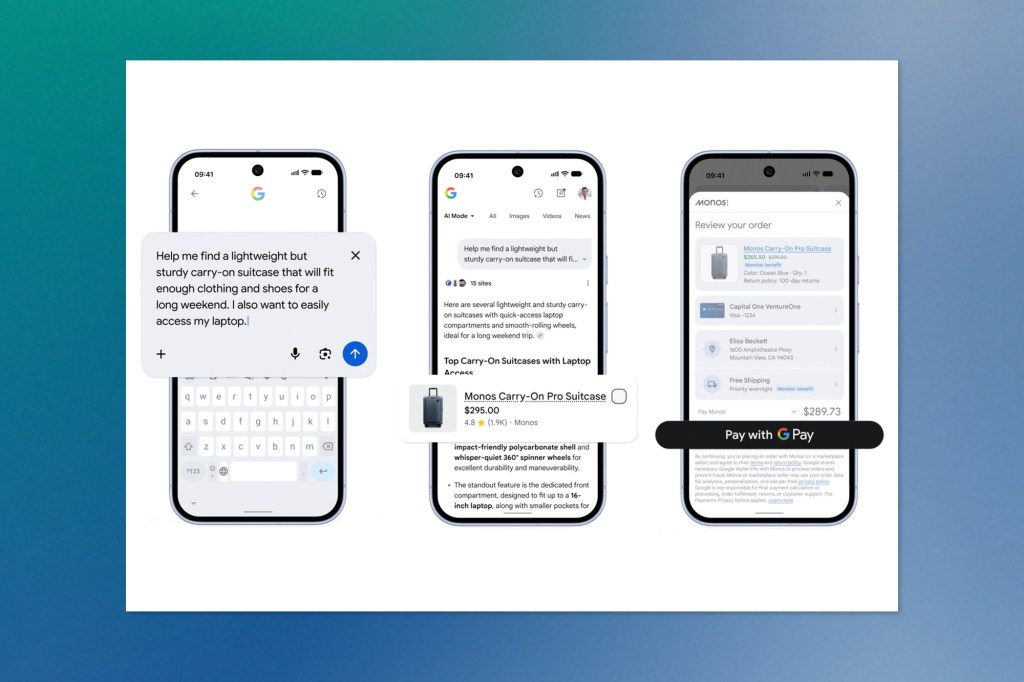
For merchants, UCP addresses a persistent e-commerce challenge: cart abandonment. By allowing shoppers to complete purchases directly within the AI interaction flow, Google aims to reduce friction points that typically cause drop-offs. Merchants remain the merchant of record, retaining full control over customer relationships, data, and post-purchase experiences. The protocol supports secure payments through tokenization while allowing businesses to use their existing payment integrations.
Google plans to integrate UCP into AI mode in Search and Gemini apps, letting US shoppers check out using Google Pay (with PayPal support coming soon) and saved shipping details from Google Wallet. The company is also providing new data attributes in Merchant Centre to help products surface more effectively in AI-generated results, alongside native SDKs to speed up integration within existing development environments.
Additional merchant tools include branded AI-powered Business Agents that can be deployed within Google Search to handle customer questions, and these are already being used by Lowe’s, Michael’s, Poshmark, and Reebok. Google also announced Gemini Enterprise for Customer Experience, a suite aimed at retailers and restaurants managing shopping and service inquiries.
The timing reflects broader industry momentum toward AI-powered commerce. Adobe recently reported that generative AI drove 693% more traffic to seller sites during the holiday season, though conversion data wasn’t disclosed.
Anthropic Expands Claude into Healthcare and Clinical Research
Days after OpenAI launched ChatGPT Health, Anthropic rolled out a comprehensive healthcare package of its own, introducing Claude for Healthcare alongside major expansions to its life sciences capabilities.
The healthcare offering centres on HIPAA-ready products designed for providers, payers, and consumers. New connectors link Claude directly to industry-standard systems, including the CMS Coverage Database for Medicare policy verification, ICD-10 for diagnosis and procedure codes, and the National Provider Identifier Registry for credentialing and claims validation. Organizations using Claude for Enterprise can also tap existing healthcare connectors like PubMed’s 35 million biomedical literature entries.
The platform targets persistent administrative bottlenecks in healthcare. Prior authorization reviews, which can take hours and delay patient care, can now pull coverage requirements from CMS or custom policies while cross-referencing clinical guidelines and patient records. Claims appeals similarly benefit from automated assembly of supporting documentation. Care coordination tools help triage patient portal messages and flag items needing immediate attention.

For consumers, Anthropic introduced personal health data integrations, launching in beta. US subscribers on the Claude Pro and Max plans can connect lab results and health records via HealthEx and Function, with Apple Health and Android Health Connect rolling out in mobile apps this week. The system can summarize medical histories, explain test results, and help prepare questions for appointments, though Anthropic emphasizes contextual disclaimers and directs users to healthcare professionals for personalized guidance.
On the life sciences side, Anthropic expanded beyond its October focus on preclinical research into clinical trial operations and regulatory work. New connectors include Medidata for trial data and enrolment tracking, ClinicalTrials.gov for pipeline intelligence and protocol design, ToolUniverse’s 600+ vetted scientific tools, and preprint servers bioRxiv and medRxiv. Additional database integrations cover Open Targets for drug target identification, ChEMBL for bioactive compounds, and Owkin’s Pathology Explorer for tissue image analysis.
New Agent Skills support clinical trial protocol drafting with FDA and NIH compliance built in, FHIR development for healthcare system interoperability, and specialized bundles for bioinformatics work using scVI-tools and Nextflow. Anthropic reports that Claude Opus 4.5 with extended thinking shows significant improvements on medical benchmarks, including MedAgentBench and MedCalc evaluations.
The timing positions Anthropic directly against OpenAI in the healthcare AI race, though the approaches differ. While OpenAI’s ChatGPT Health emphasizes consumer-facing symptom checking and health information, Claude’s package spans clinical operations, regulatory compliance, and research workflows alongside consumer tools.
⚙️ AI Infrastructure
Meta Locks Down Nuclear Power for AI Data Centres
Meta announced nuclear power agreements that could deliver up to 6.6 gigawatts of capacity by 2035, making it what the company describes as one of the most significant corporate purchasers of nuclear energy in American history. The deals came alongside CEO Mark Zuckerberg’s launch of Meta Compute, a new initiative aimed at drastically expanding the company’s AI infrastructure footprint.
Zuckerberg said Meta plans to build “tens of gigawatts this decade, and hundreds of gigawatts or more over time,” positioning infrastructure development as a strategic advantage.
The nuclear agreements address immediate power needs while backing both existing plants and next-generation reactor technology. Meta’s partnership with Bill Gates-backed TerraPower represents its largest advanced nuclear commitment to date, funding the development of two Natrium reactors capable of generating 690 megawatts, with delivery targeted for 2032, and securing rights to energy from six additional units totalling 2.1 gigawatts by 2035. Combined, the eight potential units would provide 2.8 gigawatts of baseload generation plus 1.2 gigawatts of built-in storage capacity.

With Oklo, which went public last year through a SPAC merger led by OpenAI CEO Sam Altman, Meta is backing a nuclear campus in Pike County, Ohio, that could begin operations as early as 2030. The site may eventually house multiple Aurora Powerhouse reactors delivering up to 1.2 gigawatts of capacity directly into the PJM regional grid. Oklo’s fast-reactor design can run on both fresh and repurposed fuel.
The most immediate impact comes through a 20-year agreement with Vistra covering three existing plants: Perry and Davis-Besse in Ohio, and Beaver Valley in Pennsylvania. Meta will purchase more than 2.1 gigawatts from the two Ohio facilities while supporting output increases totalling 433 megawatts across all three locations—what Vistra calls the largest nuclear uprates backed by a corporate customer in the US. The uprated capacity is expected online in the early 2030s. Power delivery from Vistra begins later this year.
The arrangements are structured to keep electricity flowing to the regional grid rather than dedicating it exclusively to Meta’s datacentres, which include the Prometheus supercluster in New Albany, Ohio. Meta emphasized it pays full energy costs for its datacentres so consumers don’t shoulder those expenses.
Meta expects the projects to generate thousands of construction jobs and hundreds of long-term operational positions. The nuclear push follows Meta’s 2024 deal with Constellation Energy for a 20-year power purchase that extended a Clinton, Illinois, plant’s operational life. Chief Global Affairs Officer Joel Kaplan framed the nuclear strategy as essential to maintaining America’s AI leadership position while strengthening energy infrastructure.
The infrastructure race extends across major tech companies. Microsoft has been partnering extensively with AI infrastructure providers, while Google’s parent company, Alphabet, acquired datacenter firm Intersect in December. Capital expenditure projections from last year showed similar ambitions across Meta’s peers, though estimates suggest America’s AI-related electrical consumption could spike from 5 gigawatts to 50 gigawatts over the next decade.
🤝 Platform Partnerships
Apple Taps Google’s Gemini to Power Siri and AI Features
Apple confirmed it will use Google’s Gemini models and cloud infrastructure to power future Apple Foundation Models, formalizing a partnership that addresses mounting criticism over the company’s lagging AI capabilities.
The multi-year deal, reportedly valued at around $1 billion, marks a notable shift for Apple, which historically favours vertical integration with its own hardware and software. The arrangement isn’t exclusive, leaving Apple room to work with other providers. The company evaluated competing technology from OpenAI and Anthropic before settling on Google.
In a joint statement, the companies said Apple determined “Google’s technology provides the most capable foundation for Apple Foundation Models.” Apple emphasized it will maintain its privacy standards throughout the partnership, keeping much processing on-device or within tightly controlled infrastructure.
The move comes after sustained criticism of Apple’s AI efforts, particularly Siri, which has fallen behind competitors despite the company quietly building foundational models. Apple Intelligence launched in 2024 with AI-powered photo search and notification summaries, but the implementation has been subtle—sometimes invisible—lacking the immediate impact of ChatGPT or Gemini. The approach has left many users waiting for the substantial Siri overhaul Apple has repeatedly delayed. A spokesperson told TechCrunch an upgrade is coming this year, with previous reports pointing to a spring launch.
The partnership arrives amid Google’s ongoing antitrust troubles, including a case that scrutinized its relationship with Apple. A federal judge ruled in August 2024 that Google illegally maintained its search monopoly by paying companies like Apple for default search placements. Judge Amit Mehta’s December 2025 remedies banned exclusive default agreements lasting more than one year, potentially constraining how Google and Apple can structure future deals.
🛠️ AI Development & Capabilities
Anthropic Launches Cowork for Non-Coding Tasks
Anthropic introduced Cowork, extending the agentic capabilities of Claude Code beyond programming to handle everyday work tasks. The research preview launched for Claude Max subscribers on macOS, with plans for cross-device sync and Windows support.
Cowork operates differently from standard Claude conversations by granting the AI access to a designated folder on your computer where it can read, modify, and create files. Rather than requiring constant back-and-forth prompting, Claude makes a plan and works through tasks independently while keeping users informed of progress. Users can queue multiple assignments and let Claude handle them in parallel, making the interaction feel more like delegating to a coworker than conducting a chat session.
Use cases include organizing downloads by sorting and renaming files, generating spreadsheets from piles of screenshots, or drafting reports from scattered notes. The system works with existing Claude connectors that link to external platforms and introduces new skills specifically designed to improve document and presentation creation. When paired with Claude in Chrome, it can tackle tasks requiring browser access.
The trade-off for increased autonomy comes with new safety considerations. Users control which folders and connectors Claude can access, and the system requests permission before taking significant actions. However, Claude can execute potentially destructive operations like deleting local files if instructed, meaning clear guidance matters when there’s risk of misinterpretation. Anthropic also warns about prompt injection attacks, where malicious content Claude encounters online could alter its behaviour. The company has built defences but acknowledges that agent safety remains an active development area across the industry.
Anthropic positioned Cowork as an early release meant to gather feedback on real-world usage patterns and identify improvement opportunities. The company encourages experimentation with unexpected use cases while users learn the system’s capabilities and limitations. Non-Max subscribers can join a waitlist for future access.
OpenAI Asks Contractors for Real Work Files to Train Models
OpenAI and training data partner Handshake AI are requesting that third-party contractors submit actual work products from their previous and current employment, Wired reports. The practice appears aimed at generating higher-quality training data that could help AI models handle more sophisticated white-collar tasks.
Company presentations reportedly instruct contractors to describe work they’ve performed in other roles and provide examples of “real, on-the-job work” they’ve completed. Acceptable submissions include concrete outputs like Word documents, PDFs, PowerPoint presentations, Excel spreadsheets, images, and code repositories; not summaries, but the actual files themselves.
OpenAI directs contractors to remove proprietary information and personally identifiable data before uploading, pointing them toward a ChatGPT tool called “Superstar Scrubbing” designed to help strip sensitive details. Despite these precautions, intellectual property attorney Evan Brown warned that this approach “puts itself at great risk” by placing significant trust in contractors to determine what qualifies as confidential information. OpenAI declined to comment on the reporting.
The move fits within a wider shift across AI companies working to automate professional tasks. Rather than relying on publicly scraped content, labs are turning to contractors who can provide specialized training material that reflects actual workplace scenarios. It’s a calculated gamble: accepting heightened legal risk in exchange for data that better represents the sophisticated outputs these models aim to eventually produce.
Keep ahead of the curve – join our community today!
Follow us for the latest discoveries, innovations, and discussions that shape the world of artificial intelligence.