
The first full week of 2026 delivered a clear picture of AI’s current trajectory. Major hardware releases dominated, with Nvidia shipping its Rubin architecture and launching autonomous vehicle reasoning models. Established players made strategic pivots: Amazon expanded Alexa to the web, OpenAI launched a dedicated health experience, and Plaud moved from hardware into desktop software. Google continued testing faster, cheaper model variants. Meanwhile, 30 Canadian tech leaders weighed in on where AI is actually headed this year, highlighting everything from vertical specialization to the coming energy and business model reckonings. Here’s the breakdown.
Listen to the AI-Powered Audio Recap
This AI-generated podcast is based on our editor team’s AI This Week posts. We use advanced tools like Google NotebookLM, Descript, and Elevenlabs to turn written insights into an engaging audio experience. While the process is AI-assisted, our team ensures each episode meets our quality standards. We’d love your feedback—let us know how we can make it even better.
🤖 The Year Ahead
Canadian Tech Leaders Sound Off on What’s Coming in AI
BetaKit gathered predictions from 30 Canadian founders, VCs, and tech executives about where artificial intelligence is headed this year. The responses paint a picture of an industry moving past the hype cycle into something more practical and consequential.
Several themes emerged. Multiple voices expect AI to become a normalized infrastructure rather than a novelty: more utility, less spectacle. At the same time, the technology is getting more specialized, with vertical AI solutions replacing broad general-purpose tools. Physical AI applications in robotics and drones are drawing attention alongside the software advances.
The darker predictions focused on security risks as bad actors use AI to compress attack timelines and exploit vulnerabilities faster. Privacy concerns are mounting around AI agents handling sensitive data, and questions about AI identity governance are becoming urgent for Canadian organizations.
Energy emerged as a critical constraint. One analyst noted the US faces a 42-gigawatt power shortfall for AI infrastructure through 2028, making electricity access the new strategic advantage. This isn’t just a technical problem. It’s becoming political, with data center energy demands expected to play a prominent role in the US midterm elections.
The business model reality check is coming too. Multiple contributors questioned whether AI investments will deliver actual ROI, warned about AI tech debt piling up, and predicted a split between companies shipping real AI products versus pure LLM players stuck in a race to the bottom. One prediction suggested the AI bubble will pop, dramatically lowering barriers for Canadian software startups.
The human element kept surfacing. Several predictions emphasized that despite increasing automation, human creativity, judgment, and in-person connection will remain essential. Trust (particularly Canada’s advantage in deploying AI responsibly) could become a key differentiator.
🛠️ AI Infrastructure
NVIDIA Ships Rubin Chips, Claims 5x Inference Speed Jump
Jensen Huang took the CES stage to announce that NVIDIA’s Rubin architecture is now in full production, with broader rollout expected in the second half of this year. The new chips replace the Blackwell generation and represent another iteration in Nvidia’s rapid development cycle that has made it the world’s most valuable company.
Rubin is built as a six-chip system designed to work together. At the center sits the Rubin GPU, but the architecture also includes a new Vera CPU specifically for agentic reasoning, plus improvements to Bluefield and NVLink systems that address storage and interconnection bottlenecks. The addition of an external storage tier tackles the memory demands that come with agentic AI workflows and long-context tasks.
Performance numbers show substantial gains over Blackwell. NVIDIA claims 3.5x faster training and 5x faster inference, hitting up to 50 petaflops. Power efficiency improved too, with 8x more inference compute per watt.

The customer list reads like a who’s who of AI infrastructure: Anthropic, OpenAI, and AWS are all deploying Rubin systems. HPE’s Blue Lion supercomputer and the Doudna supercomputer at Lawrence Berkeley National Lab will also run on the new architecture.
This launch comes as AI infrastructure spending accelerates dramatically. Huang previously estimated the industry will spend between $3 trillion and $4 trillion on AI infrastructure over the next five years. Rubin positions Nvidia to capture a significant portion of that spending as labs and cloud providers race to secure compute capacity.
⚙️ Specialized Models
NVIDIA Also Launches Open-Source AV Reasoning Models
NVIDIA used the same CES event to release Alpamayo, a family of open source AI models designed to bring reasoning capabilities to autonomous vehicles. The centrepiece is Alpamayo 1, a 10 billion parameter model that uses chain-of-thought reasoning to work through complex driving scenarios the vehicle hasn’t encountered before.
The approach differs from traditional AV systems. Instead of relying purely on pattern recognition from training data, Alpamayo breaks down problems into steps, considers multiple possibilities, and selects the safest action. It can also explain its reasoning, showing why it chose a particular path. Think of it as an autonomous vehicle that can handle edge cases like navigating a busy intersection with malfunctioning traffic lights by reasoning through the problem rather than matching it to previous examples.
NVIDIA made the underlying code available on Hugging Face, letting developers fine-tune the model for specific applications, build auto-labelling tools for video data, or create evaluation systems that assess driving decisions. The company also released a dataset with over 1,700 hours of driving data covering rare and complex scenarios across different geographies and conditions.
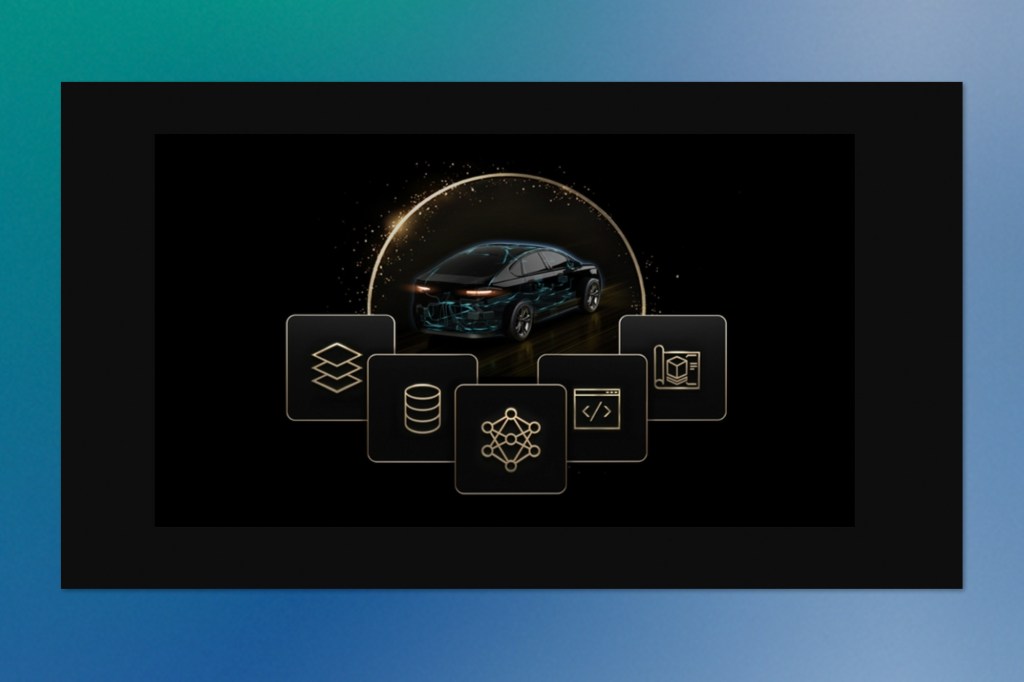
AlpaSim, an open source simulation framework now on GitHub, rounds out the package. It recreates real-world driving conditions, including sensor behaviour and traffic patterns, so developers can test systems at scale without road deployment. The framework connects with Nvidia’s Cosmos world models to generate synthetic training data that supplements real-world footage.
The release signals Nvidia’s play for the autonomous vehicle stack beyond just selling compute hardware.
Google Testing Faster Image AI Model with Flash Lineup
Google is working on a new image generation model called Nano Banana 2 Flash, which was spotted by MarsForTech, a researcher with a history of uncovering unreleased Gemini models. The new model fits into Google’s Flash lineup, which prioritizes speed over raw capability.
The positioning is straightforward. Nano Banana 2 Flash will be faster and cheaper than the current top-tier model, Nano Banana Pro, but less powerful. This follows the pattern of Flash variants across Google’s AI offerings, where the company trades some capability for significantly better performance and lower cost.
Right now, Nano Banana Pro (also called Gemini 3 Pro Image) handles complex creative work that demands accuracy and nuanced understanding. It can generate prototypes, diagrams, storyboards, and infographics from text prompts or reference content. The model can also pull in real-time information through Search grounding for things like weather or recipe visualizations.
Nano Banana 2 Flash will likely handle similar tasks but with reduced sophistication in exchange for speed. The Flash approach makes sense for workflows where iteration speed matters more than maximum quality, or where the Pro model becomes cost-prohibitive.
No official launch timeline yet, but the leak suggests Google is actively testing the model, and it could arrive in the near term.
🧷 Consumer AI
OpenAI Launches Dedicated Health Experience with Medical Record Integration
OpenAI introduced ChatGPT Health, a separate experience within ChatGPT designed specifically for health and wellness conversations. The launch addresses what’s already become one of the platform’s dominant use cases: over 230 million people globally ask health-related questions on ChatGPT every week.
ChatGPT Health operates as a walled-off space with enhanced privacy protections. Conversations, connected apps, and files are stored separately from regular chats, with their own memory system that doesn’t leak into non-health conversations. The health data gets additional encryption and isolation beyond ChatGPT’s standard protections, and none of it is used for model training.
The core functionality centers on connecting fragmented health data. Users can link medical records through a partnership with b.well, which connects to U.S. healthcare providers. Wellness apps like Apple Health, Function, and MyFitnessPal can also be integrated. The idea is to help people make sense of test results, prepare for doctor appointments, understand insurance tradeoffs, or get context on diet and workout patterns based on their actual health data.
OpenAI developed this with input from over 260 physicians across 60 countries and dozens of specialties. That group has provided more than 600,000 pieces of feedback on model outputs. The company also built HealthBench, an evaluation framework that uses physician-written rubrics to assess response quality against criteria such as safety, clarity, and appropriate escalation to clinicians.
The positioning is careful. ChatGPT Health is explicitly not intended for diagnosis or treatment. It’s designed to support understanding and preparation, not replace medical care. OpenAI is rolling it out via waitlist to users outside the European Economic Area, Switzerland, and the United Kingdom, starting with a small group before expanding to all subscription tiers on web and iOS over the coming weeks. Medical record integrations are U.S.-only for now.
Amazon Brings Alexa+ to the Web, Bets on Family Management
Amazon launched Alexa.com this week, putting its revamped AI assistant on the web alongside competitors like ChatGPT and Gemini. The move makes sense given Amazon has 600 million Alexa-powered devices in homes worldwide, but needs to be accessible everywhere to stay competitive.
The company is making a specific play here rather than building another generic chatbot. While Alexa.com handles standard AI tasks like content creation and trip planning, Amazon is betting on family and home management as its differentiator. That means controlling smart devices, managing shared calendars and to-do lists, making dinner reservations, adding items to Amazon Fresh carts, and coordinating household logistics.
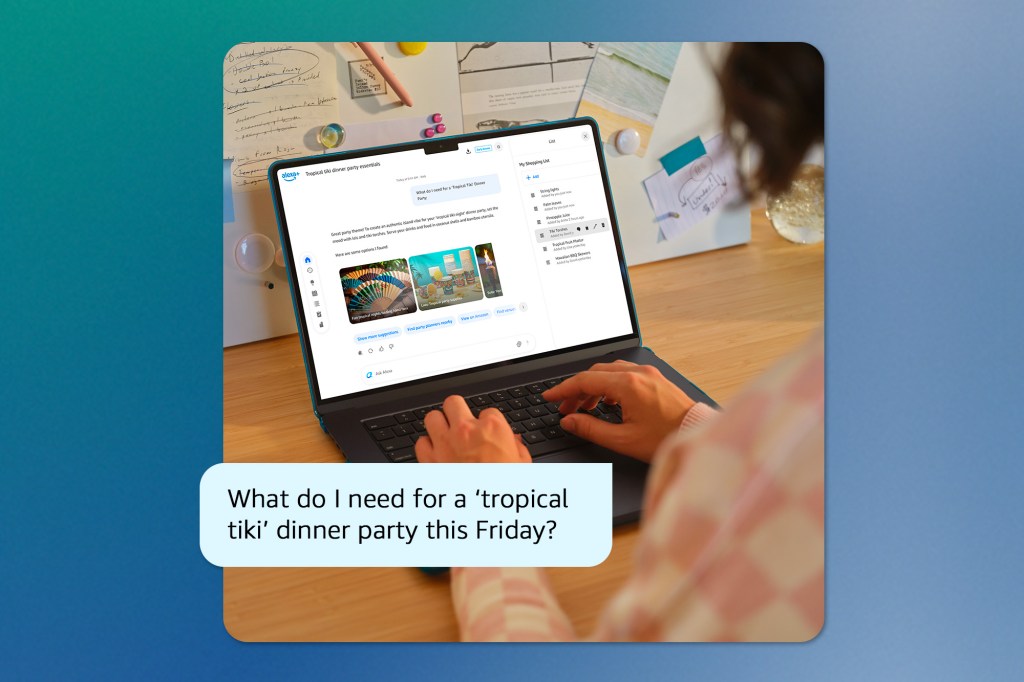
Amazon is also pushing integrations hard, connecting services like Angi, Expedia, Square, Yelp, OpenTable, and Uber directly into the Alexa experience. The mobile app is getting rebuilt with a chatbot interface as the homepage, signalling that conversational AI is now the primary interaction model.
The more ambitious bet involves personal data. Amazon wants users to share documents, emails, and calendar access so Alexa+ can become a hub for family coordination. Things like tracking kids’ school schedules, medical appointments, and household reminders. This is where Amazon faces a challenge. Google already has that personal data through Gmail, Calendar, and Docs. Amazon doesn’t have its own productivity suite, so it’s asking users to forward and upload files manually.
According to Daniel Rausch, Amazon’s VP of Alexa and Echo, 76% of what customers use Alexa+ for can’t be done by other AI assistants. Usage numbers show people having two to three times more conversations with Alexa+ compared to the original Alexa, shopping three times more, and using recipes five times more. The opt-out rate sits in low single digits.
Whether family management becomes a compelling enough hook to compete with AI assistants that are already embedded in users’ broader digital lives remains the question Amazon needs to answer.
Plaud Adds Desktop Meeting Capture to Its Wearable AI Notetaker Lineup
Plaud rolled out two products this week: the NotePin S wearable recorder and a desktop app that captures digital meetings. The hardware company, which has moved over 1.5 million devices, is expanding beyond its core in-person meeting focus to take on software-based notetakers like Granola, Fathom, and Fireflies.
The $179 NotePin S adds a physical button for recording control and the ability to tap highlights during conversations, matching functionality from Plaud’s recently launched Note Pro. The package includes multiple wearing options (clip, lanyard, magnetic pin, wristband) and Apple Find My support for tracking the device if misplaced.
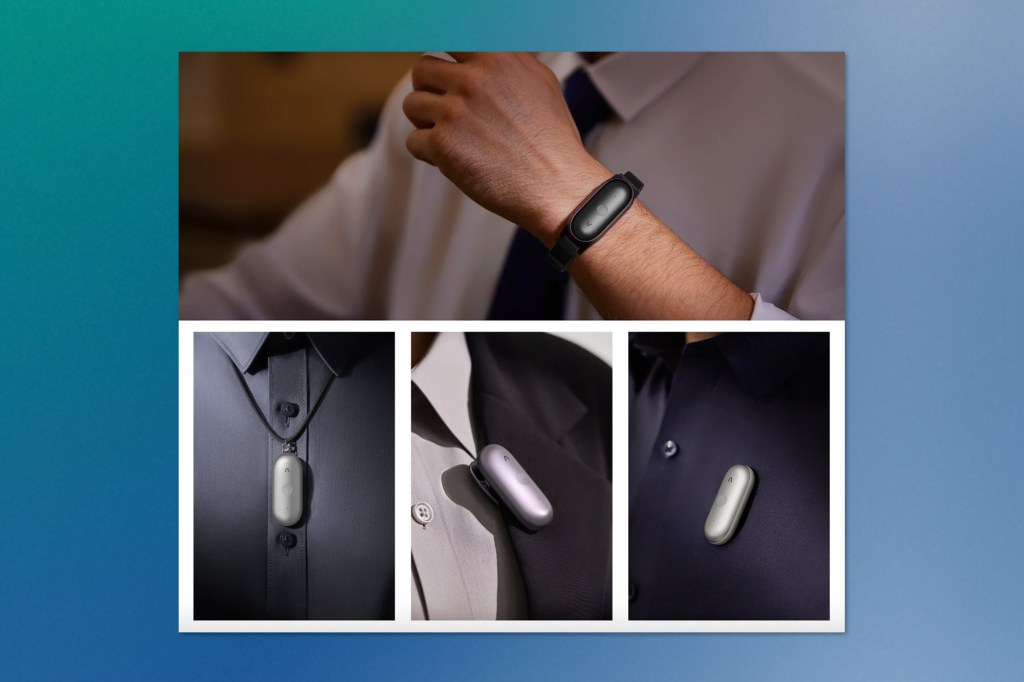
Hardware specs include 64GB storage, a 20-hour continuous recording battery, and dual MEMS microphones with a 9.8-foot capture range. Users get 300 free monthly transcription minutes. The tradeoff versus the Note Pro is reduced recording range and battery life in exchange for a more compact form factor designed for mobility.
The desktop app represents a bigger strategic shift. It detects active meetings across different platforms and captures audio through system audio on Mac. The app then structures raw transcriptions into organized notes using AI. Plaud is also bringing its multimodal input feature to the desktop, allowing users to add images and typed notes alongside audio transcriptions.
The move into desktop meeting capture puts Plaud in direct competition with established software players that have built significant user bases. Whether hardware expertise translates to competitive advantage in the crowded meeting notetaker space is the test ahead.
Keep ahead of the curve – join our community today!
Follow us for the latest discoveries, innovations, and discussions that shape the world of artificial intelligence.