OpenAI made its biggest consumer product bet in months with ChatGPT Atlas, a web browser built around AI from the ground up rather than as an afterthought. The move signals a new phase where AI companies aren’t just adding features to existing tools but reimagining entire categories. Meanwhile, Adobe launched a custom model-building service for enterprises wanting AI trained on their brand assets, while Anthropic expanded Claude Code to web browsers after seeing explosive developer adoption. On the platform side, Wikipedia shared sobering numbers showing an 8% drop in human traffic as AI summaries and social video pull users away, and Pinterest rolled out controls to reduce (but not eliminate) AI-generated content in feeds. WordPress developers are racing to finalize an Abilities API before their 6.9 beta ships next week, and Canada’s SaaS community is gathering to figure out whether old playbooks still work in an AI-driven industry. Here’s the full picture.
Listen to the AI-Powered Audio Recap
This AI-generated podcast is based on our editor team’s AI This Week posts. We use advanced tools like Google Notebook LM, Descript, and Elevenlabs to turn written insights into an engaging audio experience. While the process is AI-assisted, our team ensures each episode meets our quality standards. We’d love your feedback—let us know how we can make it even better.
🇨🇦 Canadian Tech Scene
SAAS NORTH 2025 Rethinks Conference Format for AI Era
Canada’s flagship SaaS conference, SAAS NORTH, returns to Ottawa’s Rogers Centre on November 5-6 with a central question: do the strategies that built the last decade of SaaS companies still apply in an AI-driven industry?
The 2025 theme, “Future-Proof SaaS in the Age of AI,” puts that tension front and center. Co-founder David Tyldesley says the conference was designed around immediate applicability, which means every session should give leaders something they can implement right away.
The BetaKit Keynote Stage programming reflects these industry questions. “Hot Tub Time Machine” will feature Bridgit CEO Mallorie Brodie and eSentire founder Eldon Sprickerhoff rewinding through SaaS history before projecting into an AI-driven future. Another session, “From SaaS to RaaS,” brings Vidyard founder Michael Litt to explore a potential future where customers pay for results rather than software access. There’s even a dating-game-style pitch session where founders compete for an investor’s attention.
Day two narrows in on organizational challenges. “Work Rewired” brings together leaders from Klue, Fellow.ai, Gadget, and Quest to discuss building lean, AI-first teams, addressing the tricky balance between automation and company culture as work fundamentally changes.
The conference also features scale stories from companies that have hit major milestones. Lightspeed President JD Saint-Martin will discuss reaching $1 billion in annual recurring revenue, while StackAdapt CEO Vitaly Pecherskiy shares how his company quietly scaled to $500 million by deliberately avoiding hype cycles. OpenText’s Chief Product Officer, Savinay Berry, will offer the enterprise perspective on what “future-proofing” means when decisions affect billions in revenue.
SAAS NORTH has built a reputation for creating connections that extend beyond the event itself, with ideas from Ottawa sessions often resurfacing in boardrooms and strategy documents months later.
💻 AI-Powered Browsing
OpenAI Launches ChatGPT Atlas Browser with Built-In AI
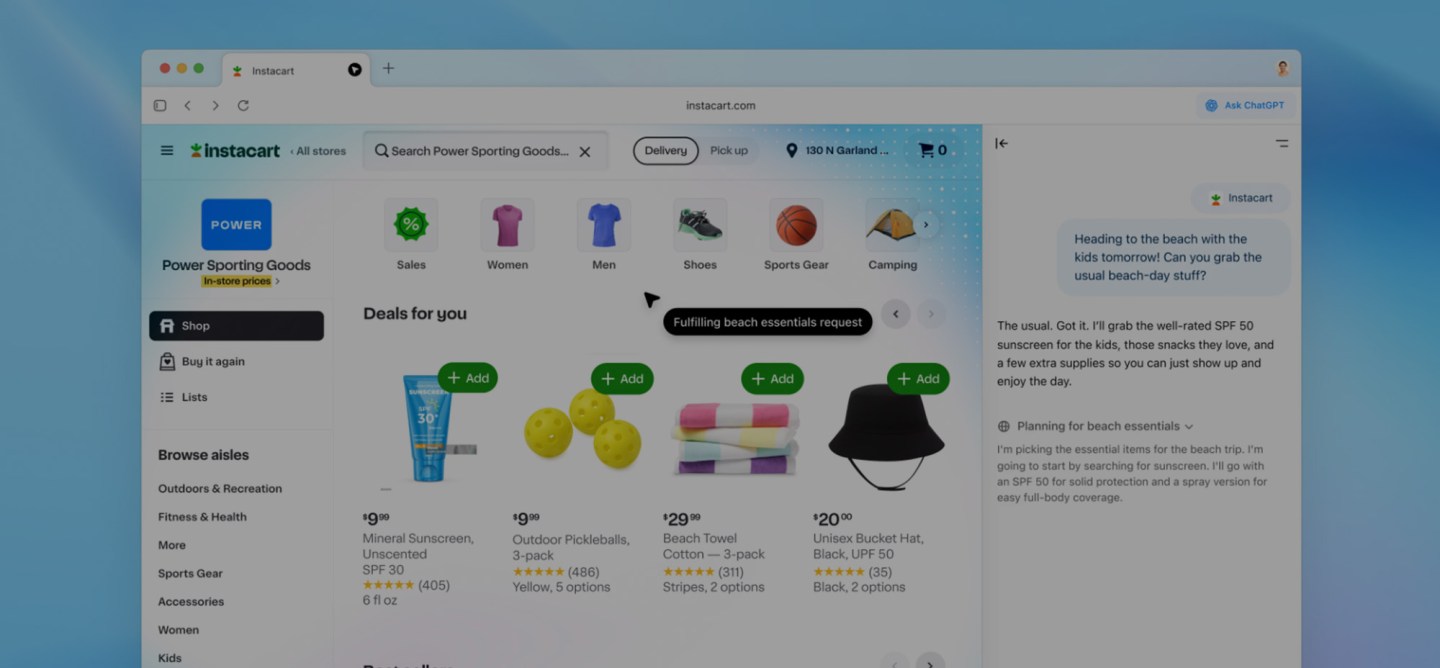
OpenAI released ChatGPT Atlas this week, a web browser designed with ChatGPT integrated throughout the entire browsing experience rather than as an add-on feature.
The browser launches today on macOS for Free, Plus, Pro, and Go users, with Windows, iOS, and Android versions coming soon. Business users get beta access, while Enterprise and Edu users can access it if their administrators enable it.
Atlas represents OpenAI’s answer to a fundamental question: what does web browsing look like when AI is built into the foundation rather than bolted on afterward? The browser allows ChatGPT to understand what users are viewing and assist them directly on any webpage without requiring screenshots, copy-pasting, or switching between tabs. ChatGPT memory carries over from conversations, so the browser can reference past chats when helping with new tasks.
A new feature called “browser memories” lets ChatGPT remember details from sites users visit and bring that context back later. For example, users could ask ChatGPT to “find all the job postings I was looking at last week and create a summary of industry trends.” The feature is optional, and users maintain full control—they can view, archive, or delete browser memories anytime, and clearing browsing history removes associated memories automatically.
Agent mode in Atlas takes this further by allowing ChatGPT to complete tasks autonomously while users browse. Currently available in preview for Plus, Pro, and Business subscribers, the agent can research topics, automate tasks, and handle logistics like planning events or making appointments. OpenAI gives an example of asking ChatGPT to take a recipe, find a grocery store, add ingredients to a cart, and complete the order—all without manual intervention.
However, OpenAI acknowledges significant risks with agent capabilities. The system can make mistakes on complex workflows, and agents are vulnerable to hidden malicious instructions embedded in webpages or emails that could override intended behaviour. OpenAI has implemented safeguards—the agent cannot run code, download files, install extensions, or access the file system, and it pauses before taking actions on sensitive sites like financial institutions. The company ran thousands of hours of red-team testing, but warns that safeguards won’t stop every attack as AI agents become more popular.
Privacy controls include options to disable ChatGPT visibility on specific sites, use incognito mode to temporarily log out of ChatGPT, and control what content gets used for model training. By default, browsing content isn’t used for training, and parental controls from ChatGPT accounts carry over to Atlas, with additional options to disable browser memories and agent mode for supervised accounts.
OpenAI says the roadmap includes multi-profile support, improved developer tools, and ways for Apps SDK developers to make their applications more discoverable within Atlas.
🏢 Enterprise AI Tools
Adobe Launches Custom AI Model Service for Enterprises
Adobe is expanding its generative AI offerings with a new service designed specifically for large businesses. The company announced Adobe AI Foundry this week, which enables enterprises to develop custom generative AI models trained on their own brand assets and proprietary content.
The service builds upon Adobe’s Firefly model family, which originally debuted in 2023. What sets Firefly apart is its training methodology. The models use only licensed content, addressing copyright concerns that have plagued other generative AI platforms. Adobe AI Foundry takes these base models and customizes them further using each client’s intellectual property to create outputs that match their specific brand guidelines.
These tailored models can generate content across multiple formats, including text, images, video, and even 3D environments. Unlike Adobe’s traditional seat-based pricing for creative software, the foundry service charges based on actual usage.
According to Adobe VP Hannah Elsakr, the launch responds directly to enterprise demand for greater customization in AI tools. Since Firefly’s introduction, businesses have already produced over 25 billion assets using the platform. The custom models aim to help brands scale their creative output more efficiently. Imagine creating a single ad campaign and then automatically adapting it across different seasons, languages, or platforms while maintaining brand consistency.
Adobe is positioning this service as an enhancement to human creativity rather than a replacement. The company emphasizes that these tools are meant to amplify what creative professionals can accomplish, giving them more powerful capabilities to execute their vision rather than automating them out of the process.
⚙️ Developer Tools
Anthropic Brings Claude Code to Web Browsers
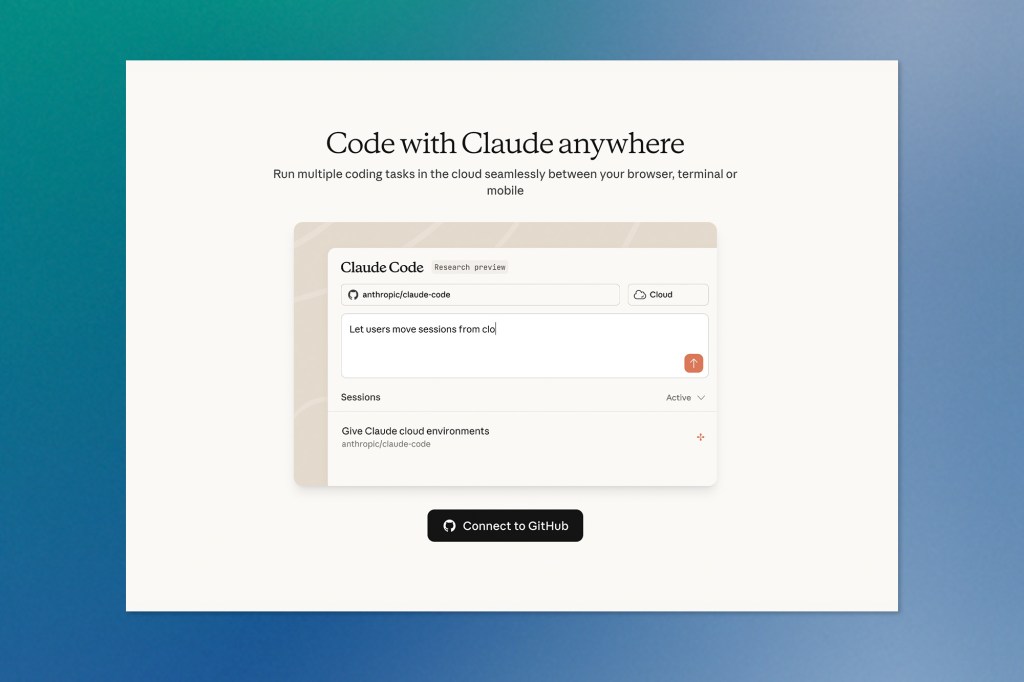
Anthropic launched a web-based version of Claude Code this week, allowing developers to create and manage AI coding agents directly from their browsers rather than exclusively through command-line terminals.
The web interface is now available to subscribers on Anthropic’s Pro plan ($20/month) as well as its higher-tier Max plans ($100 and $200/month). Users can access it through the same claude.ai website that hosts the company’s chatbot, simply by clicking into a dedicated “Code” tab.
The move comes as competition intensifies in the AI coding space. While GitHub Copilot initially dominated the market, companies like Cursor, Google, OpenAI, and Anthropic have all developed capable alternatives, many of which are already web-accessible. Still, Claude Code has gained significant traction, growing its user base tenfold since a broader rollout in May and now generating over $500 million in annualized revenue for Anthropic.
Product Manager Cat Wu credits much of Claude Code’s success to Anthropic’s underlying AI models, which have developed a strong following among developers. But she also notes the team’s intentional efforts to make the product enjoyable to use. Despite expanding to web and mobile, Wu says the terminal will remain the primary interface, offering the most customizable and intelligent experience for coding agents.
Anthropic claims that 90% of Claude Code’s own codebase was written by its AI models. Wu, formerly an engineer herself, says she now rarely writes code manually and instead primarily reviews AI-generated output. This is a shift that reflects how modern AI coding tools are transforming developers into managers of autonomous agents rather than traditional autocomplete assistants.
However, this transition hasn’t been universally embraced. Recent research indicates some engineers actually work more slowly with AI coding tools, potentially due to time spent prompting and waiting for responses rather than tackling other problems. The technology also struggles with large, complex codebases, sometimes producing incorrect solutions that require significant debugging time.
WordPress AI Team Pushes to Complete Abilities API for Version 6.9
The WordPress AI team has been working against a tight deadline to finalize the Abilities API in time for inclusion in WordPress 6.9‘s beta release.
The strategy centres on delivering core functionality, specifically the ability to register and retrieve abilities, while deferring more ambitious features. Complex additions like filtering capabilities have been postponed since developers can manually filter results themselves in the meantime. The team is making pragmatic trade-offs to avoid introducing technical debt or missing the release window entirely.
One partially-completed feature presented a dilemma, with work finished on the PHP side but lacking the necessary JavaScript implementation. Leadership needed to decide quickly whether to pull it entirely or push for completion by the deadline.
The Abilities API is already showing promise beyond internal development. Jeff Marx successfully integrated 11 abilities into the GatherPress plugin over a weekend, providing real-world validation that the API works as intended for managing events and venues. This external testing offers valuable feedback before the core release is finalized.
Alongside the Abilities API work, development continues on supporting tools. The PHP AI Client is getting a new preferred model feature that lets developers specify a prioritized list of models with automatic fallback options. The WordPress AI Client and Experiments Plugin is also progressing, with the latter decoupled from the 6.9 release timeline to allow for continued iteration through early December.
🧩 Platform Challenges
Wikipedia Reports Traffic Decline Linked to AI and Social Media Shifts
The Wikimedia Foundation revealed this week that Wikipedia is experiencing a notable drop in human visitors, with pageviews down 8% compared to last year. Marshall Miller from the foundation shared the findings in a blog post, explaining that improved bot detection systems helped clarify the picture; much of what appeared to be increased traffic earlier this year was actually automated bots designed to slip past detection measures.
The foundation identifies two primary culprits behind the decline: AI-powered search features and changing information consumption habits. Search engines are increasingly delivering answers directly through generative AI summaries rather than directing users to source websites like Wikipedia. Meanwhile, younger users are gravitating toward social video platforms instead of traditional web pages for their information needs.
Miller acknowledges that new methods of knowledge distribution aren’t inherently problematic, and notes that Wikipedia’s content still reaches people even when they don’t visit the site directly. However, this shift creates concerning implications for the platform’s sustainability. Fewer direct visitors could mean fewer volunteers contributing to and improving articles, and potentially fewer individual donations supporting the nonprofit’s operations.
The foundation argues that companies leveraging Wikipedia content—whether through AI systems, search engines, or social platforms—have a responsibility to drive traffic back to the original source. Wikipedia is working on solutions, including developing better attribution frameworks and deploying teams focused on reaching new audiences.
Miller’s post also includes a broader appeal for supporting content integrity across the internet. He encourages people to seek out citations, visit original sources, and recognize that the information feeding generative AI systems was created by real people who deserve credit and support for their work.
Pinterest Introduces AI Content Controls, But Can’t Eliminate It Completely
Pinterest launched a new feature this week that gives users more control over how much AI-generated content appears in their feeds, though the platform isn’t offering a way to remove it entirely.
The tool, which Pinterest calls a “tuner,” lets users adjust AI content levels across specific categories, including beauty, art, fashion, and home decor. However, the company makes clear this only applies to “eligible image Pins” in these particular categories, not across the entire platform.

Users can find the tuner in their settings under “refine your recommendations” within a tab labelled “GenAI interests.” The feature is currently accessible on Android devices and desktop browsers, with iPhone availability expected within the next few weeks.
This represents Pinterest’s second major attempt at addressing AI content proliferation on its platform. Back in May, the company introduced automated labels marking AI-modified images with a tag in the bottom left corner of pins. Pinterest says it has enhanced both its detection capabilities and the visibility of these labels, though specific details about the improvements weren’t disclosed.
The measured approach reflects the challenge platforms face in managing AI content. Users are asking for less of it, but completely filtering it out appears either technically difficult or strategically undesirable for the company.
Keep ahead of the curve – join our community today!
Follow us for the latest discoveries, innovations, and discussions that shape the world of artificial intelligence.